본문으로 바로가기
Ess-neofab

A line- and system-level record of ESS and secondary-battery manufacturing processes

  • 한국어
  • English
  • Home
  • Process
  • System
  • Interface
  • Traceability
  • News & Trends
  • About
  • Contact
  • 한국어
  • English
  • Home
  • Process
  • System
  • Interface
  • Traceability
  • News & Trends
  • About
  • Contact

카테고리

  • Interface (28)
  • News & Trends (20)
  • Process (32)
  • System (31)
  • Traceability (22)

최근 글

  • Five million ACC cells equal 2.7 to 3.6 months of nameplate outputOctober 15, 2026
  • A 160 MW battery’s six-week commissioning has two baselinesOctober 8, 2026
  • Two Cycles a Day Take 106.8 % of a Day, and the Retention Tier Shifts Cell Volume by 1.47 GWhOctober 1, 2026
  • Battwoo’s Second-Life EV Batteries — When an 80 % Acceptance Threshold Overlaps the Retirement Distribution, Incoming Screening Becomes the BottleneckSeptember 30, 2026
  • US storage set an energy record in Q2 as installed power fell 7%September 29, 2026
  • CATL Starts Trial Production in Debrecen — The Digits of the Defect-Rate Target, Not the Equipment, Set the Length of a Trial RunSeptember 29, 2026
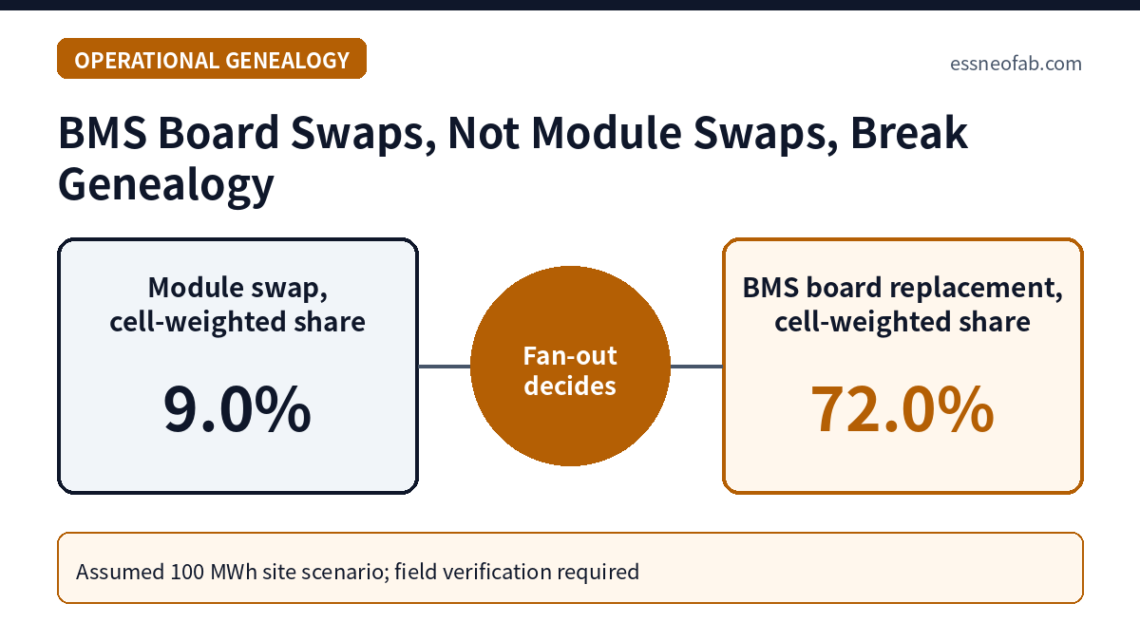
  • BMS Board Swaps, Not Module Swaps, Break Genealogy
    System,  Traceability

    Serial Genealogy in ESS Operation: Where Module Swaps, Refurbishment and BMS Board Replacements Break Parent-Child Links

    July 6, 2026 /

    After shipment, genealogy mismatches at an ESS site accumulate less from module swaps, which are managed as genealogy events, than from BMS board (BMU/BCU) replacements, which are not recognized as genealogy events at all. Assuming annual replacement rates and record-omission rates for a 100 MWh site (99,840 cells, 1,920 modules, 240 racks), cells whose parent chain cannot be verified accumulate at 554 per year and 5,541 over 10 years (5.55% of the total), with 72.0% originating from board replacements. Module swaps account for 25.3% by event count but only 9.0% when weighted by cells. Since Article 77(7) of the EU Batteries Regulation requires repurposed and remanufactured batteries to carry a…

    read more
    ESS-neofab Comments Off on Serial Genealogy in ESS Operation: Where Module Swaps, Refurbishment and BMS Board Replacements Break Parent-Child Links

    You May Also Like

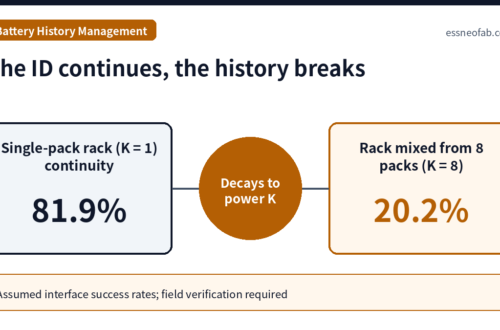
    The ID continues, the history breaks

    After Korea’s Battery History Management System: IDs Continue, Operating History Breaks — History Continuity of ESS Reuse Racks
    July 10, 2026
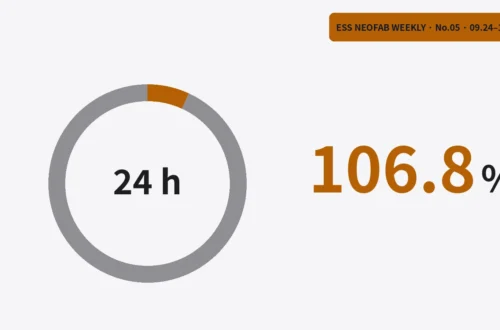
    Ring graph showing two ESS cycles a day taking 106.8 % of a day

    Two Cycles a Day Take 106.8 % of a Day, and the Retention Tier Shifts Cell Volume by 1.47 GWh
    October 1, 2026
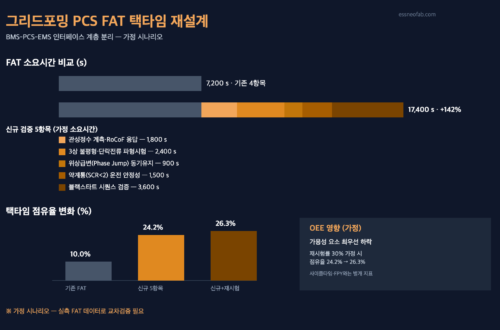
    그리드포밍 PCS FAT 택타임 비교 및 택타임 점유율 변화 도식

    Grid-Forming PCS Mandate Redesigns FAT Takt Time and the BMS-PCS-EMS Interface
    August 31, 2026
© 2026 Ess-neofab · A line- and system-level record of ESS and secondary-battery manufacturing processes
  • About
  • Contact
  • Privacy Policy
  • Disclaimer
Ashe Theme by WP Royal.