-
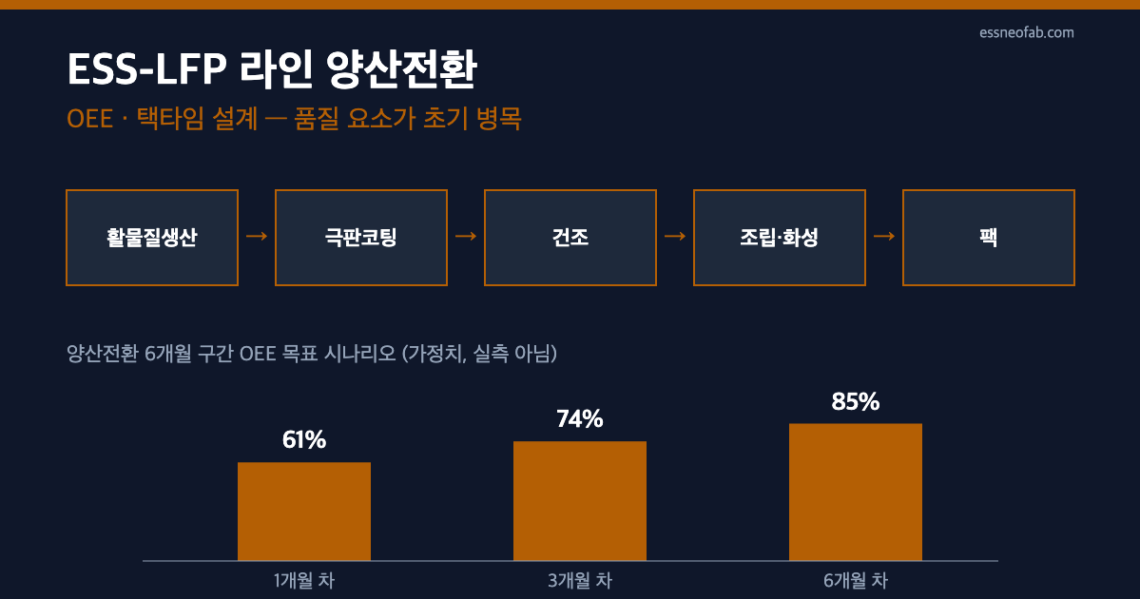
The Equipment Maker’s Line-Ownership Shift — OEE and Takt-Time Design During the ESS-LFP New-Line Mass-Production Ramp-Up
As more equipment suppliers directly operate their own ESS-LFP lines, a need has emerged to review line balancing and OEE management during the mass-production ramp-up separately from equipment-buyer-owned lines. Prompted by domestic equipment maker PNT's May 2026 earnings announcement, in which it stated it is focusing on yield stabilization for its Plant 4 ESS-LFP battery/cathode-active-material production line with a target of mass-production conversion in the second half of 2026, this article designs and verifies a target scenario for the order in which the three OEE factors — Availability, Performance, and Quality — improve during a ramp-up phase in which both new materials and a new line are introduced simultaneously. It…
You May Also Like
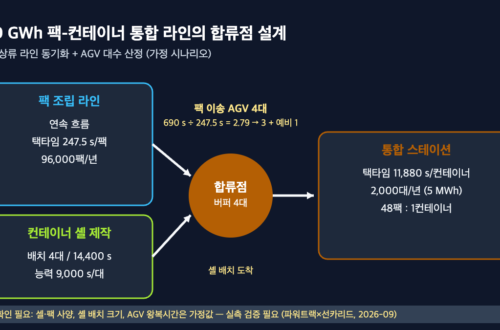
Designing the Merge Point in a 10 GWh Pack-Container Integration Line: Synchronizing Two Upstream Lines and Sizing AGV Fleet from the Powertrac × Sunka Lead Order
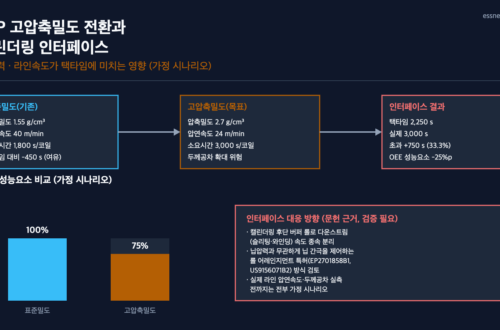
LFP High-Compaction-Density Conversion and the Calendering Interface: How Nip Pressure and Line Speed Affect Takt Time
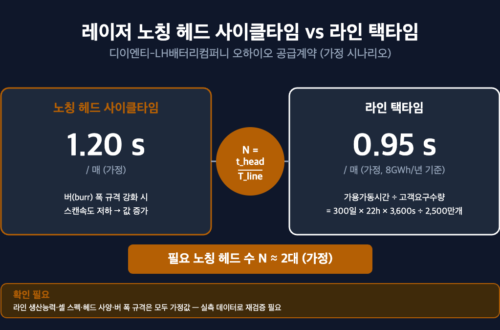
The Interface Between Laser Notching Cycle Time and Line Takt Time — The Head-Count Sizing Problem Revealed by DI ENT’s Ohio Supply Contract
-
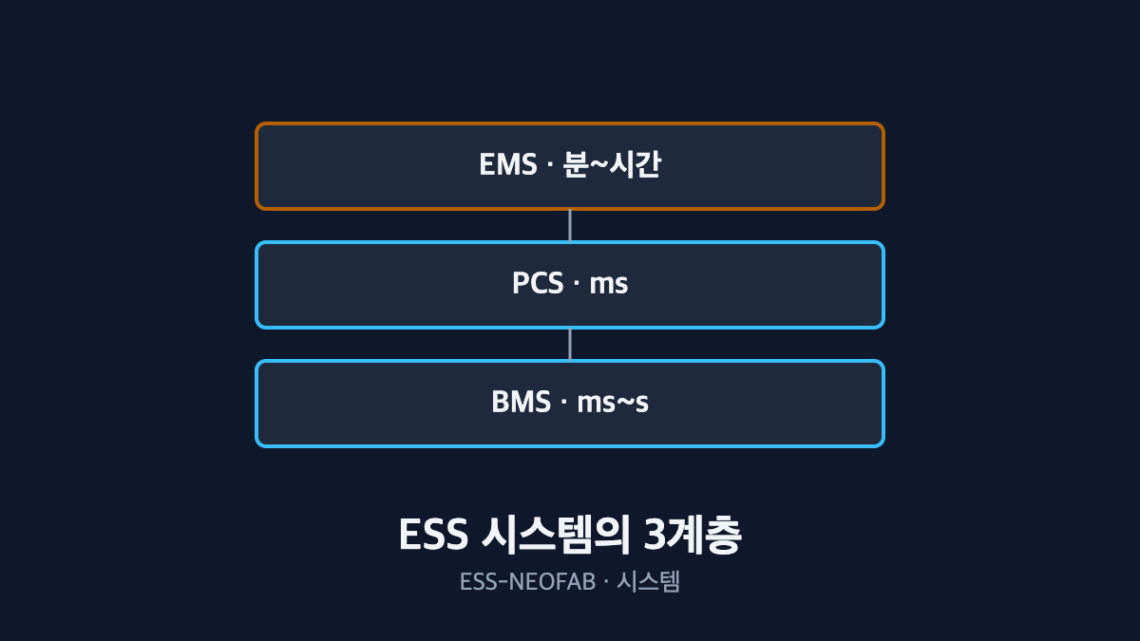
BMS, PCS, EMS: Why Do the Three ESS System Layers Move at Different Speeds?
Describing an ESS as "a battery with a PCS attached" is only half right. BMS, PCS and EMS each make decisions on a different time axis, and the gap between their control periods is not a qualitative remark but a quantitative one of roughly seven orders of magnitude (10). That gap is why the three layers cannot be collapsed into one control loop, and whether a protection response can ride on the communication chain must be judged by the product of chain latency and voltage rise rate. Every figure below is an assumed value for illustration and must be recalculated against actual equipment specifications. 1. The Conclusion First — The…
You May Also Like
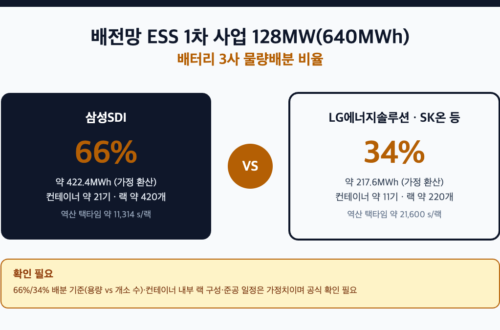
128 MW of Distribution-Grid ESS Volume Allocated — Can the Battery Pack Assembly Line Absorb the Takt Time?
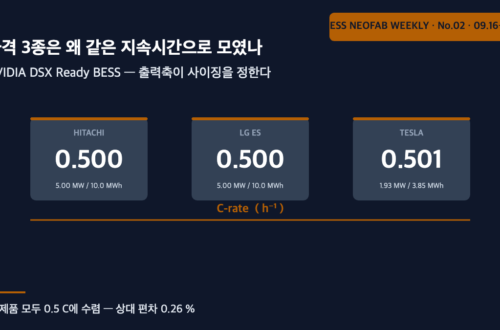
Why three qualified products landed on the same duration — in DSX Ready BESS, sizing is set by the output axis
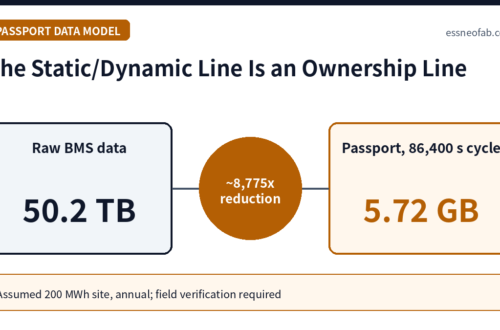
Battery Passport Static vs Dynamic Data: Ownership and Update Interfaces Across ESS Layers