-
When the Station Block Grows to 62 MWh, What Actually Shrinks Is Commissioning Labor, Not Cell Count
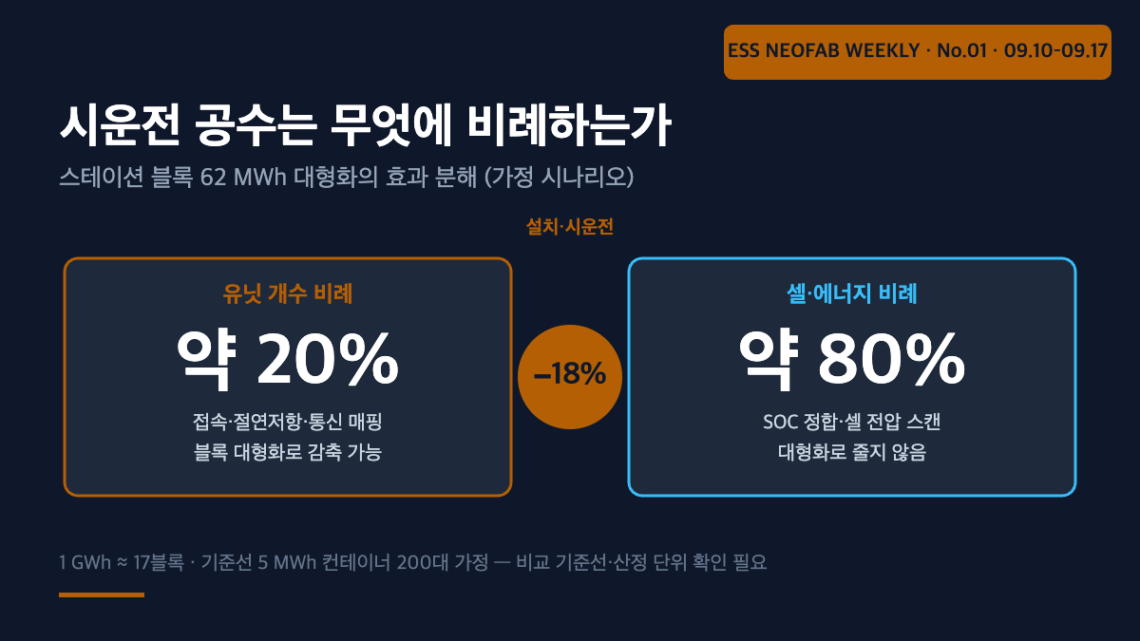
On September 16, 2026, BYD unveiled its second-generation grid-forming station block, the "GC Block," in a maximum 10 MW/62 MWh single configuration, stating that a 1 GWh project would require approximately 17 blocks. The same announcement claimed a 69.4% reduction in BMS management complexity, a maintenance workload reduction of over 60%, and an installation/commissioning workload reduction of over 18%. Working backward from these three figures using the same assumed unit-count reduction rate (91.5% under a baseline assumption), the unit-count-proportional share of on-site commissioning labor turns out to be only about 20%, with the remaining roughly 80% proportional to cell/energy count. In other words, block enlargement is a lever that attacks…
-
Grid-Forming PCS Mandate Redesigns FAT Takt Time and the BMS-PCS-EMS Interface
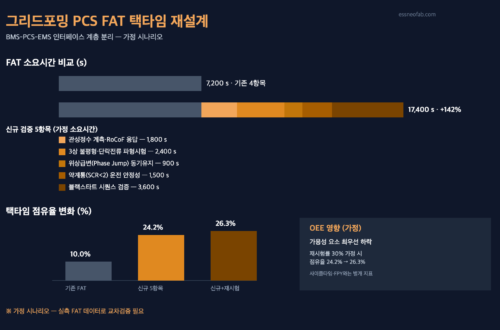
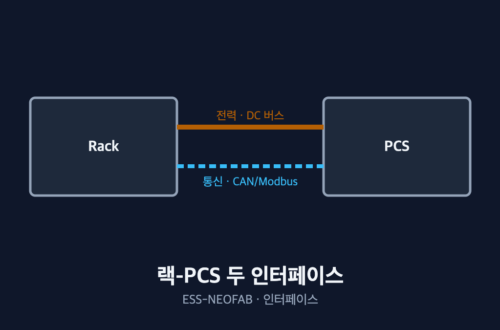
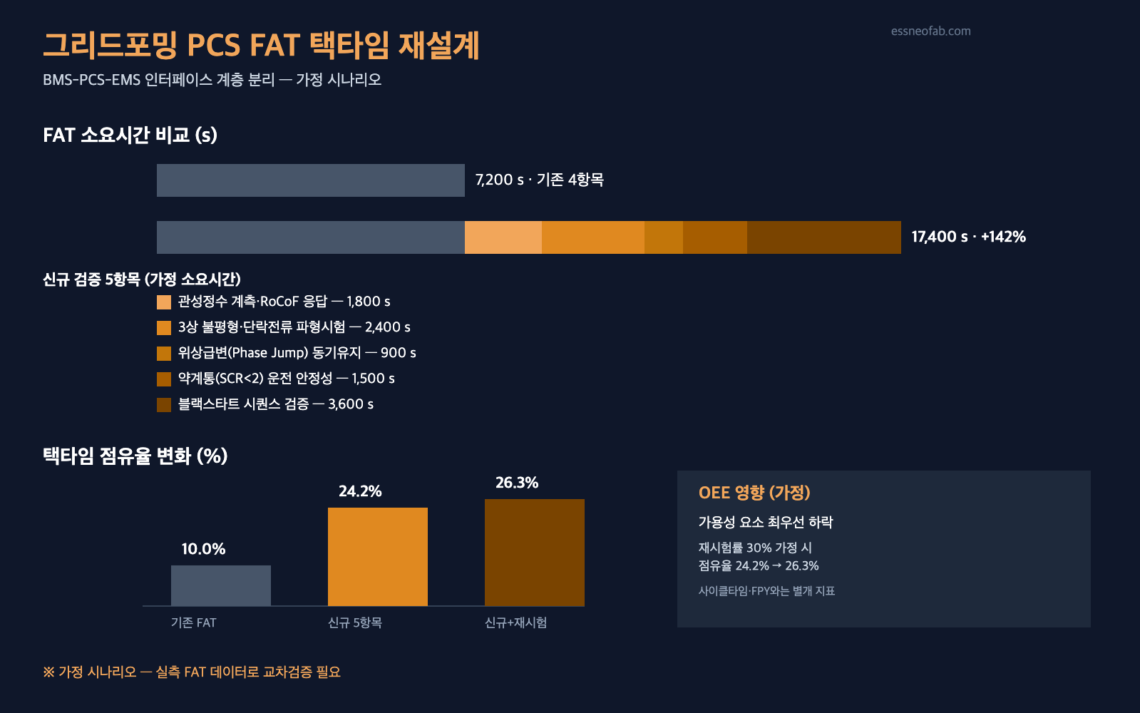
As grid-forming (GFM) inverter performance requirements become mandatory starting with long-duration BESS (Battery Energy Storage System) in the centralized-contract market scheduled for commercial operation in December 2027, five new verification stages are added to PCS (Power Conversion System) manufacturers' Factory Acceptance Test (FAT) lines. In an assumed-scenario calculation, per-unit FAT time increases by approximately 142% over the existing baseline, pushing the takt-time share from the 10% range to the 24% range, and if retests recur, the Availability factor of OEE (Overall Equipment Effectiveness) is the first to be shaken. At the same time, a design challenge emerges: a layer separation is needed between the grid-forming control loop, which requires sub-cycle…
You May Also Like
SK On’s Dual-Site ESS Production Bases — Where Fixed Contracts and Variable Bidding Split Takt Time Design
When the Station Block Grows to 62 MWh, What Actually Shrinks Is Commissioning Labor, Not Cell Count
128 MW of Distribution-Grid ESS Volume Allocated — Can the Battery Pack Assembly Line Absorb the Takt Time?