-
Introducing Robotic Automation Equipment — Where Does the Interface with Line Takt Time Break Down
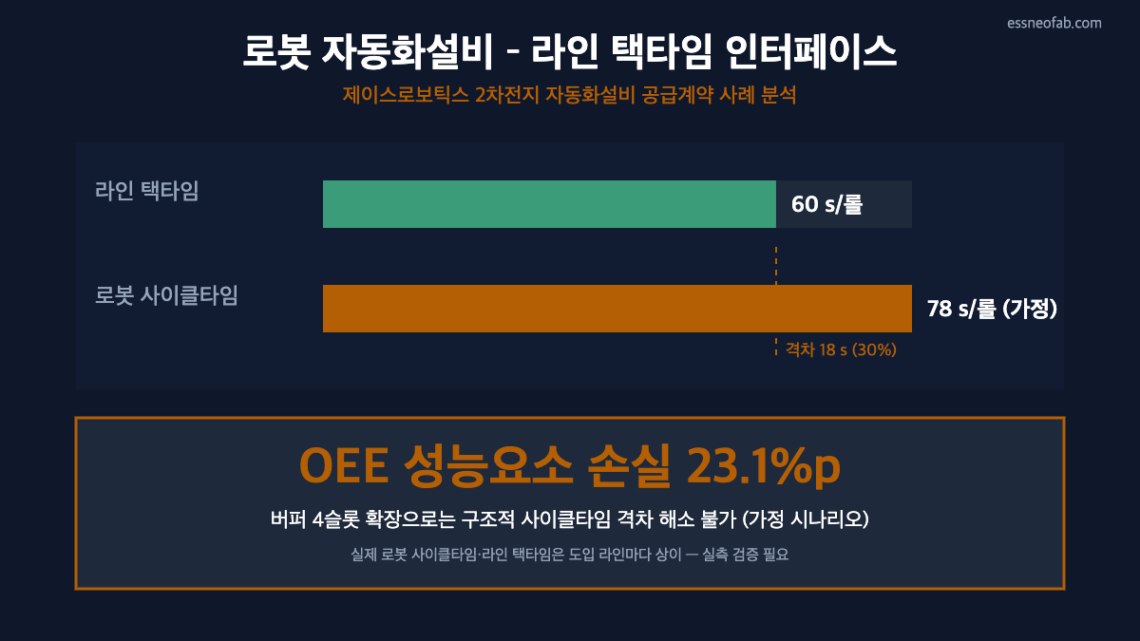
The supply contract disclosed by JS Robotics on September 2, 2026, worth roughly KRW 33.26 billion, for battery-manufacturing robotic automation equipment brings renewed attention to the Cycle Time-Takt Time gap that arises the moment new robotic equipment is connected to an existing R2R (Roll-to-Roll) line. This article calculates an assumed scenario in which one cycle of robotic automation equipment exceeds the line takt time, distinguishing the range of variation that buffer accumulation design can absorb from the structural gap it cannot. The analysis concludes that buffers absorb only micro-stop-level variation, and that a structural gap where the robot's own cycle time exceeds takt time translates directly into OEE performance-factor loss,…
You May Also Like
Formation Channel Sizing Read from a Cell Assembly Equipment FAT — How 1 Second of Takt Time Moves 3,350 Channels
Don’t Subtract Breakdowns When Calculating Takt Time — Takt Time vs. Cycle Time vs. Lead Time
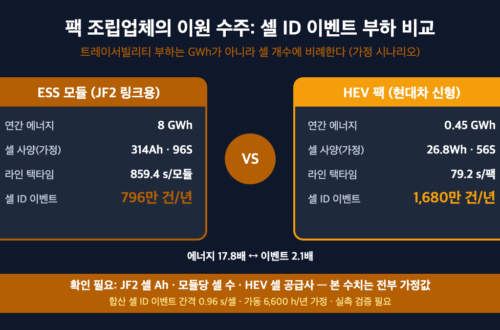
Sebang Lithium Battery’s Simultaneous HEV Pack and ESS Module Orders — Analyzing the Cell-Inbound Interface and Cell-ID Traceability Load
-
Between the Continuous Solid-Electrolyte Process and the Assembly Line: How Should the Buffer Interface Be Designed?
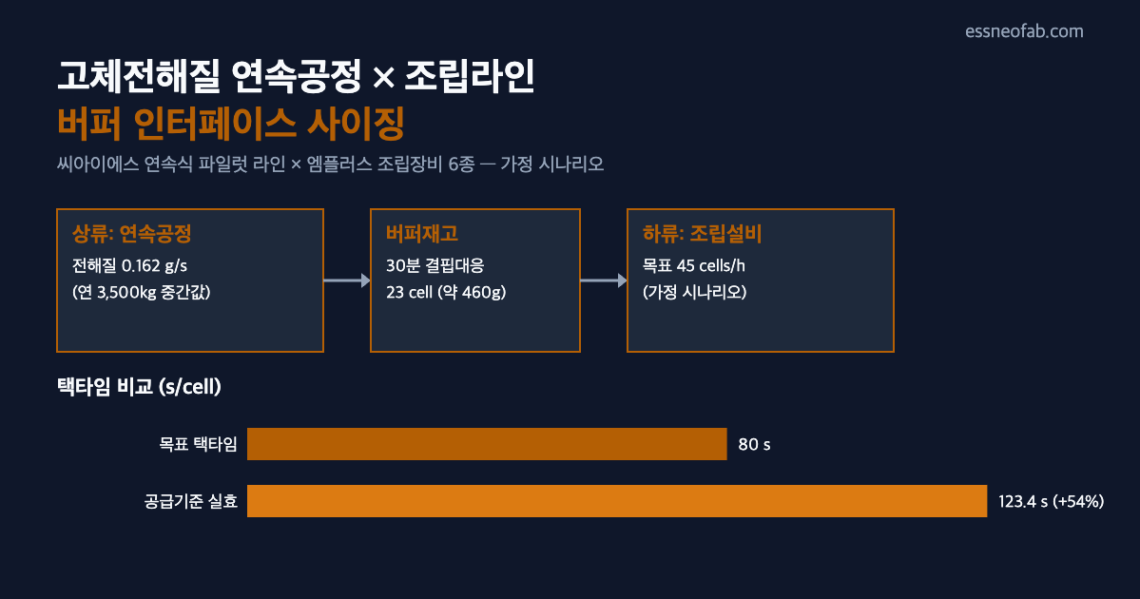
CIS's continuous-process pilot line for sulfide-based solid electrolyte at its Daegu Plant 3 (2–5 t/year, expanded from the existing batch process's 840 kg) and M Plus's order for six types of all-solid-state battery assembly equipment (targeting development/fabrication completion by end-2026) reveal a textbook interface problem: the production capacities of the upstream materials process and the downstream assembly process are not scaled up on the same timeline. This article estimates, as an assumed scenario, the buffer stock and takt-time loss required between these two processes, to quantitatively pin down why the materials-assembly interface design is a leading variable for the line's overall OEE (Overall Equipment Effectiveness). The downstream assembly equipment's target…
You May Also Like
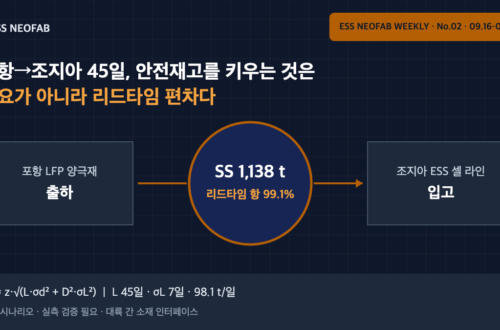
45 Days from Pohang to Georgia — Safety Stock at an Intercontinental Cathode Interface Is Driven by Lead-Time Variability, Not Demand
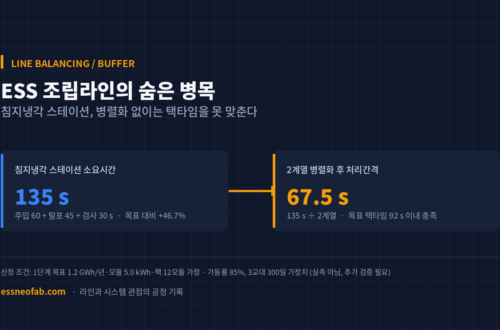
ESS Assembly Line: Why Immersion Cooling Becomes a Bottleneck
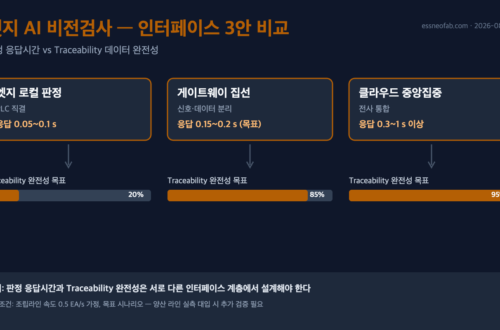
Edge AI Vision Inspection and Battery-Pack Leak Testing: How Gateway Aggregation Affects Traceability Completeness