-
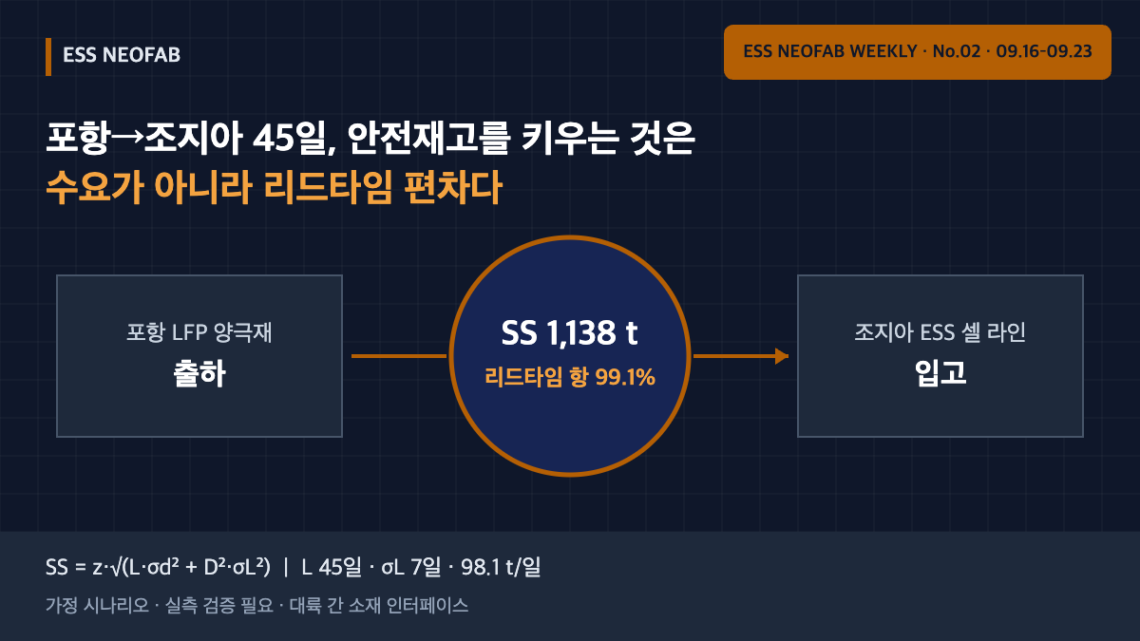
45 Days from Pohang to Georgia — Safety Stock at an Intercontinental Cathode Interface Is Driven by Lead-Time Variability, Not Demand
SK On’s roughly KRW 1.0742 trillion LFP cathode contract with POSCO Future M (2027–2029, for its Georgia ESS cell line) puts a continent and an ocean crossing between the materials and cell plants. Under an assumed scenario (45-day lead time, σL 7 days, 98.1 t/day), safety stock in front of the Georgia cell line is about 1,138 t, 99.1% of which comes from the lead-time variability term. Halving lead-time variability cuts it to 577 t; halving demand variability leaves it at 1,136 t. At an intercontinental interface, the management variable is the spread of arrival times, not the demand forecast.
You May Also Like
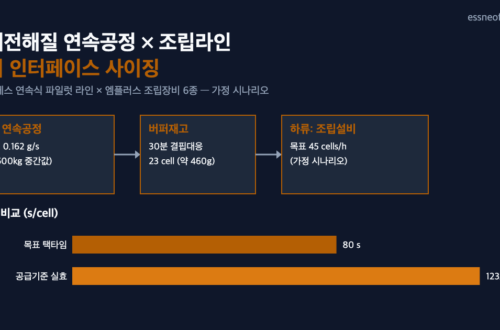
Between the Continuous Solid-Electrolyte Process and the Assembly Line: How Should the Buffer Interface Be Designed?
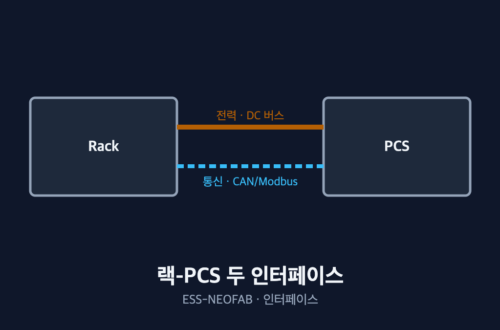
Between the Battery Rack and the PCS: Two Points Where the Interface Diverges
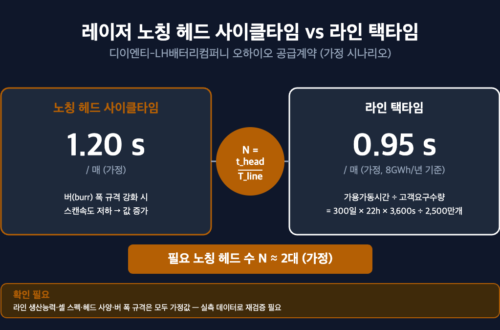
The Interface Between Laser Notching Cycle Time and Line Takt Time — The Head-Count Sizing Problem Revealed by DI ENT’s Ohio Supply Contract
-
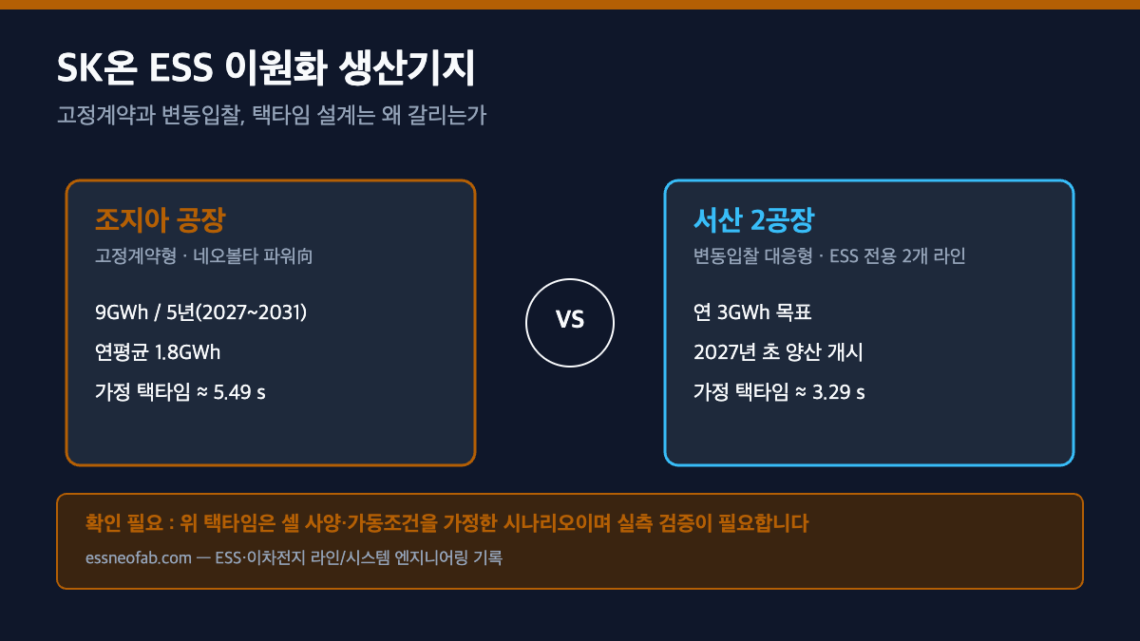
SK On’s Dual-Site ESS Production Bases — Where Fixed Contracts and Variable Bidding Split Takt Time Design
As of the second half of 2026, SK On is simultaneously pursuing two capacity-allocation efforts that look similar on the surface but differ sharply in character: a long-term fixed-contract ESS supply obligation from its Georgia, USA plant (9 GWh over 2027-2031 to NeoVolta Power), and a variable-bid-responsive capacity build at its domestic Seosan Plant 2, where 2 of 4 production lines are being converted to dedicated ESS-LFP pouch-cell lines. Both sites represent "ESS expansion" on paper, but the takt time (Takt Time) character each demands is different. Using publicly disclosed contract and conversion volumes, this article constructs an assumed scenario showing quantitatively that the fixed-contract site is better served by…
You May Also Like
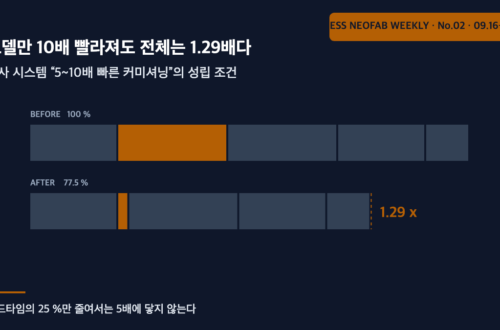
Even a tenfold faster model moves the whole by 1.29x — what “5 to 10 times faster commissioning” actually requires
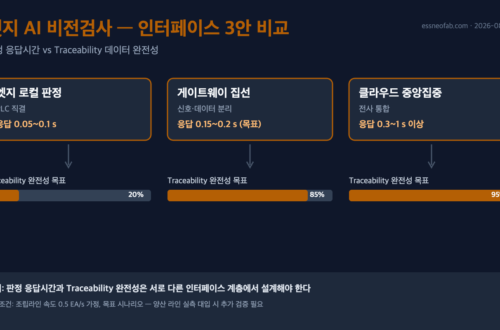
Edge AI Vision Inspection and Battery-Pack Leak Testing: How Gateway Aggregation Affects Traceability Completeness
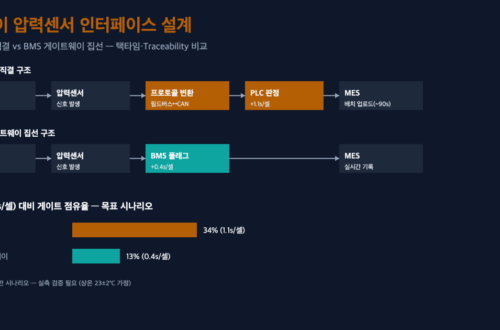
46-Phi Cylindrical Cell Line Conversion: The Pressure-Sensor–BMS Interface Determines Takt Time