Traceability
This category covers the systemic requirements a manufacturing stage must satisfy for ESS to function within the clean-energy industry.
-
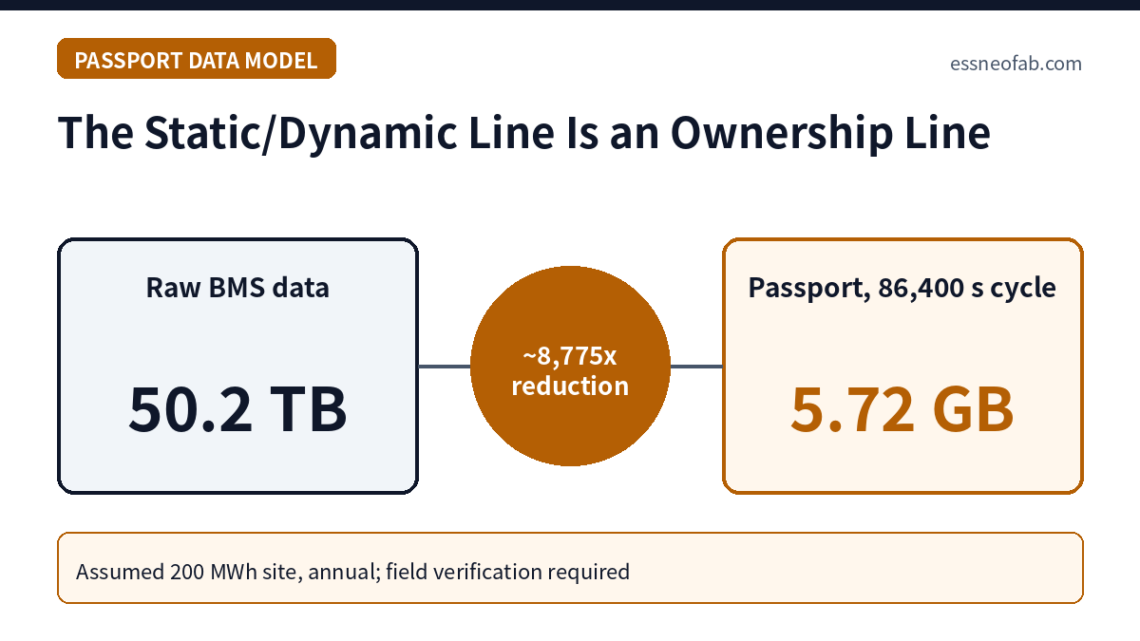
Battery Passport Static vs Dynamic Data: Ownership and Update Interfaces Across ESS Layers
The split between "static data" and "dynamic data" in the battery passport data model looks like a classification of data characteristics, but mapped onto ESS system layers it functions as the boundary where data ownership and legal responsibility diverge. Regulation (EU) 2023/1542 places responsibility for the accuracy and up-to-dateness of passport information on the operator placing the battery on the market (usually the pack or system integrator), yet the 16 dynamic attributes (mandatory for the stationary category) are generated after placing on the market in the BMS and EMS run by the asset owner, and the BMS read access right under Article 14 is granted to the purchaser, not the…
You May Also Like
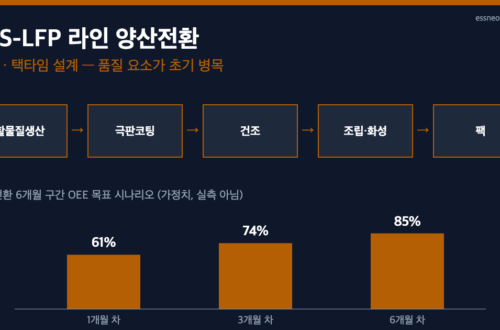
The Equipment Maker’s Line-Ownership Shift — OEE and Takt-Time Design During the ESS-LFP New-Line Mass-Production Ramp-Up
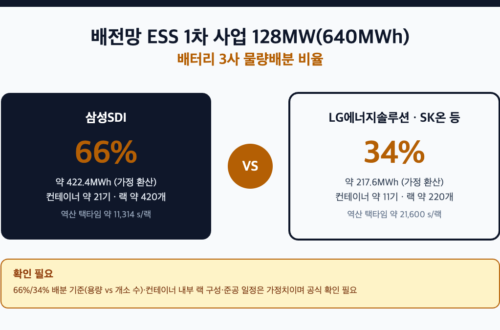
128 MW of Distribution-Grid ESS Volume Allocated — Can the Battery Pack Assembly Line Absorb the Takt Time?
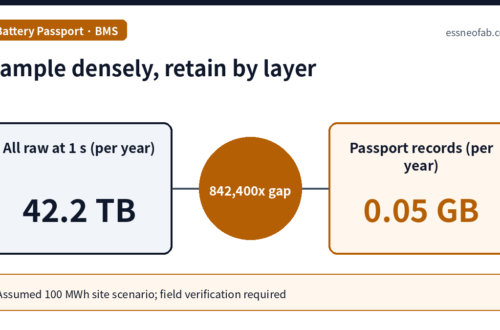
Linking BMS Operating History to the Battery Passport: Why Sampling and Retention Must Be Separated
-
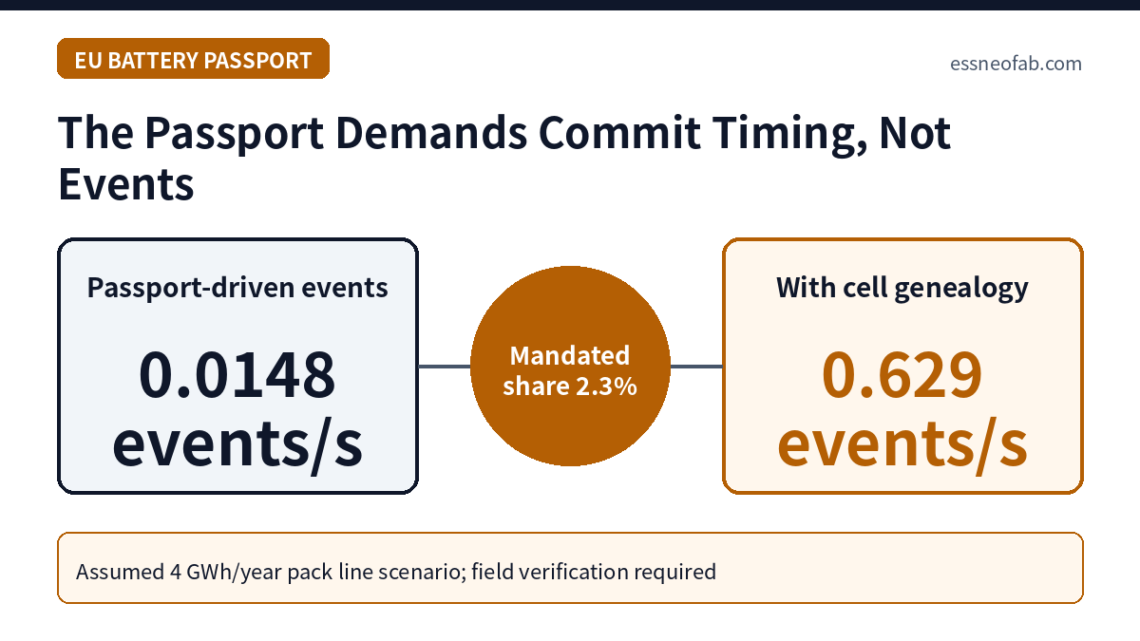
EU Battery Passport 2027: Which Station on an ESS Pack Line Commits What
Under Article 77 of the EU Batteries Regulation (Regulation (EU) 2023/1542), industrial batteries above 2 kWh require a battery passport from 18 February 2027, and as of September 2026 no legislative proposal changing that date has been identified. Breaking down the passport data attribute list (the version aligned with DIN DKE SPEC 99100) for the stationary ESS category shows that, of 80 mandatory attributes, only 5 static attributes must be recorded on the line at individual-battery level; the remaining static attributes are fixed once at battery-model level. In an assumed scenario (4 GWh/year pack line, pack takt time 338.6 s), passport-driven line capture events amount to 5 per pack (0.0148…
You May Also Like
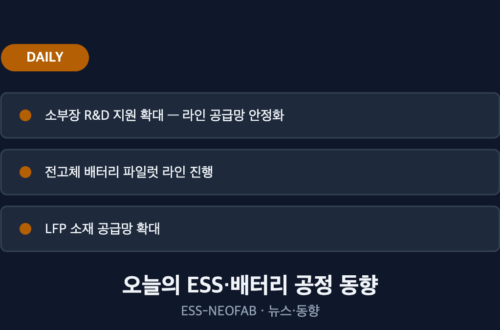
Today’s ESS/Battery Process Trends — Expanded Support for Materials/Parts/Equipment Lines, Solid-State/LFP Pilot Lines Launch (2026.08.07)
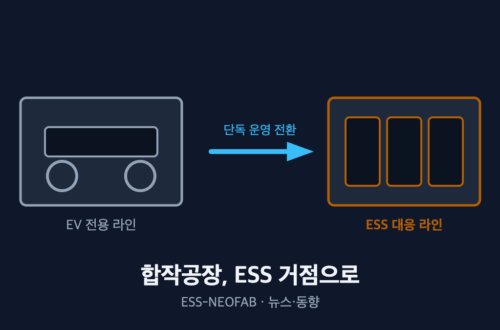
Samsung SDI Turns Its GM Joint-Venture Plant Into an ESS Hub
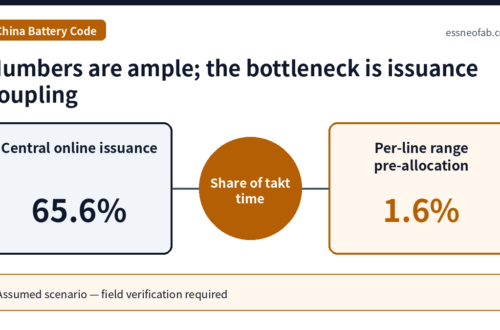
China’s GB/T 34014 24-Character Battery Code: How Code Structure Fixes Issuance Timing and Authority on the Line