본문으로 바로가기
Ess-neofab

A line- and system-level record of ESS and secondary-battery manufacturing processes

  • 한국어
  • English
  • Home
  • Process
  • System
  • Interface
  • Traceability
  • News & Trends
  • About
  • Contact
  • 한국어
  • English
  • Home
  • Process
  • System
  • Interface
  • Traceability
  • News & Trends
  • About
  • Contact

카테고리

  • Interface (28)
  • News & Trends (20)
  • Process (32)
  • System (31)
  • Traceability (22)

최근 글

  • Five million ACC cells equal 2.7 to 3.6 months of nameplate outputOctober 15, 2026
  • A 160 MW battery’s six-week commissioning has two baselinesOctober 8, 2026
  • Two Cycles a Day Take 106.8 % of a Day, and the Retention Tier Shifts Cell Volume by 1.47 GWhOctober 1, 2026
  • Battwoo’s Second-Life EV Batteries — When an 80 % Acceptance Threshold Overlaps the Retirement Distribution, Incoming Screening Becomes the BottleneckSeptember 30, 2026
  • US storage set an energy record in Q2 as installed power fell 7%September 29, 2026
  • CATL Starts Trial Production in Debrecen — The Digits of the Defect-Rate Target, Not the Equipment, Set the Length of a Trial RunSeptember 29, 2026
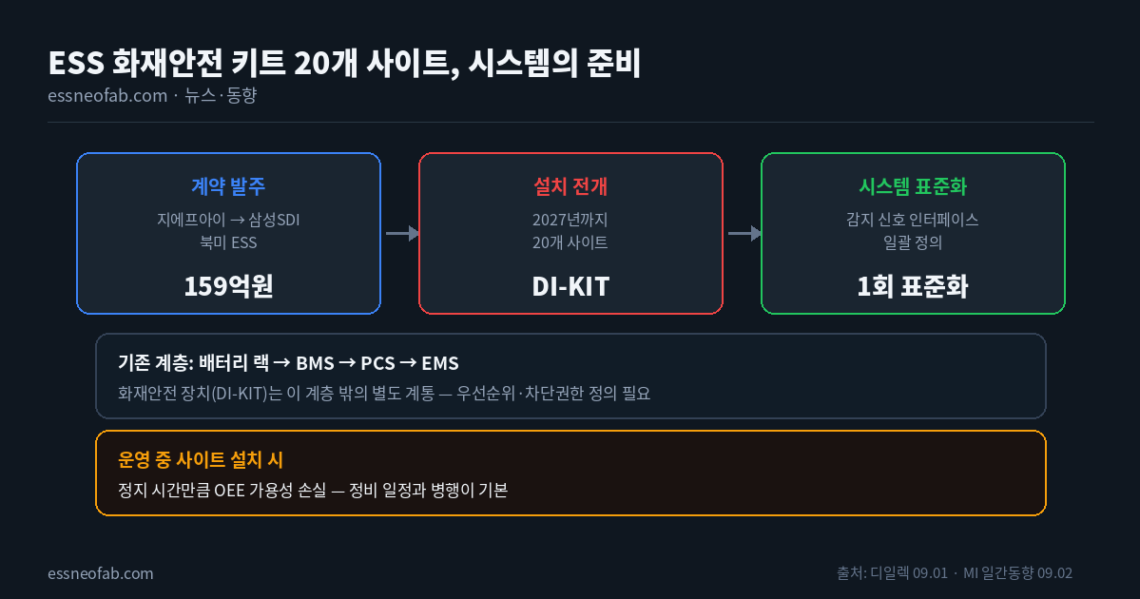
  • GFI DI-KIT ESS 화재안전 키트 20개 사이트 계약·설치·인터페이스 표준화 흐름도
    News & Trends

    ESS Fire-Safety Kits Across 20 Sites — What the System Must Prepare

    September 2, 2026 /

    GFI has won a KRW 15.9 billion contract for Samsung SDI's North American ESS fire-safety solution. It will install DI-KIT at 20 sites by 2027. This contract shows that fire-safety devices are being ordered not as a cell-level option but as a site-level system line item. On the operations side, what is needed first is defining the installation sequence across the 20 sites and the interface with existing systems. 1. What Happened To state the conclusion first: ESS fire-safety solutions have moved into a phase of being applied in bulk across multiple sites. Until now, the general approach for North American ESS was to address site-specific safety requirements individually. Bundling…

    read more
    ESS-neofab 2 Comments

    You May Also Like

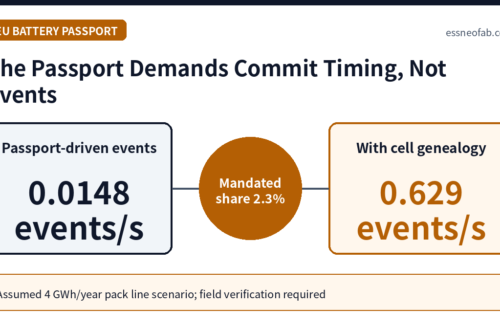
    The Passport Demands Commit Timing, Not Events

    EU Battery Passport 2027: Which Station on an ESS Pack Line Commits What

    July 1, 2026

    LS Electric Ships First Units of Next-Gen ESS PCS “G2” — Is Liquid Cooling the Answer?

    August 10, 2026

    “Capturing the U.S. ESS Market” — K-Battery Supply Chain’s Wave of Localization: What’s Going Where

    August 11, 2026
  • ESS 제조·설치 공간 전경
    News & Trends

    NFPA 855 (2026 Edition) Revision: ESS Safety Standards Expand From the Cell to the Entire System

    August 5, 2026 /

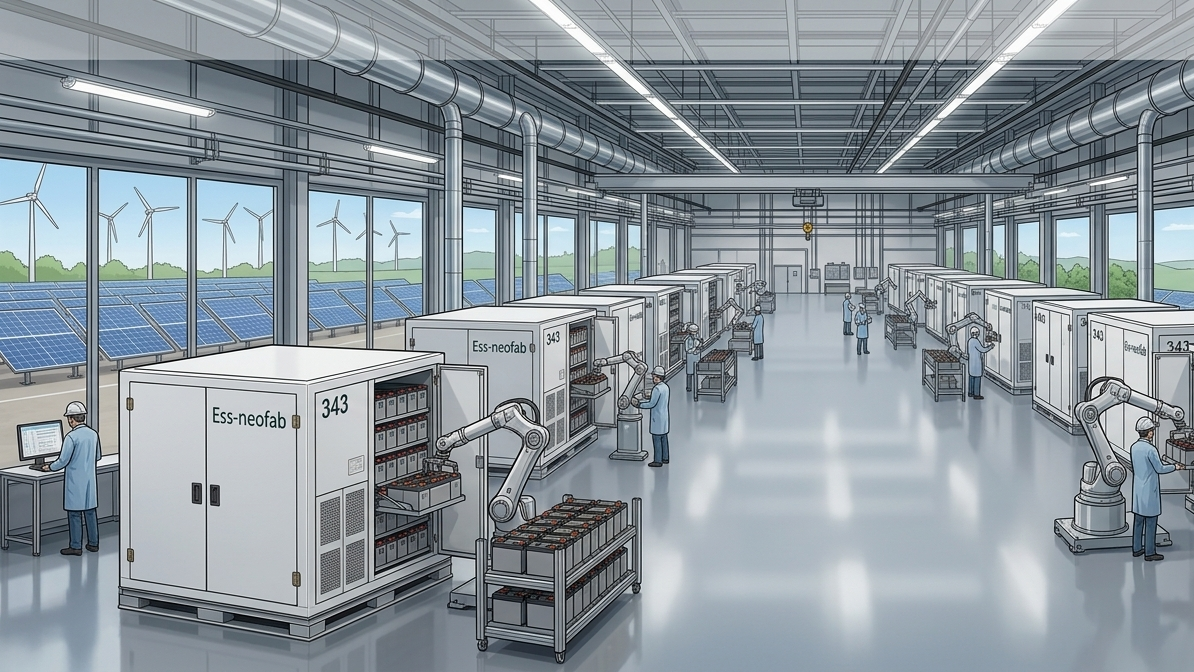
    Since August 2017, 21 lithium-ion battery ESS fires have occurred in Korea alone, but only a portion of these incidents can be explained by battery cell defects alone. In many cases, the direct cause of fire spread was equipment outside the battery itself — the Balance of System (BOS) — such as missing surge arresters, defective wiring installation, or cooling/HVAC failures. With the release of the 2026 edition of NFPA 855, the National Fire Protection Association (NFPA) has shifted its evaluation criterion from "whether an internal cell defect exists" to "whether propagation to adjacent cells, modules, or racks is blocked." NFPA 855 is the Standard for the Installation of Stationary…

    read more
    ESS-neofab 1 Comment

    You May Also Like

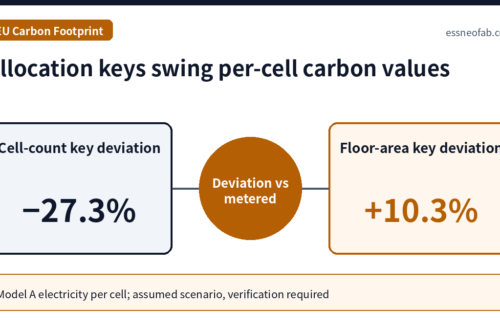
    Allocation keys swing per-cell carbon values

    EU Battery Carbon Footprint Methodology Still Pending: How Line Energy Metering Resolution and Allocation Choice Shift Per-Cell Values
    July 8, 2026

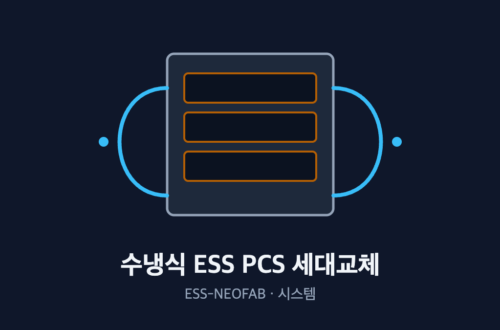
    LS Electric Ships First Units of Next-Gen ESS PCS “G2” — Is Liquid Cooling the Answer?
    August 10, 2026

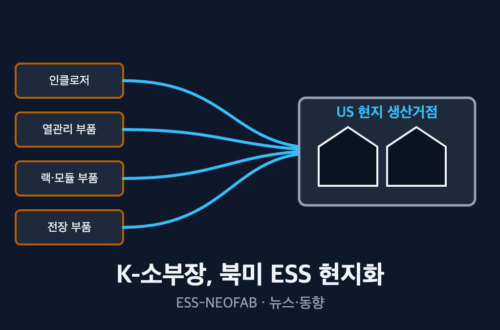
    “Capturing the U.S. ESS Market” — K-Battery Supply Chain’s Wave of Localization: What’s Going Where
    August 11, 2026
© 2026 Ess-neofab · A line- and system-level record of ESS and secondary-battery manufacturing processes
  • About
  • Contact
  • Privacy Policy
  • Disclaimer
Ashe Theme by WP Royal.