-
FAT and SAT Differ in More Than Location — How IEC 62381:2024 Defines the Tests
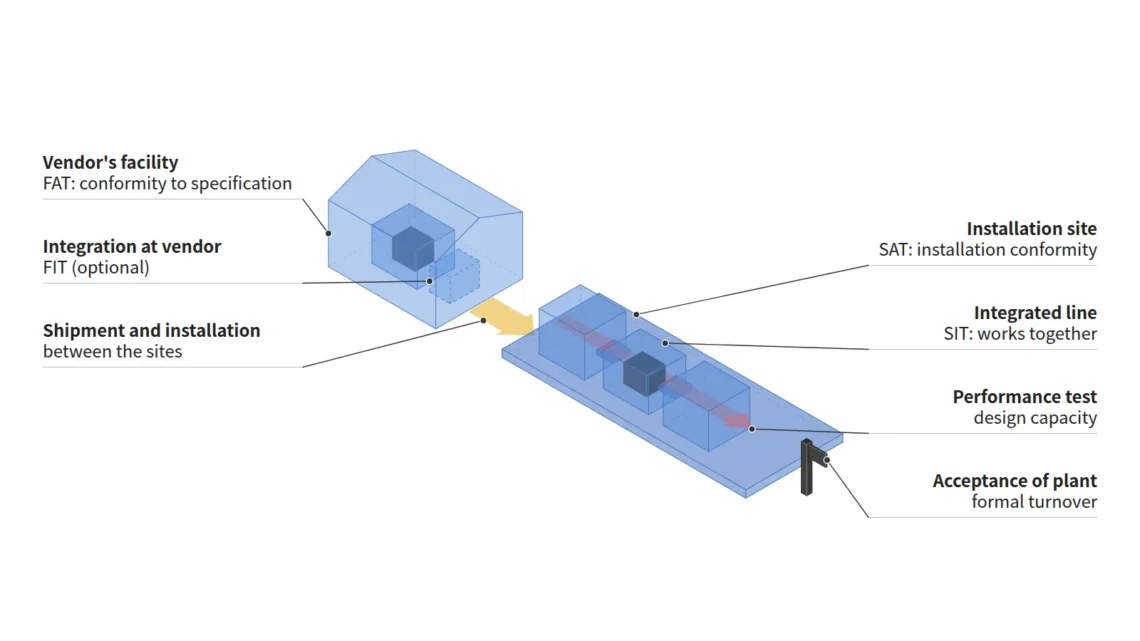
IEC 62381:2024 defines the factory acceptance test (FAT) as an activity to demonstrate that the automation system is in accordance with the specification, typically conducted at the vendor's facility, and the site acceptance test (SAT) as an activity to demonstrate, at the site of the installation, that the installation is in accordance with the applicable standards, codes, specifications, and installation instructions. The two tests differ not only in location but also in what they demonstrate, and the 2024 edition adds the optional factory integration test (FIT) and defines requirements and checklists for the FAT, FIT, SAT, and site integration test (SIT). Loop checks and commissioning lie outside the scope of…
You May Also Like

Pylontech’s 588 Ah and 601 Ah LFP Cells Enter Mass Production — Why Energy-Weighted Availability Stays the Same When the Cell Count Halves
StarPlus Energy’s Indiana Plant — The Blended-OEE Illusion Created by Sequential NCA/LFP Commissioning
LFP High-Compaction-Density Conversion and the Calendering Interface: How Nip Pressure and Line Speed Affect Takt Time
-
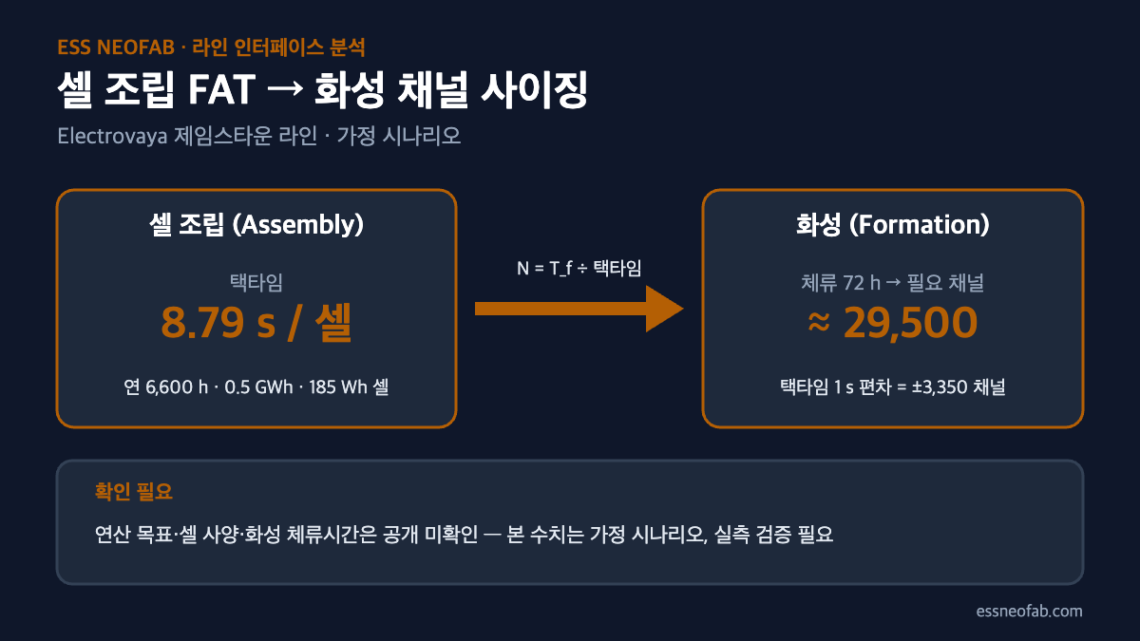
Formation Channel Sizing Read from a Cell Assembly Equipment FAT — How 1 Second of Takt Time Moves 3,350 Channels
Electrovaya announced that on August 24, 2026, it began a Factory Acceptance Test (FAT) of automated cell-assembly and Formation equipment for its Jamestown, New York cell plant, to be followed after completion in early October by shipping and a Site Acceptance Test (SAT). This article reinterprets that FAT not as “equipment inspection” but as a sizing verification that absorbs, through the number of Formation channels, the takt-time mismatch between cell assembly — which moves at a second-by-second cadence — and Formation — which holds cells for hours at a time. Under an assumed scenario (0.5 GWh annual output, 185 Wh cells, 6,600 h/yr of operation, 72 h Formation dwell time),…
You May Also Like
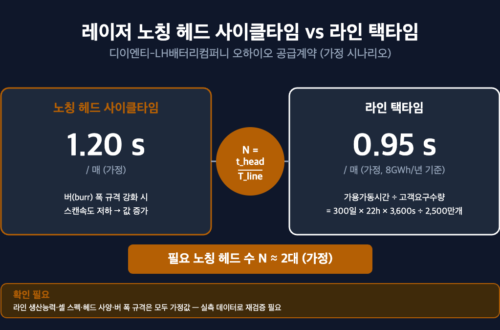
The Interface Between Laser Notching Cycle Time and Line Takt Time — The Head-Count Sizing Problem Revealed by DI ENT’s Ohio Supply Contract
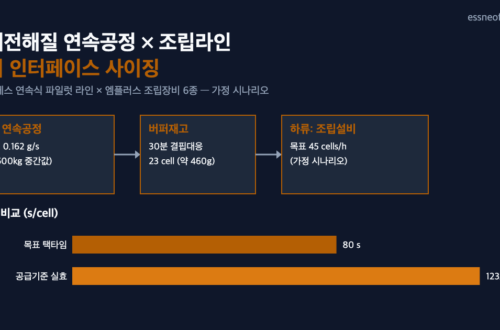
Between the Continuous Solid-Electrolyte Process and the Assembly Line: How Should the Buffer Interface Be Designed?
LFP High-Compaction-Density Conversion and the Calendering Interface: How Nip Pressure and Line Speed Affect Takt Time