-
Grid-Forming PCS Mandate Redesigns FAT Takt Time and the BMS-PCS-EMS Interface
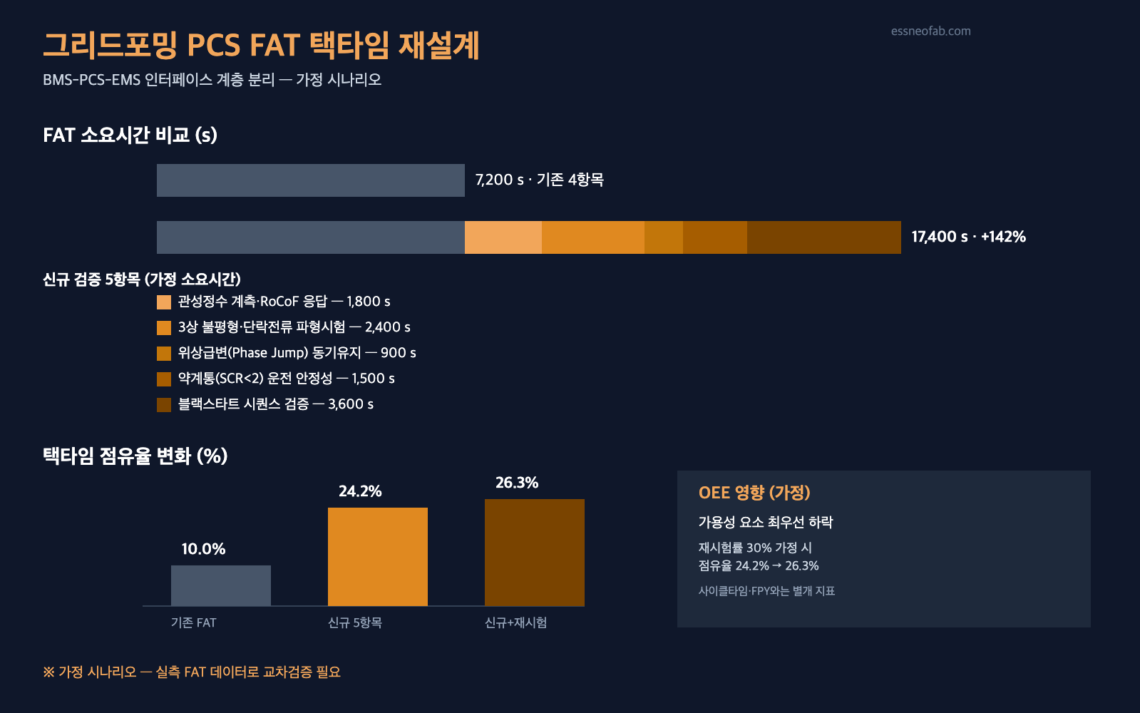
As grid-forming (GFM) inverter performance requirements become mandatory starting with long-duration BESS (Battery Energy Storage System) in the centralized-contract market scheduled for commercial operation in December 2027, five new verification stages are added to PCS (Power Conversion System) manufacturers' Factory Acceptance Test (FAT) lines. In an assumed-scenario calculation, per-unit FAT time increases by approximately 142% over the existing baseline, pushing the takt-time share from the 10% range to the 24% range, and if retests recur, the Availability factor of OEE (Overall Equipment Effectiveness) is the first to be shaken. At the same time, a design challenge emerges: a layer separation is needed between the grid-forming control loop, which requires sub-cycle…
You May Also Like
The 2026 Edition of NFPA 855 Changes ESS Rack Design and Traceability Documentation at the Same Time
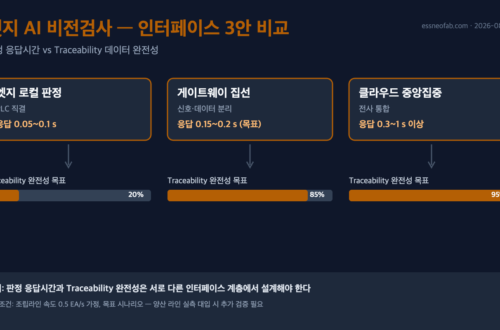
Edge AI Vision Inspection and Battery-Pack Leak Testing: How Gateway Aggregation Affects Traceability Completeness
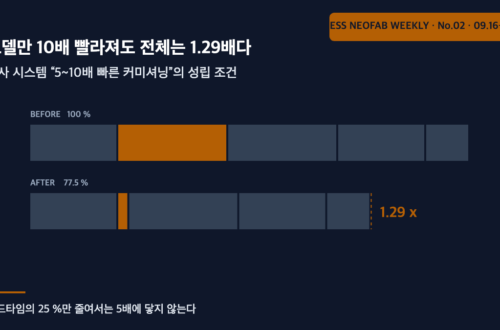
Even a tenfold faster model moves the whole by 1.29x — what “5 to 10 times faster commissioning” actually requires
-
Long-Duration ESS Interface Design in the Era of Power-Grid Saturation
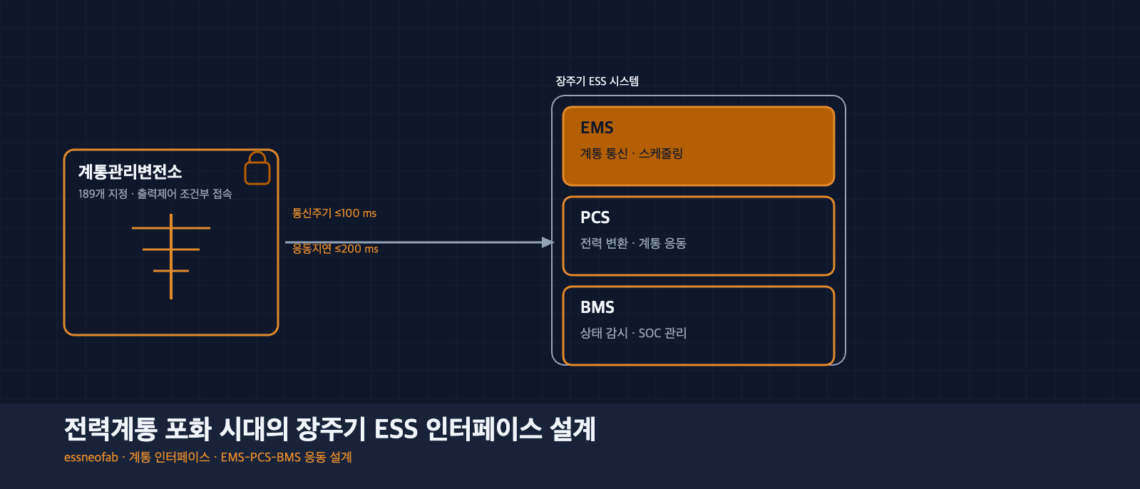
As 189 grid-management substations nationwide have, starting in 2026, been restricting new interconnection of renewable energy and large-scale demand through conditional curtailment, long-duration ESS (Energy Storage System) is shifting from a simple generation-consumption buffer into an essential variable in grid interface design. Korea's Ministry of Trade, Industry and Energy's centralized-contract market has presented a target of securing approximately 0.5 GW annually from 2026 to 2029, and a cumulative 21.5 GW by 2038, of long-duration ESS, which translates directly into standardization pressure on the communication and response specifications across the three-tier BMS-PCS-EMS hierarchy. In the current structure, where grid-interconnection queue information is not disclosed, designing margin into an individual ESS system's…
You May Also Like
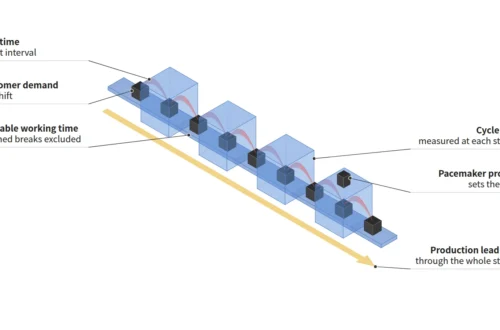
Don’t Subtract Breakdowns When Calculating Takt Time — Takt Time vs. Cycle Time vs. Lead Time
Even a tenfold faster model moves the whole by 1.29x — what “5 to 10 times faster commissioning” actually requires
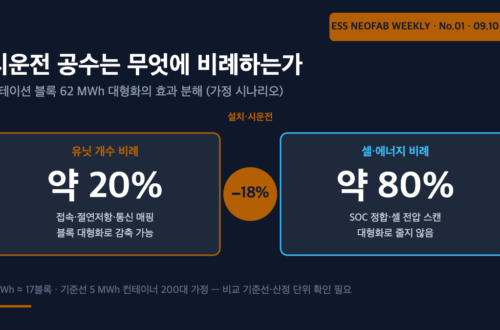
When the Station Block Grows to 62 MWh, What Actually Shrinks Is Commissioning Labor, Not Cell Count
-
Battery Passport Static vs Dynamic Data: Ownership and Update Interfaces Across ESS Layers
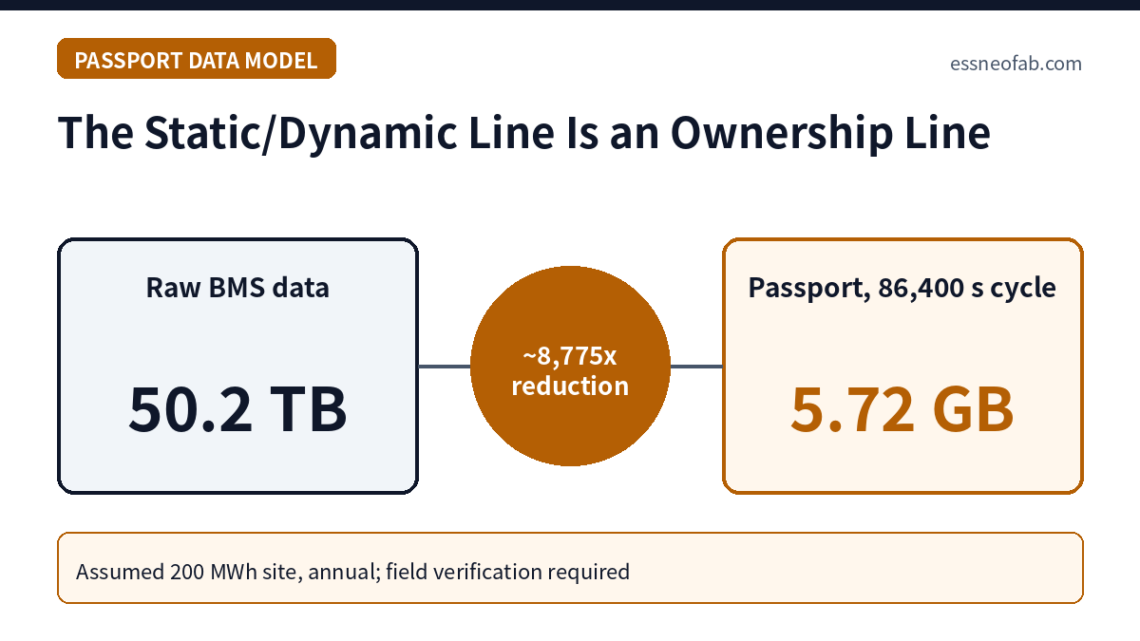
The split between "static data" and "dynamic data" in the battery passport data model looks like a classification of data characteristics, but mapped onto ESS system layers it functions as the boundary where data ownership and legal responsibility diverge. Regulation (EU) 2023/1542 places responsibility for the accuracy and up-to-dateness of passport information on the operator placing the battery on the market (usually the pack or system integrator), yet the 16 dynamic attributes (mandatory for the stationary category) are generated after placing on the market in the BMS and EMS run by the asset owner, and the BMS read access right under Article 14 is granted to the purchaser, not the…
You May Also Like
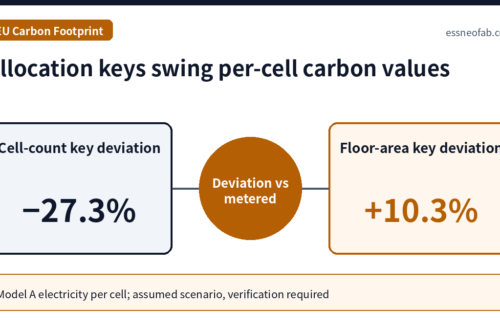
EU Battery Carbon Footprint Methodology Still Pending: How Line Energy Metering Resolution and Allocation Choice Shift Per-Cell Values
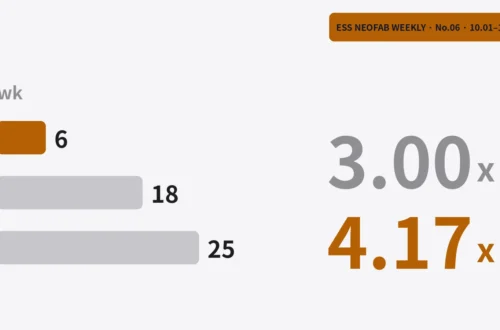
A 160 MW battery’s six-week commissioning has two baselines
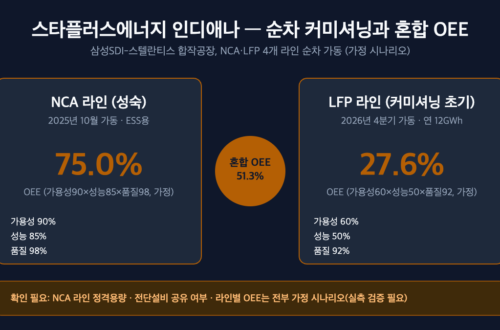
StarPlus Energy’s Indiana Plant — The Blended-OEE Illusion Created by Sequential NCA/LFP Commissioning