-
Converting EV Lines to ESS: Where Does OEE Break Down?
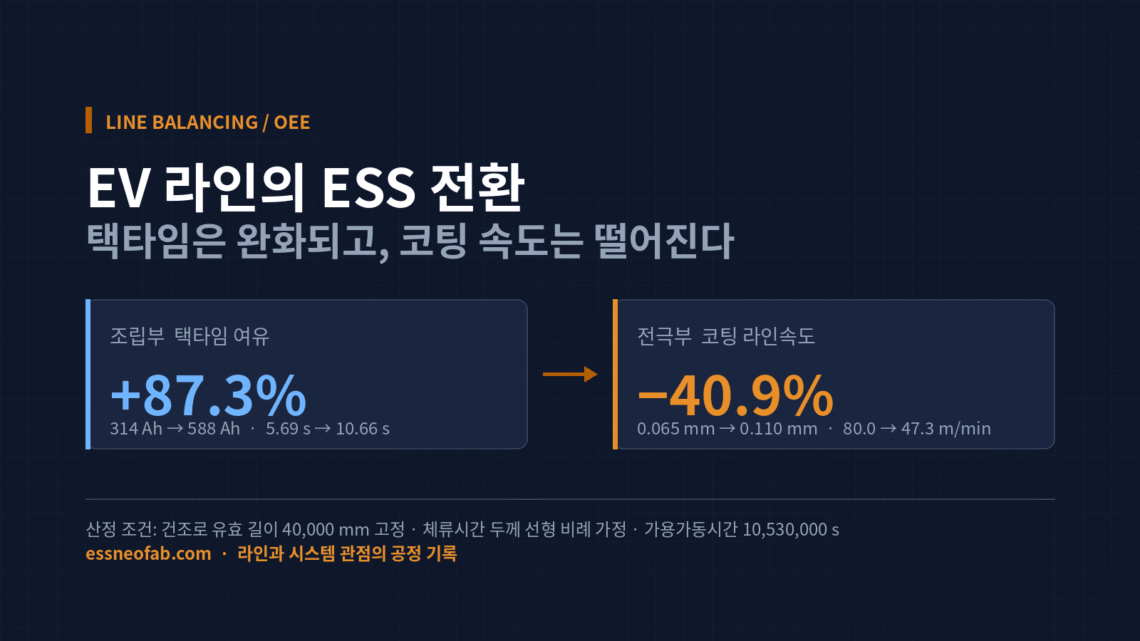
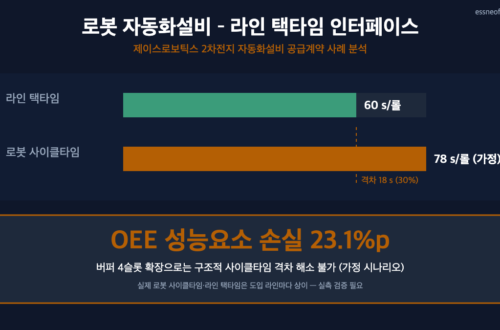
When converting an EV cell line for ESS use, retrofit effort and budget tend to concentrate on the assembly process. However, when a thick-film electrode and a large prismatic cell format are applied simultaneously while the drying-oven length remains fixed, the takt-time margin in the assembly section increases by 87.3% while the coating-section line speed drops by 40.9%. The conversion bottleneck shifts from assembly to the electrode section, and CAPEX priority should be reallocated accordingly. Furthermore, failing to update the abnormal-cycle-time baseline by part number books up to 36.3 percentage points of phantom performance loss into OEE, causing the improvement organization to chase a loss that does not exist. 1.…
-
Converting EV Lines to ESS: What the H1 Utilization Gap Reveals About Line-Conversion Speed
In H1 2026, utilization rates at the three major domestic battery makers' plants diverged based on how quickly each converted its lines to ESS use amid weak EV demand. LG Energy Solution and Samsung SDI sharply raised utilization through faster conversion and by securing new demand outlets (ESS, BBU), while SK On's utilization actually declined due to delayed conversion. This is not a matter of individual equipment performance, but of the speed of line-level decision-making. This article compares the three companies' utilization changes from a line-reconfiguration perspective. 1. What Happened U.S. EV demand is weak. The three battery makers all faced the same market environment. So why did their utilization…
You May Also Like
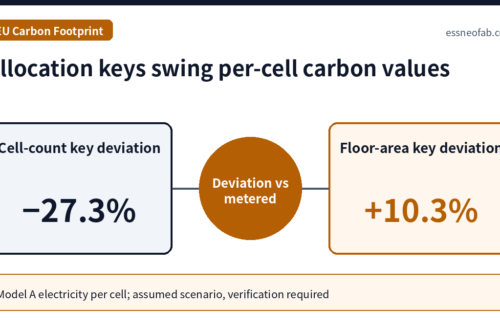
EU Battery Carbon Footprint Methodology Still Pending: How Line Energy Metering Resolution and Allocation Choice Shift Per-Cell Values

Today’s ESS/Battery Process Trends — Expanded Support for Materials/Parts/Equipment Lines, Solid-State/LFP Pilot Lines Launch (2026.08.07)
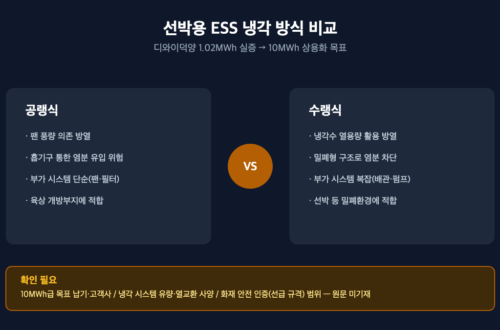
DY Duckyang’s 10 MWh-Class Marine ESS — What the Water-Cooled Demonstration Means for System Design
-
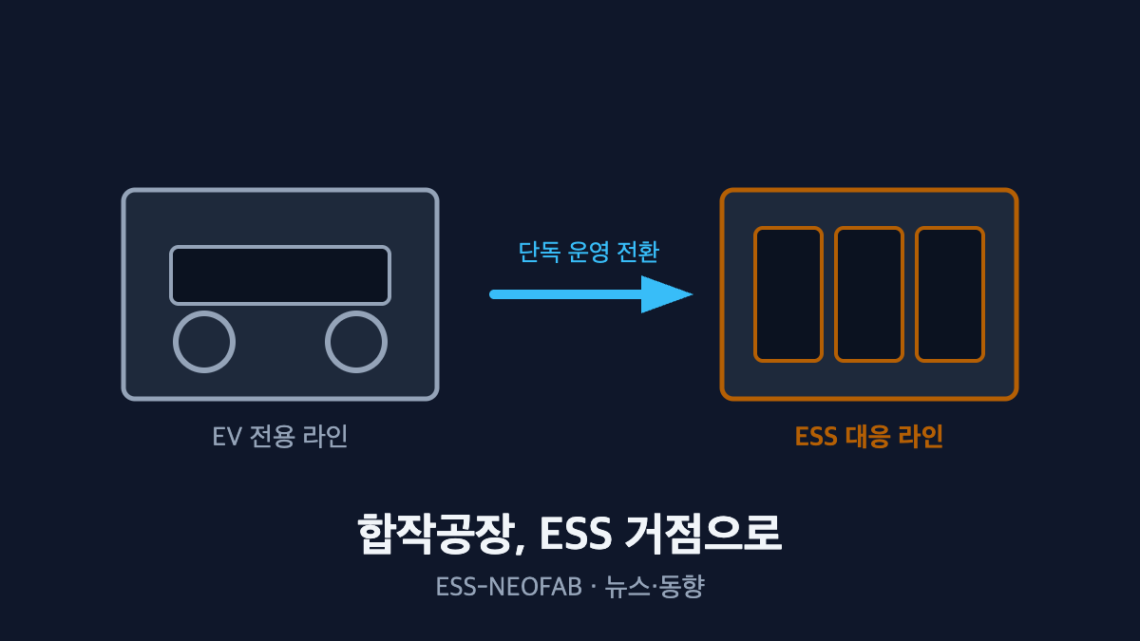
From EV to ESS Use: What Ultium Cells and Cosmos Lab Show About Converting a Line’s Purpose
In summer 2026, cases of cell lines being converted to a different purpose followed one another in North America and Korea. Ultium Cells, the GM–LG Energy Solution joint venture, retooled one EV line at its Spring Hill (Tennessee) plant into an LFP cell line for ESS at a cost of USD 70 million and began production on July 8, 2026, while its Warren (Ohio) plant resumed production of NCMA cells for EVs after a shutdown of about seven months, with about 1,400 workers returning. In the same period, Cosmos Lab raised a KRW 22 billion Series A and is preparing mass production of aqueous zinc-halogen batteries. This article distinguishes “purpose…
-
Samsung SDI Turns Its GM Joint-Venture Plant Into an ESS Hub
On August 11, 2026, Samsung SDI announced that it would acquire GM’s 49.99 % stake in SDI-GM Synergy Cells, its U.S. battery joint venture with GM, converting it into a wholly owned entity. The subject is the 27 GWh per year plant in New Carlisle (Indiana) (with an expansion plan of up to 36 GWh), and Samsung SDI intends to raise its U.S. ESS battery production capacity to about 30 GWh by the end of 2026. This article uses an assumed scenario to calculate how plant load is redistributed when the same GWh is filled with ESS cells instead of EV cells. Switching to ESS cells with higher energy per…
You May Also Like
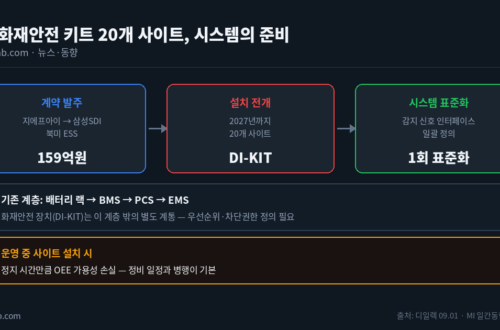
K-BATTERY SHOW 2026 Fire Safety Seminar: What to Look for in a Line-Level Fire Response System
Converting EV Lines to ESS: What the H1 Utilization Gap Reveals About Line-Conversion Speed
EU Battery Carbon Footprint Methodology Still Pending: How Line Energy Metering Resolution and Allocation Choice Shift Per-Cell Values