-
Pylontech’s 588 Ah and 601 Ah LFP Cells Enter Mass Production — Why Energy-Weighted Availability Stays the Same When the Cell Count Halves
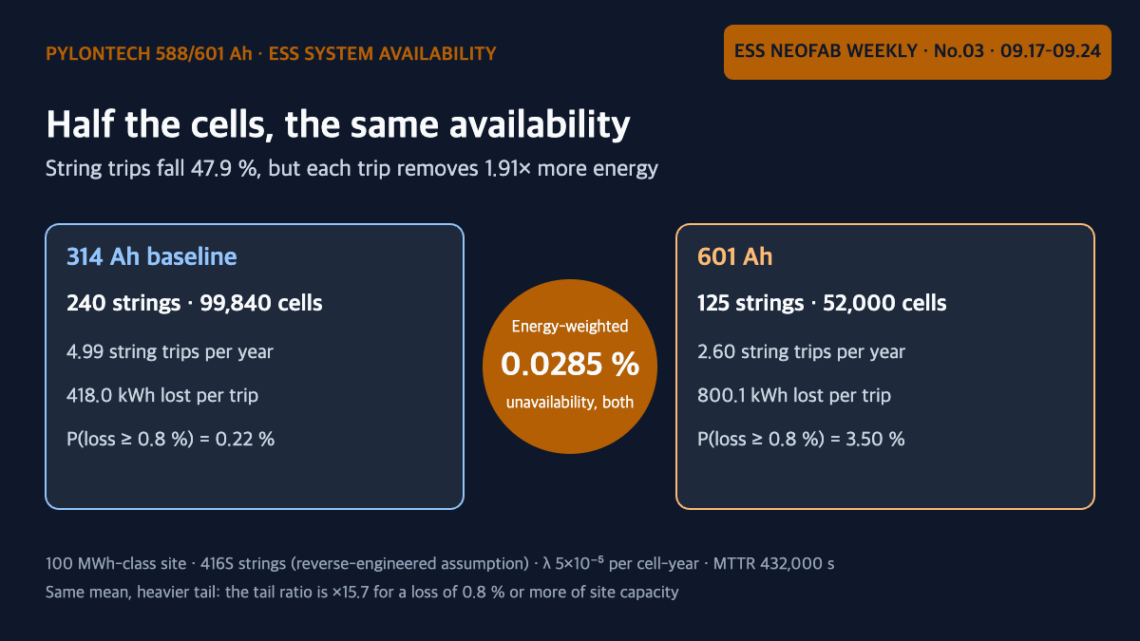
On September 21, 2026, Pylontech began mass production of 588 Ah and 601 Ah prismatic LFP ESS cells at its Hefei base and named "fewer cells and interconnections" as a benefit of the larger format¹. Under a reverse-engineered assumption of 416S strings, a 100 MWh-class site drops from 99,840 cells to 52,000 cells (−47.9 %), and string trips caused by cell-count-proportional faults fall at the same rate. Each trip, however, now removes 800.1 kWh instead of 418.0 kWh (1.91×), so the energy-weighted unavailability stays at 0.0285 % regardless of cell capacity. The mean is unchanged and only the tail gets heavier: the probability of losing 0.8 % or more of…
You May Also Like
Between the Continuous Solid-Electrolyte Process and the Assembly Line: How Should the Buffer Interface Be Designed?
Even a tenfold faster model moves the whole by 1.29x — what “5 to 10 times faster commissioning” actually requires
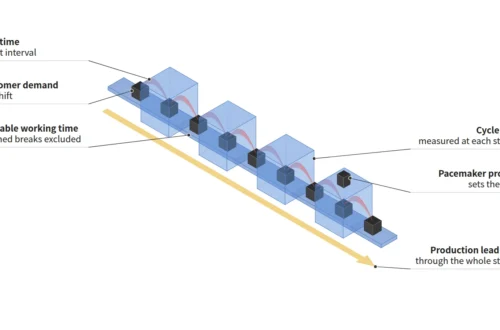
Don’t Subtract Breakdowns When Calculating Takt Time — Takt Time vs. Cycle Time vs. Lead Time
-
Converting EV Lines to ESS: Where Does OEE Break Down?
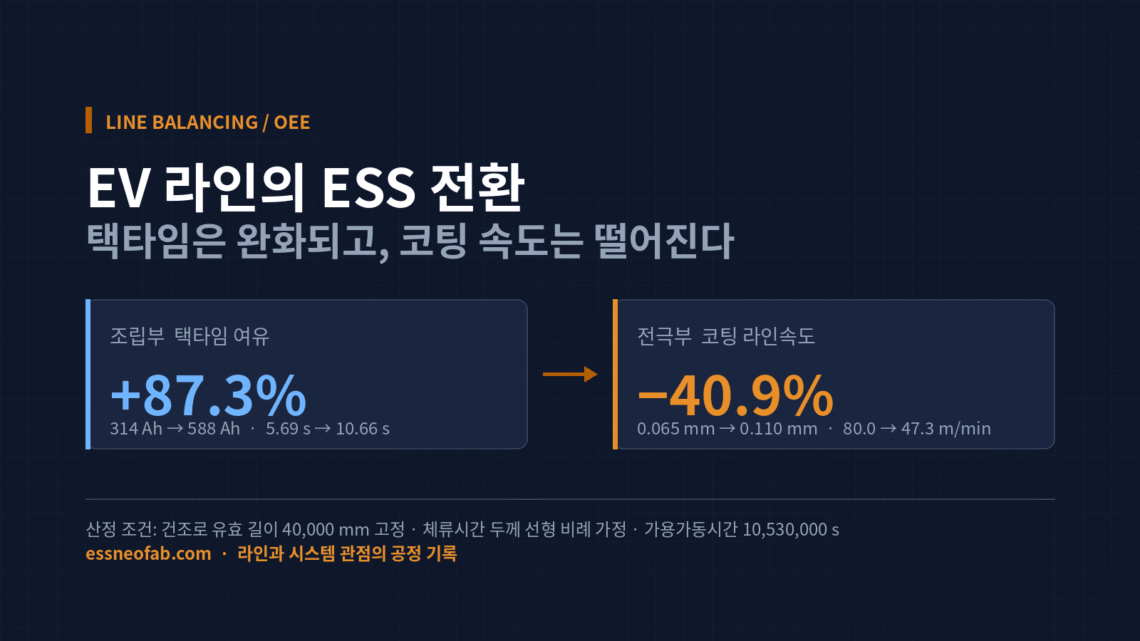
When converting an EV cell line for ESS use, retrofit effort and budget tend to concentrate on the assembly process. However, when a thick-film electrode and a large prismatic cell format are applied simultaneously while the drying-oven length remains fixed, the takt-time margin in the assembly section increases by 87.3% while the coating-section line speed drops by 40.9%. The conversion bottleneck shifts from assembly to the electrode section, and CAPEX priority should be reallocated accordingly. Furthermore, failing to update the abnormal-cycle-time baseline by part number books up to 36.3 percentage points of phantom performance loss into OEE, causing the improvement organization to chase a loss that does not exist. 1.…
You May Also Like
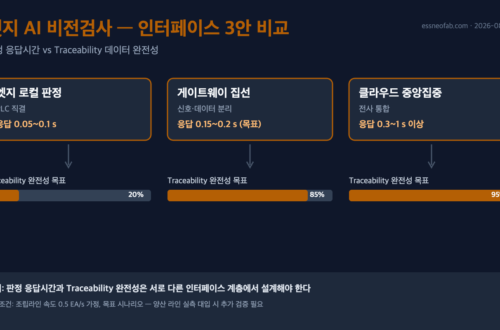
Edge AI Vision Inspection and Battery-Pack Leak Testing: How Gateway Aggregation Affects Traceability Completeness
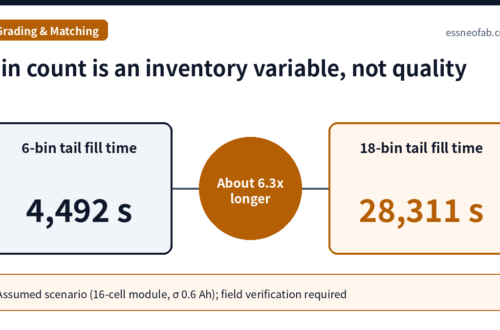
Cell Grading Bin Count and Grade-Specific WIP: What Module Matching History Must Retain
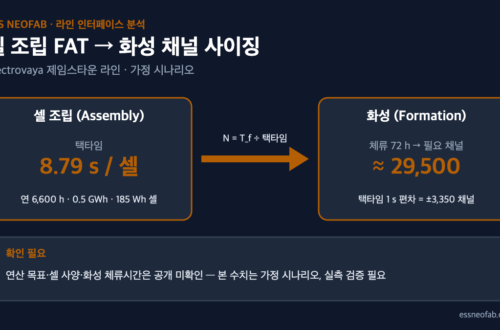
Formation Channel Sizing Read from a Cell Assembly Equipment FAT — How 1 Second of Takt Time Moves 3,350 Channels