-
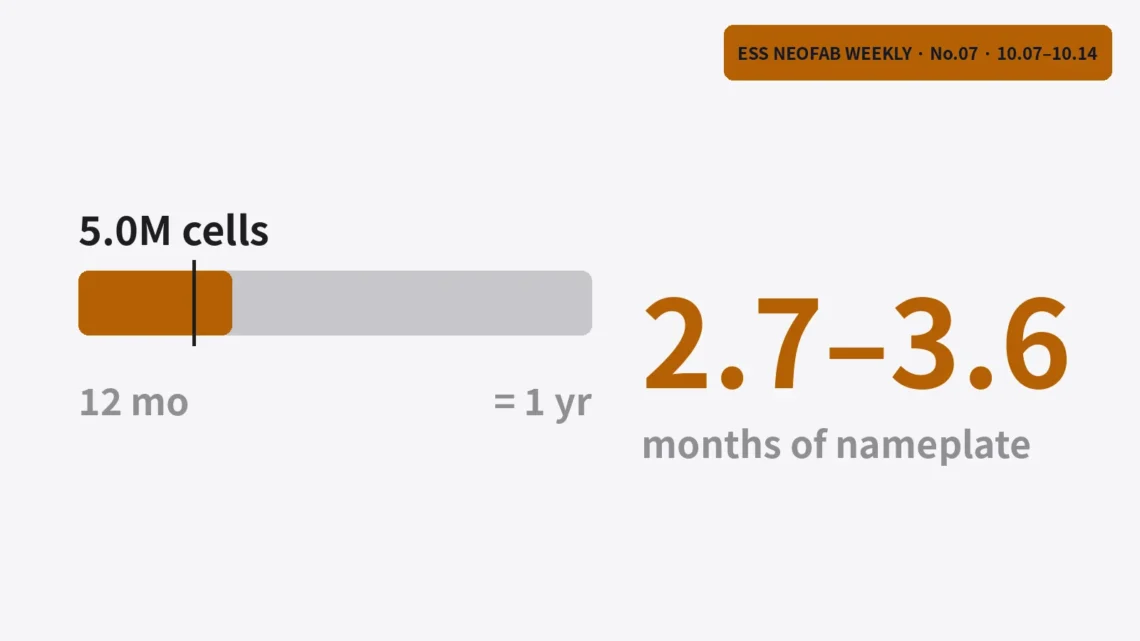
Five million ACC cells equal 2.7 to 3.6 months of nameplate output
ACC's Douvrin plant in France announced a running total of five million cells on 12 October 2026. Two figures in the coverage imply about 125 cells per vehicle, and assuming the first block runs at 13 GWh a year, five million cells equal 22.5 to 29.9 % of one nameplate year, or 2.7 to 3.6 months. Reports do not say how many years the total took, so average utilization can only be given as a range: 11.2 to 14.9 % over two years, 5.6 to 7.5 % over four. Applying the 15 to 20 % scrap rate reported in November 2025 would put 0.88 to 1.25 million scrapped cells behind…
You May Also Like
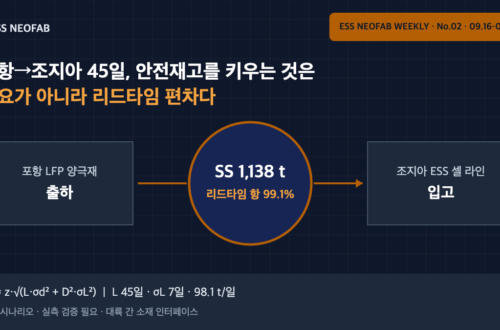
45 Days from Pohang to Georgia — Safety Stock at an Intercontinental Cathode Interface Is Driven by Lead-Time Variability, Not Demand
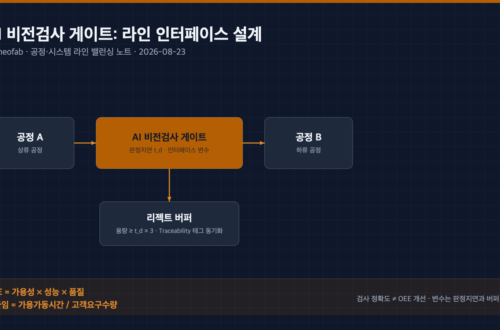
Embedding an AI Vision Inspection Gate in the Line: Redefining OEE and Takt-Time Design Variables
A 160 MW battery’s six-week commissioning has two baselines
-
A 160 MW battery’s six-week commissioning has two baselines
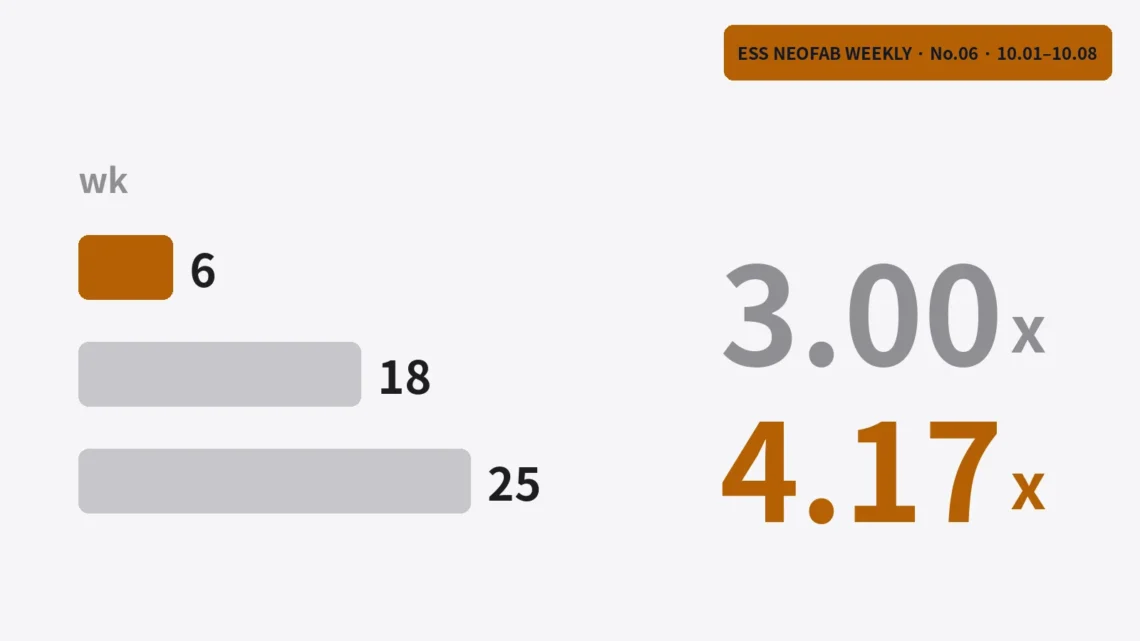
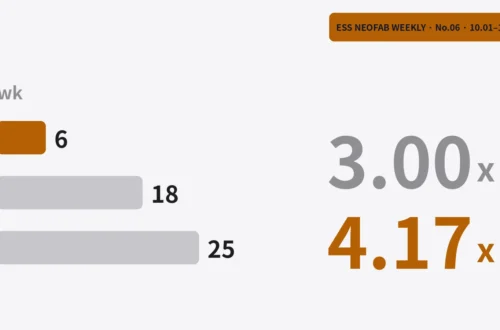
Two different baselines hang on the six-week commissioning of a 160 MW/320 MWh battery in Texas. One report says deployment time fell threefold against the original plan, and another compares the six weeks with a typical 25 weeks or more, so the baselines sit 7 weeks apart (18 and 25) and the multiples split into 3.00 and 4.17. Of roughly 16 months from groundbreaking to start-up (69.6 weeks), the six weeks make up 8.6 %, and the site announced operation 10.1 weeks after the last day of its target quarter. However the planned commissioning length is assumed, the delay that built up before commissioning stays at 4.1 weeks or more,…
You May Also Like
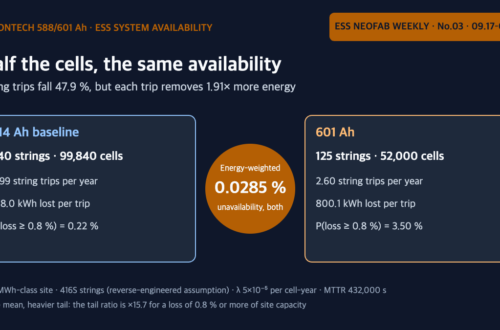
Pylontech’s 588 Ah and 601 Ah LFP Cells Enter Mass Production — Why Energy-Weighted Availability Stays the Same When the Cell Count Halves
45 Days from Pohang to Georgia — Safety Stock at an Intercontinental Cathode Interface Is Driven by Lead-Time Variability, Not Demand
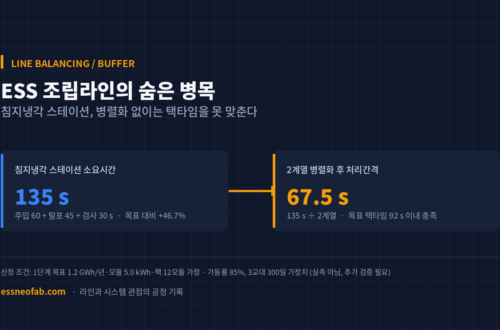
ESS Assembly Line: Why Immersion Cooling Becomes a Bottleneck
-
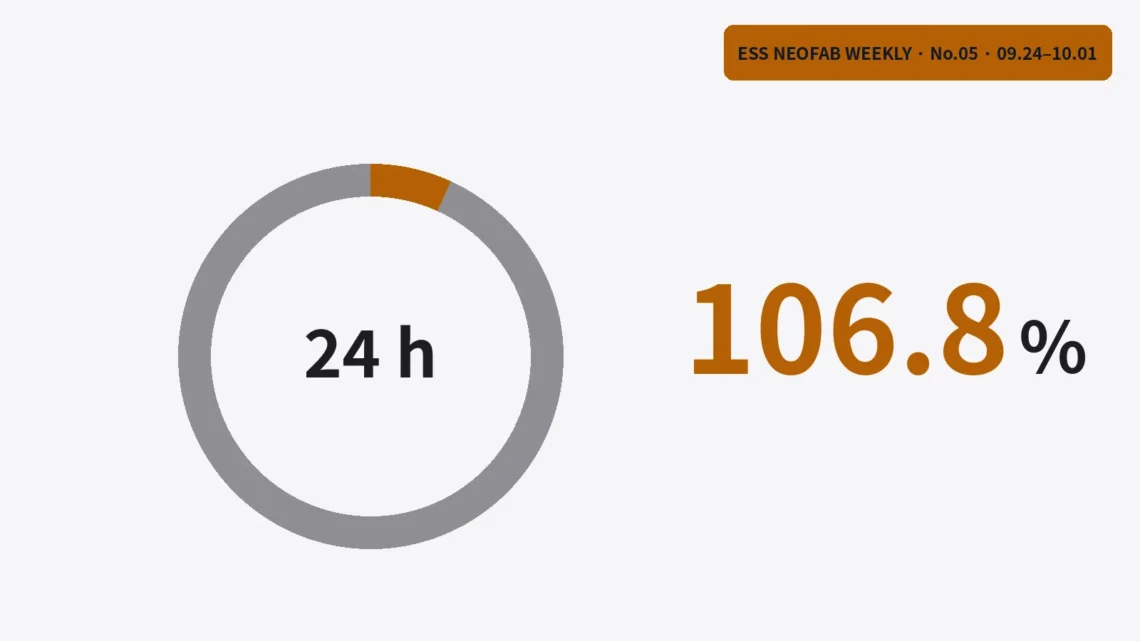
Two Cycles a Day Take 106.8 % of a Day, and the Retention Tier Shifts Cell Volume by 1.47 GWh
Korea's 25-year Jeju contract asks for at least 730 charge and discharge cycles a year from an 80 MW, 480 MWh system that runs for 21,600 s (6 hours) at full power. If each cycle is a full one and round-trip efficiency is assumed at 0.88, two cycles a day take 92,291 s, which is 106.8 % of the 86,400 s in a day. The warranty-life score pays 7 points for 90 % or more capacity at contract end and 1.75 points for 75 to 80 %. With no cells allowed to be added mid-term, the mainland's 6.6 GWh needs between 7.33 and 8.80 GWh of installed cells, a gap…
You May Also Like
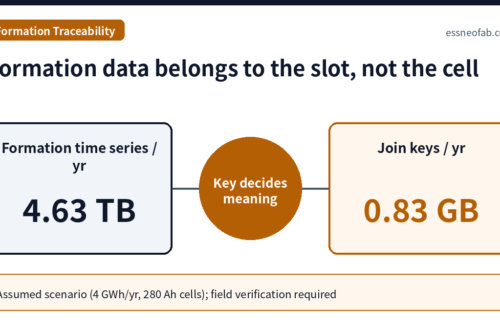
Linking Cell History in Formation and Aging: History Contamination from Tray ID + Slot Mapping
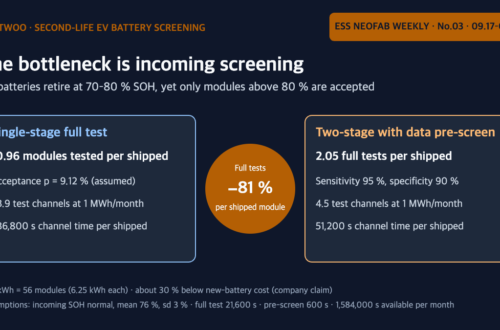
Battwoo’s Second-Life EV Batteries — When an 80 % Acceptance Threshold Overlaps the Retirement Distribution, Incoming Screening Becomes the Bottleneck
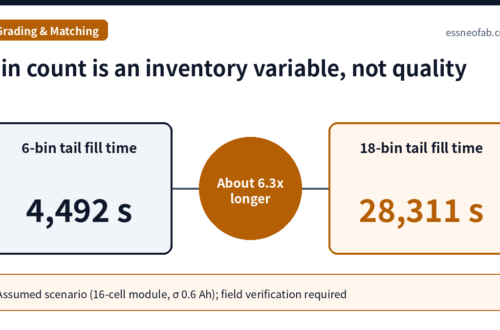
Cell Grading Bin Count and Grade-Specific WIP: What Module Matching History Must Retain
-
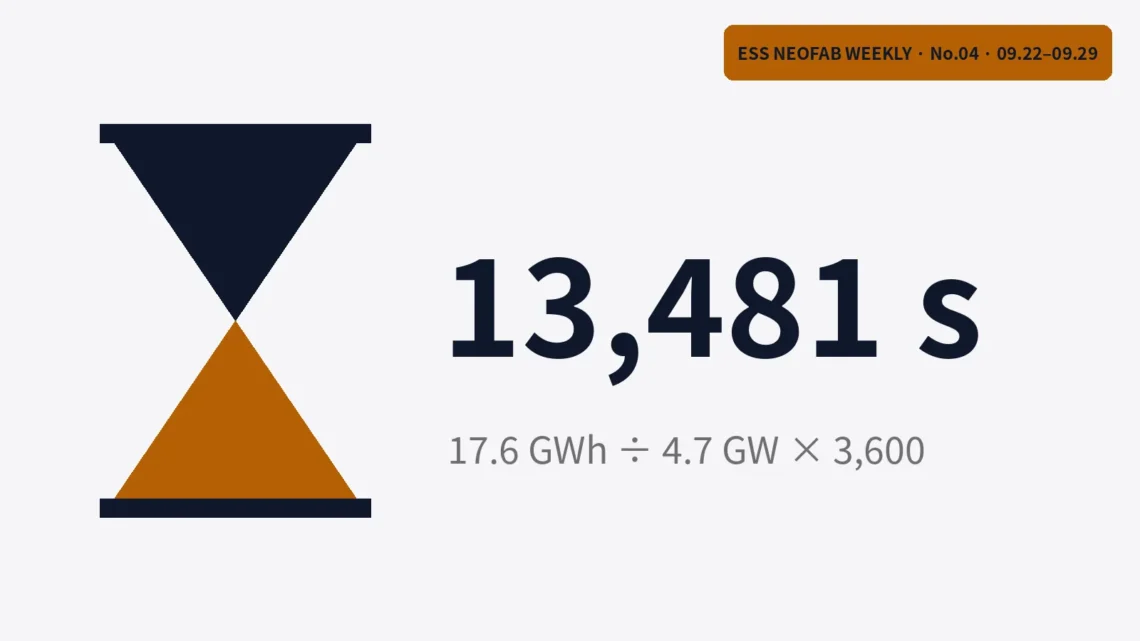
US storage set an energy record in Q2 as installed power fell 7%
The US installed a record 18.9 GWh of energy storage in the second quarter of 2026, yet installed power fell 7% from a year earlier. Duration, the energy divided by the power, got longer, and for utility-scale projects it reached 13,481 s (about 3.74 hours). If duration stretches to the 14,788 s average in the 2026–2031 outlook, a 10% rise in energy calls for only 0.3% more PCS capacity. Battery lines follow GWh and PCS-transformer lines follow GW, and each conversion unit carries a larger share as duration grows.
You May Also Like
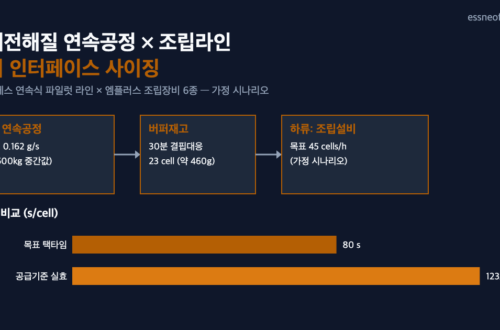
Between the Continuous Solid-Electrolyte Process and the Assembly Line: How Should the Buffer Interface Be Designed?
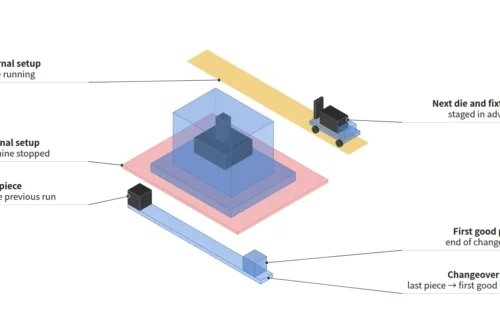
Is a Changeover Planned Downtime or an Availability Loss? — How the Definition Changes OEE
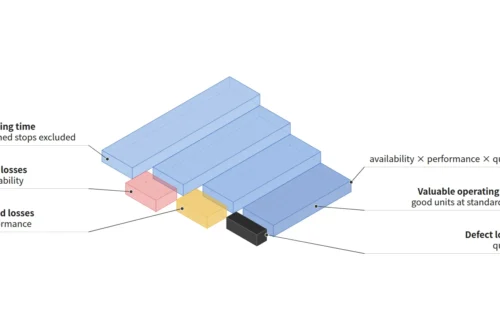
If Availability, Performance and Quality Are All 80 %, OEE Is 51.2 % — How to Calculate OEE