Interface
This category integrates the heterogeneous process characteristics between battery cell manufacturing lines and final ESS pack assembly lines.
-
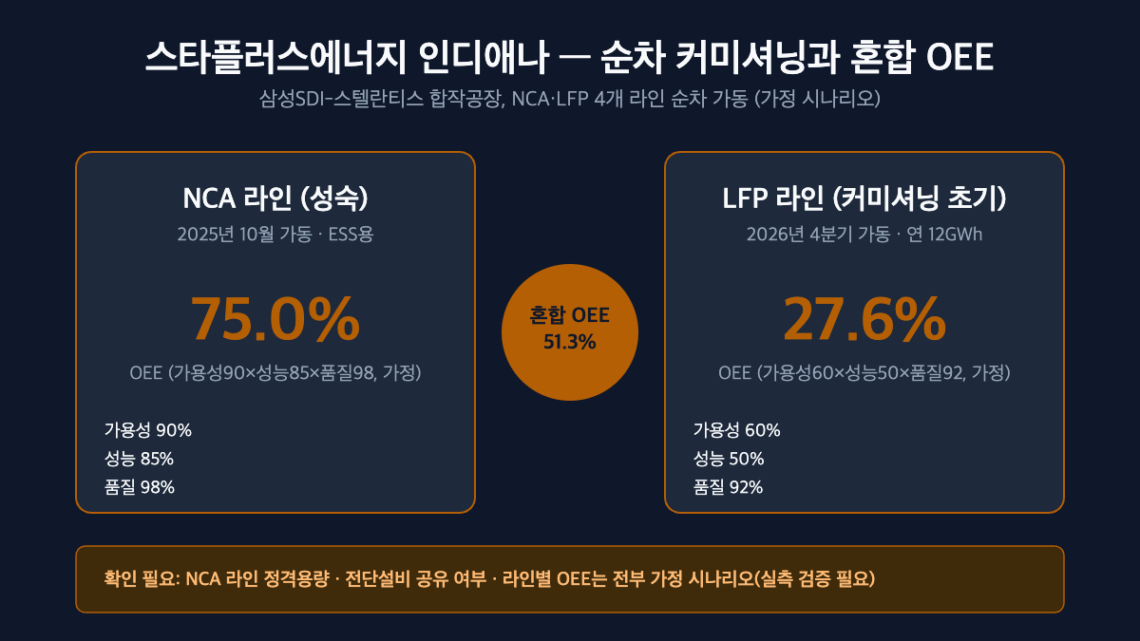
StarPlus Energy’s Indiana Plant — The Blended-OEE Illusion Created by Sequential NCA/LFP Commissioning
The Samsung SDI–Stellantis joint venture StarPlus Energy's Indiana (Kokomo) plant is bringing four lines online in sequence over 18 months: an NCA line starting October 2025, an LFP line (12 GWh/year) in Q4 2026, and additional NCA and LFP lines in Q1 2027. When lines of different chemistries (NCA, LFP) and end uses (EV, ESS) are commissioned at different times within a single site, a “Blended OEE” that sums the entire site into one number creates an illusion that obscures the actual performance of mature lines. This article back-calculates Takt Time from the publicly disclosed line-startup schedule and compares site-level blended metrics against line-level OEE under an assumed scenario. The…
You May Also Like
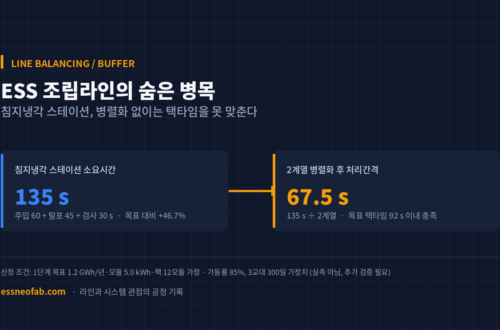
ESS Assembly Line: Why Immersion Cooling Becomes a Bottleneck
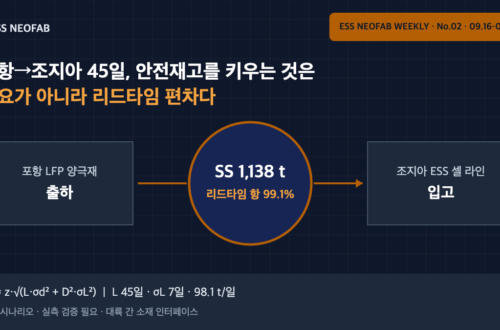
45 Days from Pohang to Georgia — Safety Stock at an Intercontinental Cathode Interface Is Driven by Lead-Time Variability, Not Demand
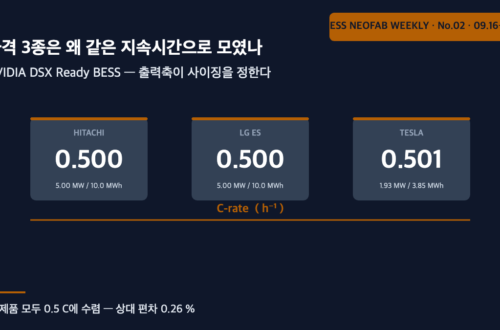
Why three qualified products landed on the same duration — in DSX Ready BESS, sizing is set by the output axis
-
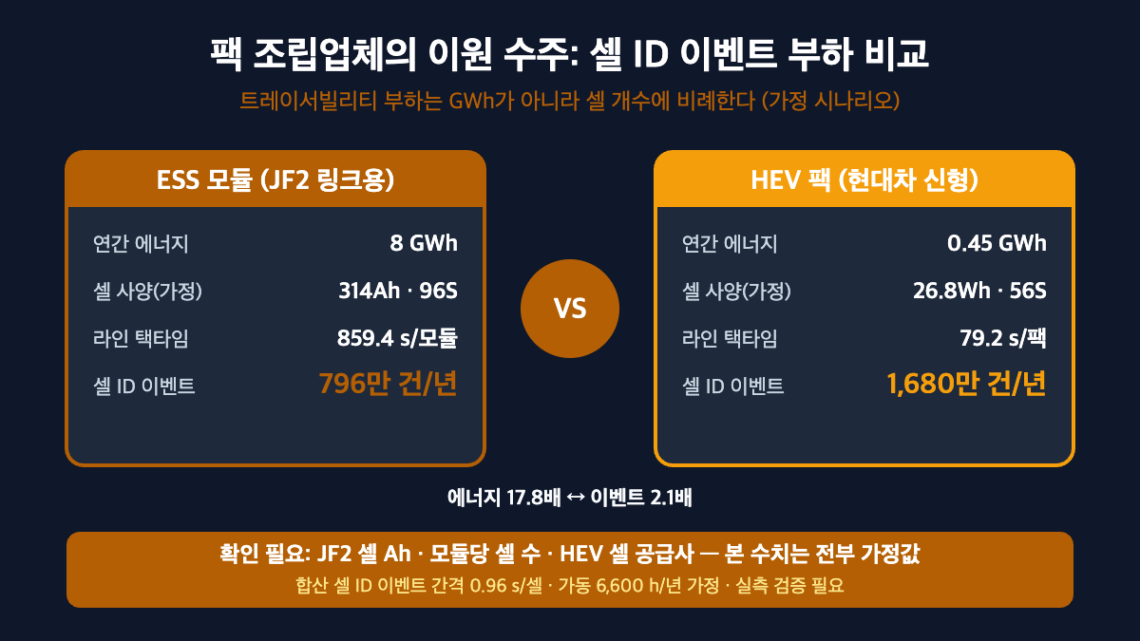
Sebang Lithium Battery’s Simultaneous HEV Pack and ESS Module Orders — Analyzing the Cell-Inbound Interface and Cell-ID Traceability Load
Sebang Lithium Battery simultaneously won orders for Hyundai Motor's new hybrid (HEV) battery packs and LG Energy Solution's new ESS (JF2) battery packs, together worth more than KRW 3 trillion (reported 2026-09-07). This article quantifies, under an assumed scenario, how the Cell Inbound Interface and Cell-ID Traceability load differ when a pack systems company that sources cells externally receives two heterogeneous product lines — automotive and grid-scale power — within a single organization. The conclusion is that the traceability system's load scales with cell count, not GWh. In the assumed scenario, the HEV pack, at 0.45 GWh/year, is only 1/17.8 the scale of the ESS module (8 GWh/year), yet its…
You May Also Like
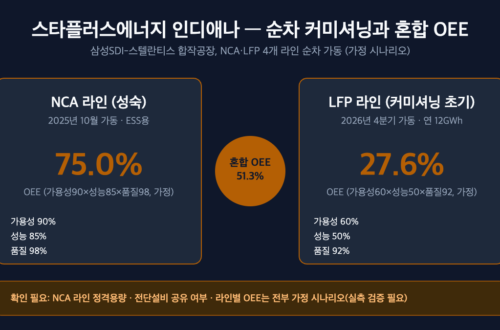
StarPlus Energy’s Indiana Plant — The Blended-OEE Illusion Created by Sequential NCA/LFP Commissioning
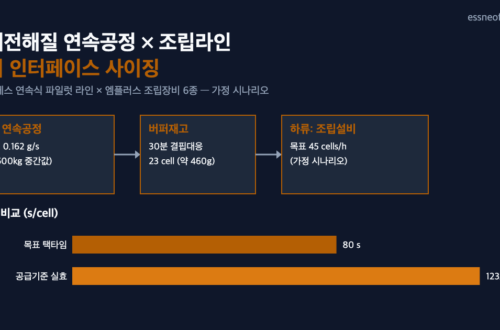
Between the Continuous Solid-Electrolyte Process and the Assembly Line: How Should the Buffer Interface Be Designed?
Grid-Forming PCS Mandate Redesigns FAT Takt Time and the BMS-PCS-EMS Interface
-
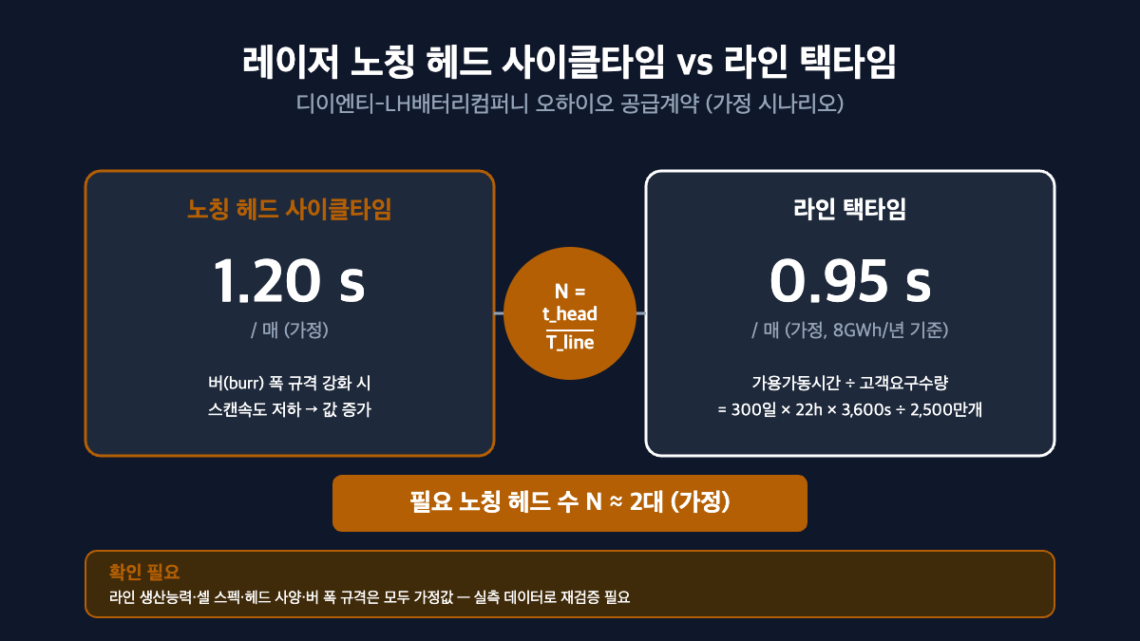
The Interface Between Laser Notching Cycle Time and Line Takt Time — The Head-Count Sizing Problem Revealed by DI ENT’s Ohio Supply Contract
DI ENT signed laser notching equipment supply contracts worth a combined KRW 87.3 billion, across two separate orders, with LH Battery Company (an LG Energy Solution–Honda joint venture), for delivery to Honda’s new second battery plant in Ohio, USA, by March 2026. This supply contract is more than an order-win announcement — it surfaces an interface-design problem between the notching process’s cycle time and the line’s takt time. When the processing time of a single notching head is longer than the takt time the line requires, adding parallel heads becomes unavoidable, and as burr-width specifications are tightened, per-head processing time increases, causing the required head count to rise non-linearly. This…
You May Also Like
46-Phi Cylindrical Cell Line Conversion: The Pressure-Sensor–BMS Interface Determines Takt Time
A 160 MW battery’s six-week commissioning has two baselines
45 Days from Pohang to Georgia — Safety Stock at an Intercontinental Cathode Interface Is Driven by Lead-Time Variability, Not Demand
-
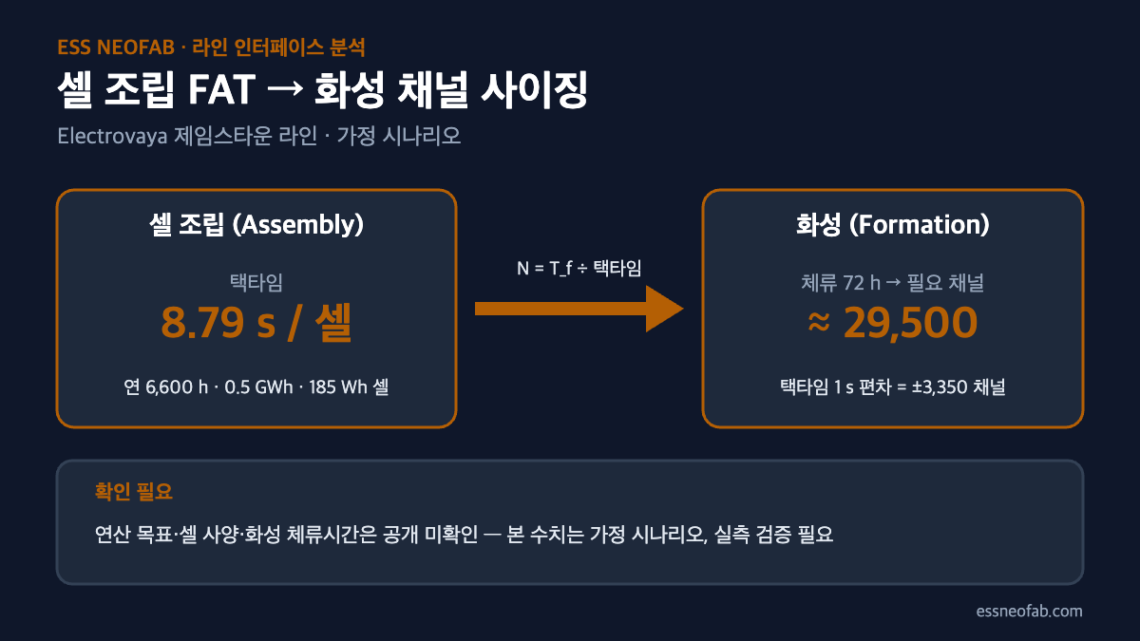
Formation Channel Sizing Read from a Cell Assembly Equipment FAT — How 1 Second of Takt Time Moves 3,350 Channels
Electrovaya announced that on August 24, 2026, it began a Factory Acceptance Test (FAT) of automated cell-assembly and Formation equipment for its Jamestown, New York cell plant, to be followed after completion in early October by shipping and a Site Acceptance Test (SAT). This article reinterprets that FAT not as “equipment inspection” but as a sizing verification that absorbs, through the number of Formation channels, the takt-time mismatch between cell assembly — which moves at a second-by-second cadence — and Formation — which holds cells for hours at a time. Under an assumed scenario (0.5 GWh annual output, 185 Wh cells, 6,600 h/yr of operation, 72 h Formation dwell time),…
You May Also Like
FAT and SAT Differ in More Than Location — How IEC 62381:2024 Defines the Tests
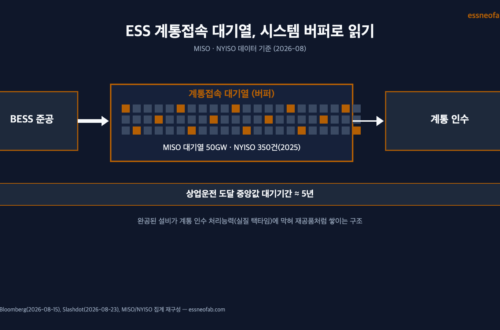
Re-Reading the ESS Grid-Interconnection Queue in the Language of Line Balancing
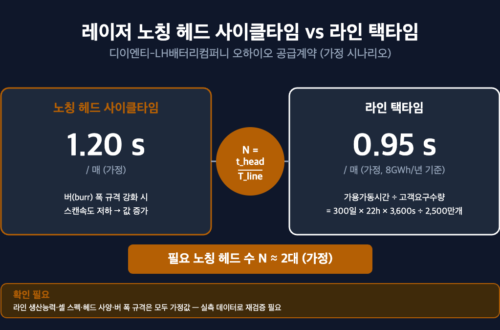
The Interface Between Laser Notching Cycle Time and Line Takt Time — The Head-Count Sizing Problem Revealed by DI ENT’s Ohio Supply Contract
-
128 MW of Distribution-Grid ESS Volume Allocated — Can the Battery Pack Assembly Line Absorb the Takt Time?
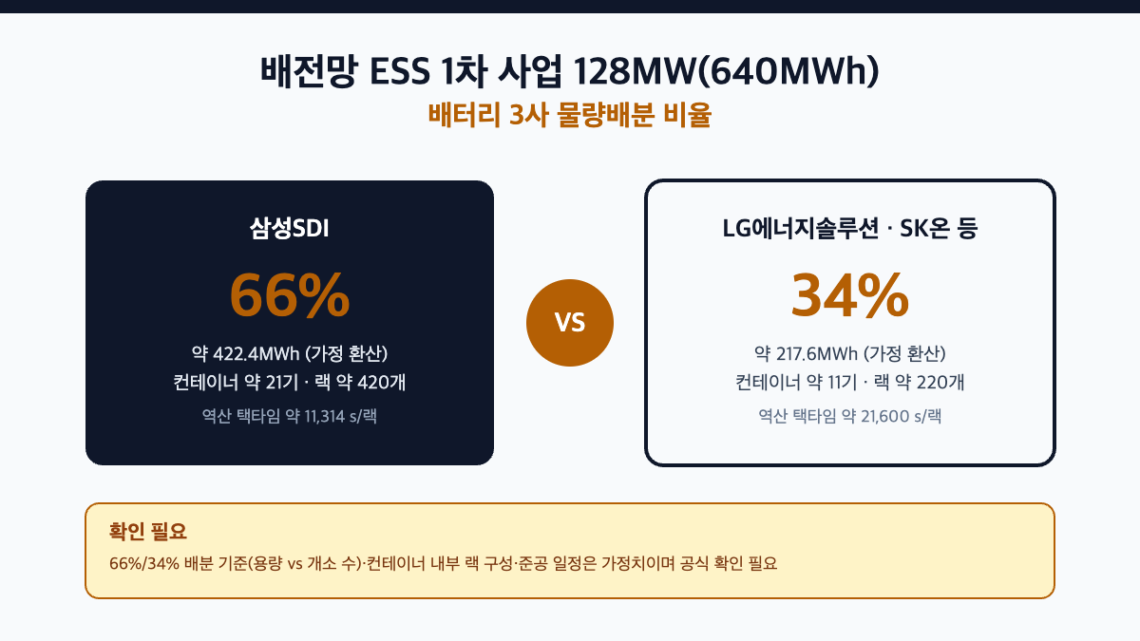
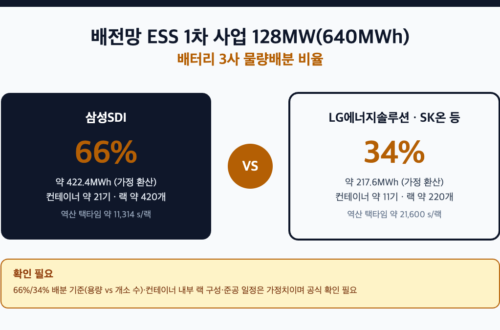
The Ministry of Climate, Energy and Environment’s Phase 1 distribution-grid ESS project — linked to additional renewable-energy interconnection — confirmed 9 operators and allocated a combined 128 MW (640 MWh) across 32 distribution feeders. Samsung SDI recorded the largest award at 66%, with LG Energy Solution and SK On splitting the remainder. This article converts that volume-allocation ratio into a load distribution across battery-pack assembly lines, and back-calculates, under an assumed scenario, how far the takt time diverges between operators. The conclusion is that a difference in procurement-volume ratio is carried straight through into a load imbalance at the production-line design stage, so Line Balancing review must be conducted together,…
You May Also Like
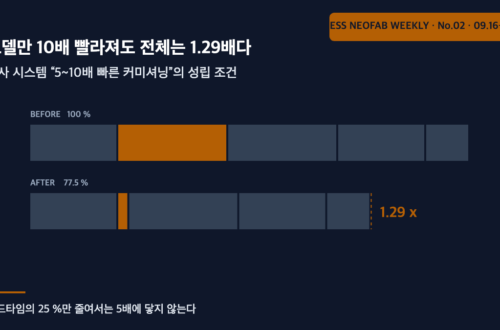
Even a tenfold faster model moves the whole by 1.29x — what “5 to 10 times faster commissioning” actually requires
46-Phi Cylindrical Cell Line Conversion: The Pressure-Sensor–BMS Interface Determines Takt Time
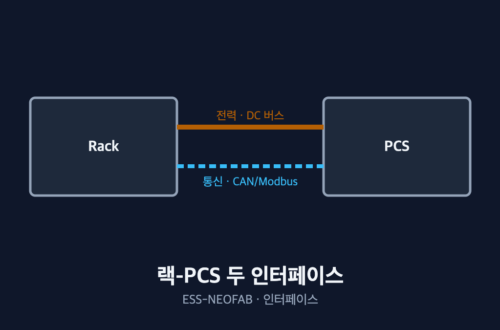
Between the Battery Rack and the PCS: Two Points Where the Interface Diverges
-
SK On’s Dual-Site ESS Production Bases — Where Fixed Contracts and Variable Bidding Split Takt Time Design
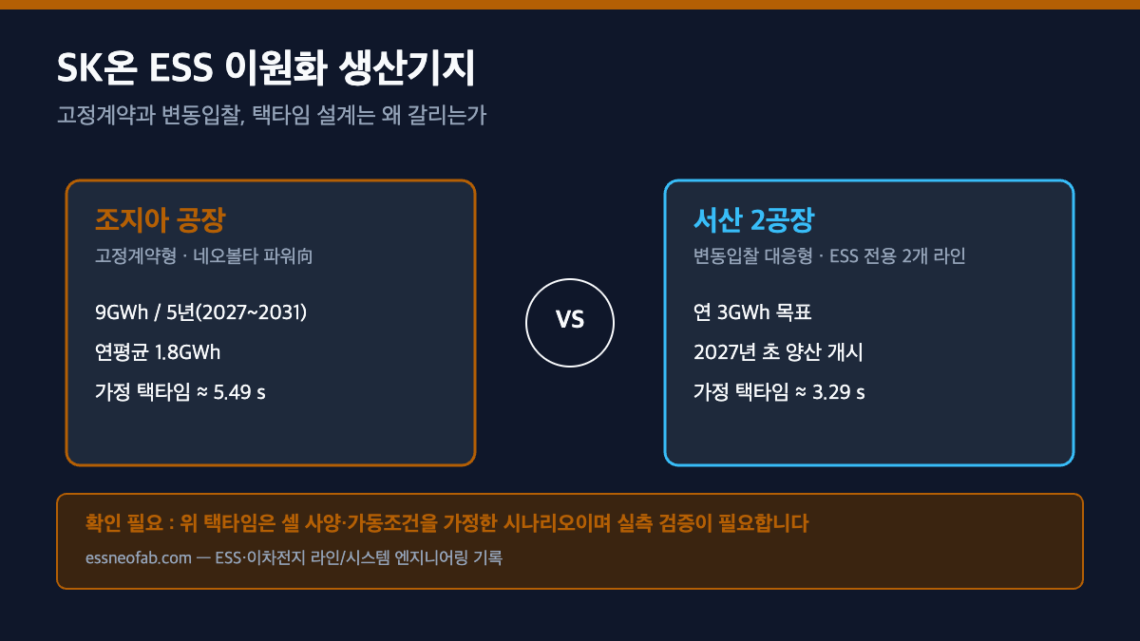
As of the second half of 2026, SK On is simultaneously pursuing two capacity-allocation efforts that look similar on the surface but differ sharply in character: a long-term fixed-contract ESS supply obligation from its Georgia, USA plant (9 GWh over 2027-2031 to NeoVolta Power), and a variable-bid-responsive capacity build at its domestic Seosan Plant 2, where 2 of 4 production lines are being converted to dedicated ESS-LFP pouch-cell lines. Both sites represent "ESS expansion" on paper, but the takt time (Takt Time) character each demands is different. Using publicly disclosed contract and conversion volumes, this article constructs an assumed scenario showing quantitatively that the fixed-contract site is better served by…
You May Also Like
Long-Duration ESS Interface Design in the Era of Power-Grid Saturation
Even a tenfold faster model moves the whole by 1.29x — what “5 to 10 times faster commissioning” actually requires
128 MW of Distribution-Grid ESS Volume Allocated — Can the Battery Pack Assembly Line Absorb the Takt Time?
-
Introducing Robotic Automation Equipment — Where Does the Interface with Line Takt Time Break Down
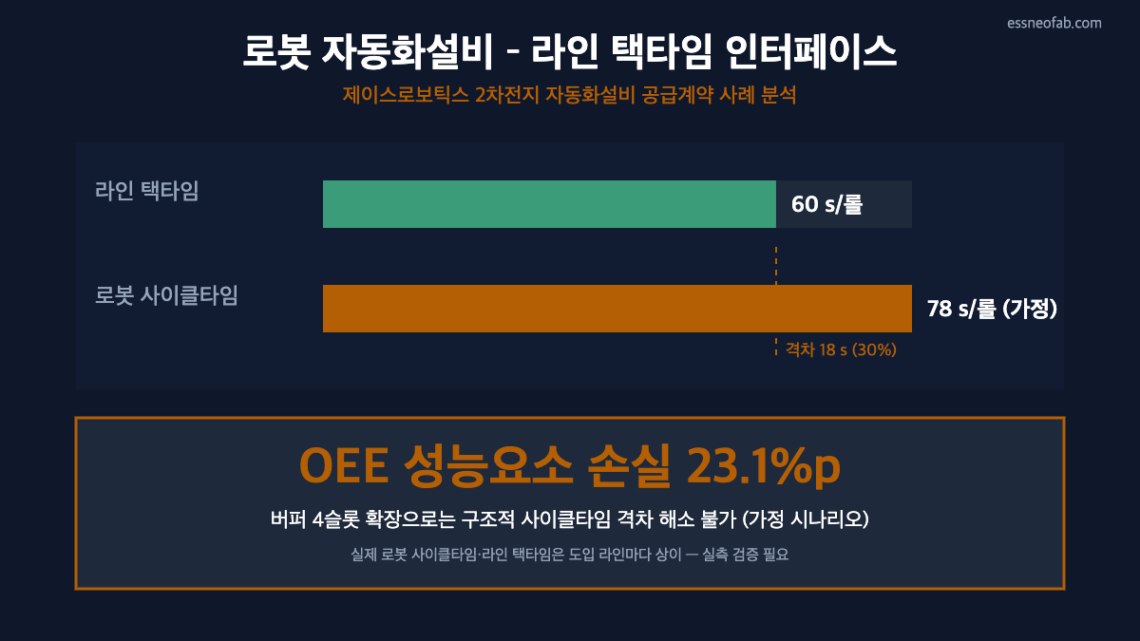
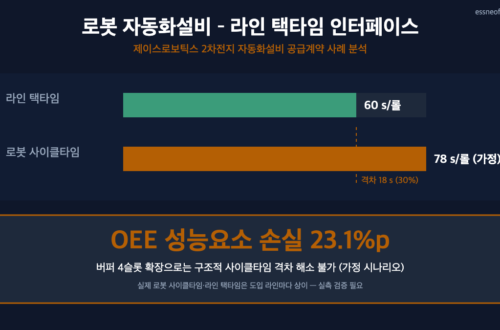
The supply contract disclosed by JS Robotics on September 2, 2026, worth roughly KRW 33.26 billion, for battery-manufacturing robotic automation equipment brings renewed attention to the Cycle Time-Takt Time gap that arises the moment new robotic equipment is connected to an existing R2R (Roll-to-Roll) line. This article calculates an assumed scenario in which one cycle of robotic automation equipment exceeds the line takt time, distinguishing the range of variation that buffer accumulation design can absorb from the structural gap it cannot. The analysis concludes that buffers absorb only micro-stop-level variation, and that a structural gap where the robot's own cycle time exceeds takt time translates directly into OEE performance-factor loss,…
You May Also Like
45 Days from Pohang to Georgia — Safety Stock at an Intercontinental Cathode Interface Is Driven by Lead-Time Variability, Not Demand
Five million ACC cells equal 2.7 to 3.6 months of nameplate output
LFP High-Compaction-Density Conversion and the Calendering Interface: How Nip Pressure and Line Speed Affect Takt Time
-
LFP High-Compaction-Density Conversion and the Calendering Interface: How Nip Pressure and Line Speed Affect Takt Time
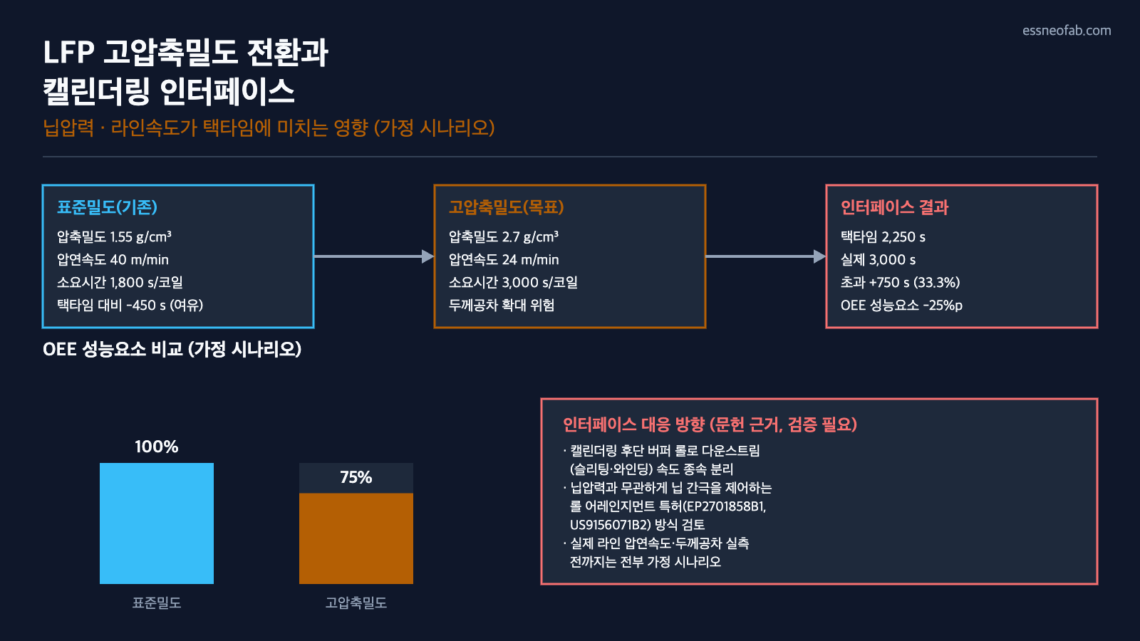
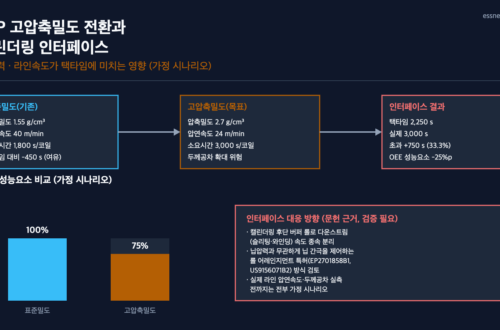
If the compaction density target for LFP (Lithium Iron Phosphate) cathode material — typically in the 1.4–1.6 g/cm³ range — is raised to the 2.7 g/cm³ class that L&F has disclosed as its end-2026 mass-production target, the nip pressure and line speed of the calendering (rolling) process must be redesigned, and this directly affects the takt time and OEE (Overall Equipment Effectiveness) performance factor of existing operating lines. In an assumed-scenario calculation, if the rolling speed decelerates from 40 m/min to 24 m/min, the calendering time per coil (1,200 m) increases from 1,800 s to 3,000 s, creating a bottleneck that exceeds the 2,250 s takt time by 750 s…
You May Also Like
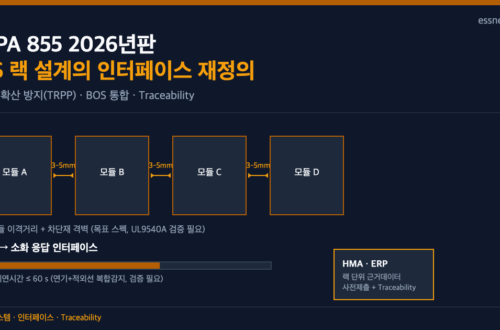
The 2026 Edition of NFPA 855 Changes ESS Rack Design and Traceability Documentation at the Same Time
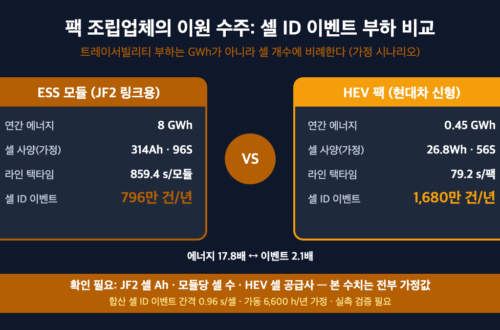
Sebang Lithium Battery’s Simultaneous HEV Pack and ESS Module Orders — Analyzing the Cell-Inbound Interface and Cell-ID Traceability Load
Five million ACC cells equal 2.7 to 3.6 months of nameplate output
-
Between the Continuous Solid-Electrolyte Process and the Assembly Line: How Should the Buffer Interface Be Designed?
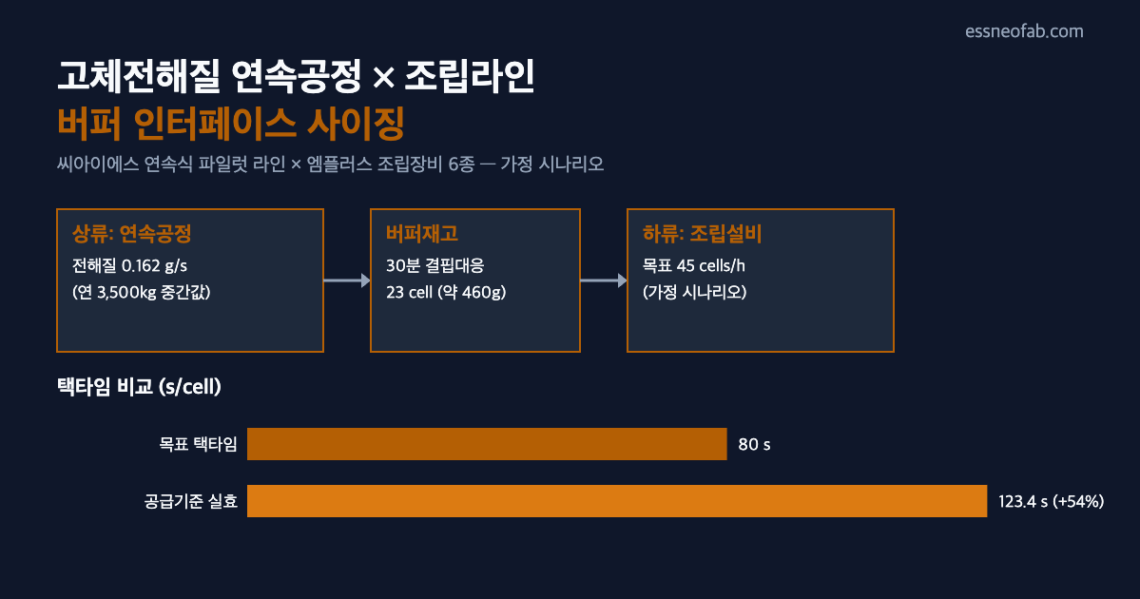
CIS's continuous-process pilot line for sulfide-based solid electrolyte at its Daegu Plant 3 (2–5 t/year, expanded from the existing batch process's 840 kg) and M Plus's order for six types of all-solid-state battery assembly equipment (targeting development/fabrication completion by end-2026) reveal a textbook interface problem: the production capacities of the upstream materials process and the downstream assembly process are not scaled up on the same timeline. This article estimates, as an assumed scenario, the buffer stock and takt-time loss required between these two processes, to quantitatively pin down why the materials-assembly interface design is a leading variable for the line's overall OEE (Overall Equipment Effectiveness). The downstream assembly equipment's target…
-
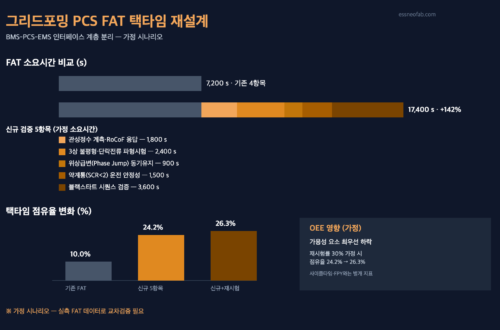
Grid-Forming PCS Mandate Redesigns FAT Takt Time and the BMS-PCS-EMS Interface
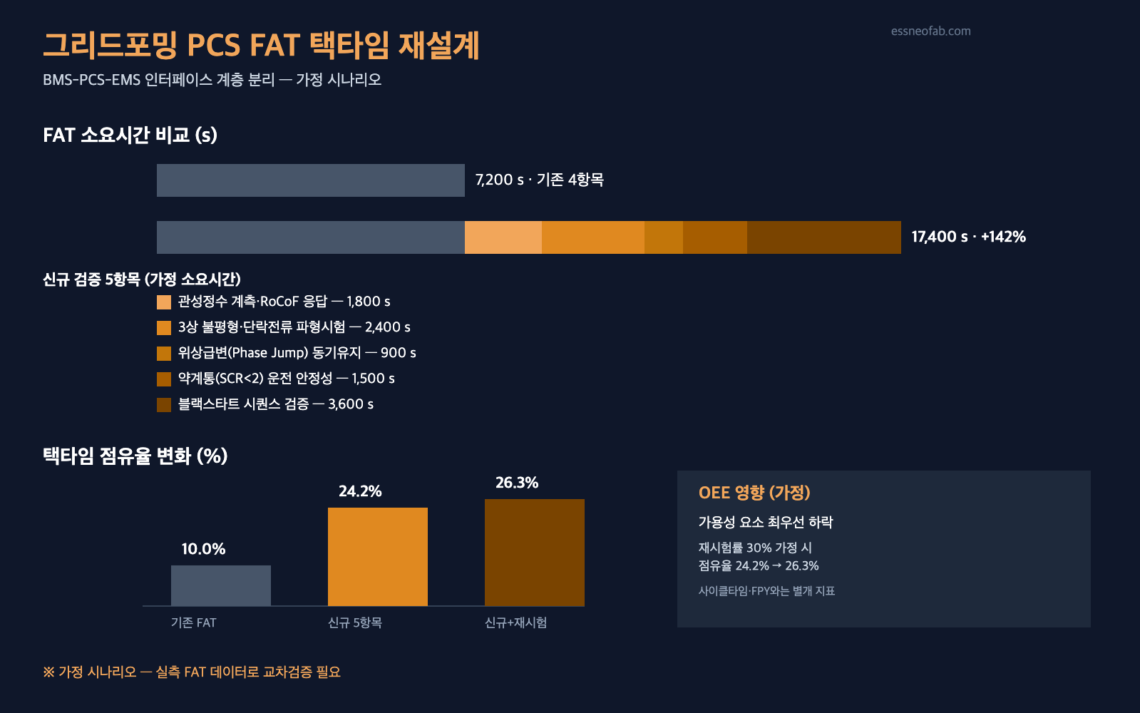
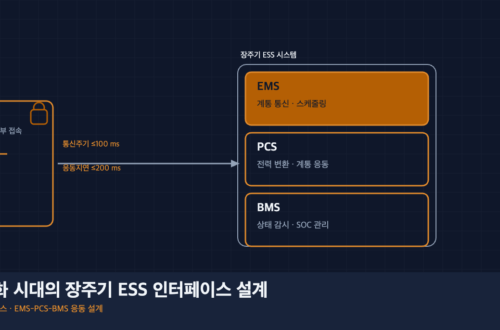
As grid-forming (GFM) inverter performance requirements become mandatory starting with long-duration BESS (Battery Energy Storage System) in the centralized-contract market scheduled for commercial operation in December 2027, five new verification stages are added to PCS (Power Conversion System) manufacturers' Factory Acceptance Test (FAT) lines. In an assumed-scenario calculation, per-unit FAT time increases by approximately 142% over the existing baseline, pushing the takt-time share from the 10% range to the 24% range, and if retests recur, the Availability factor of OEE (Overall Equipment Effectiveness) is the first to be shaken. At the same time, a design challenge emerges: a layer separation is needed between the grid-forming control loop, which requires sub-cycle…
You May Also Like
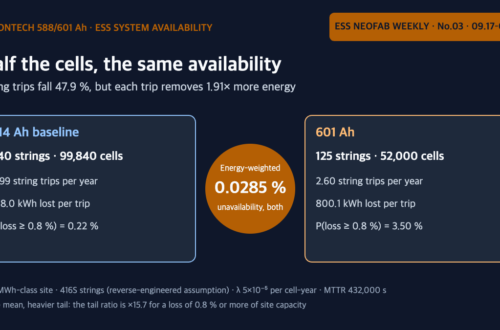
Pylontech’s 588 Ah and 601 Ah LFP Cells Enter Mass Production — Why Energy-Weighted Availability Stays the Same When the Cell Count Halves
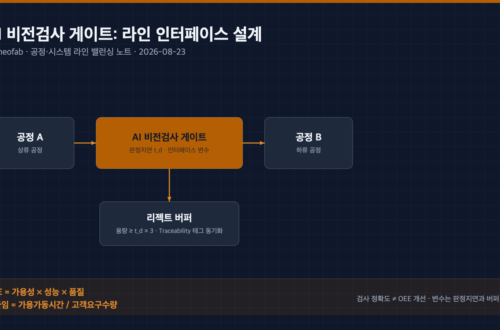
Embedding an AI Vision Inspection Gate in the Line: Redefining OEE and Takt-Time Design Variables
Five million ACC cells equal 2.7 to 3.6 months of nameplate output