-
A 160 MW battery’s six-week commissioning has two baselines
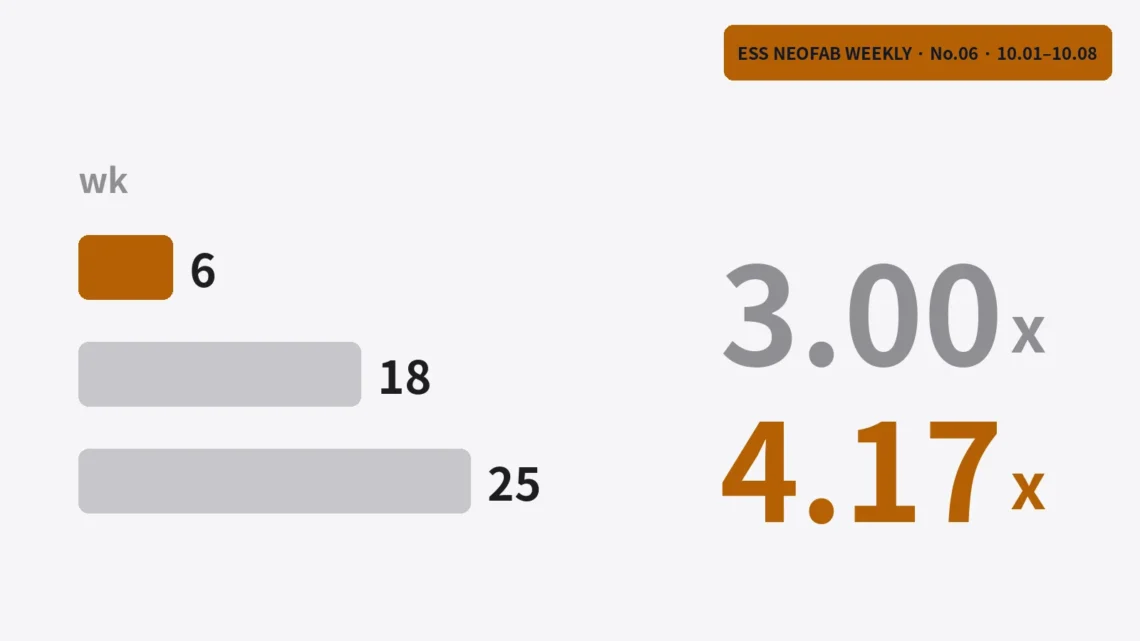
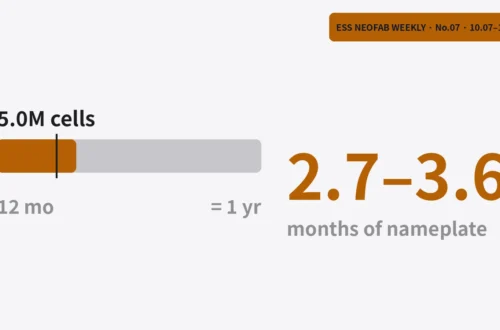
Two different baselines hang on the six-week commissioning of a 160 MW/320 MWh battery in Texas. One report says deployment time fell threefold against the original plan, and another compares the six weeks with a typical 25 weeks or more, so the baselines sit 7 weeks apart (18 and 25) and the multiples split into 3.00 and 4.17. Of roughly 16 months from groundbreaking to start-up (69.6 weeks), the six weeks make up 8.6 %, and the site announced operation 10.1 weeks after the last day of its target quarter. However the planned commissioning length is assumed, the delay that built up before commissioning stays at 4.1 weeks or more,…
You May Also Like
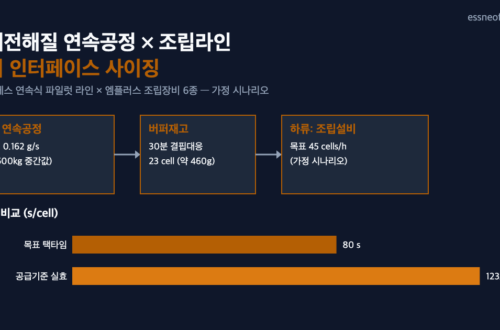
Between the Continuous Solid-Electrolyte Process and the Assembly Line: How Should the Buffer Interface Be Designed?
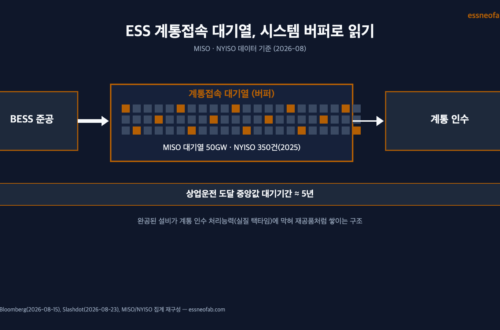
Re-Reading the ESS Grid-Interconnection Queue in the Language of Line Balancing
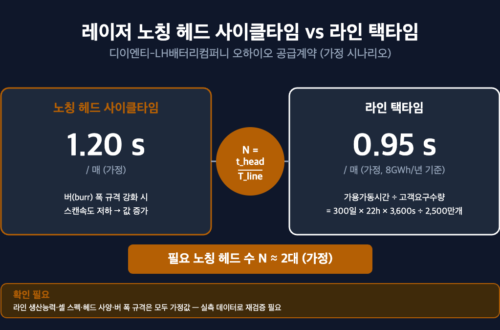
The Interface Between Laser Notching Cycle Time and Line Takt Time — The Head-Count Sizing Problem Revealed by DI ENT’s Ohio Supply Contract
-
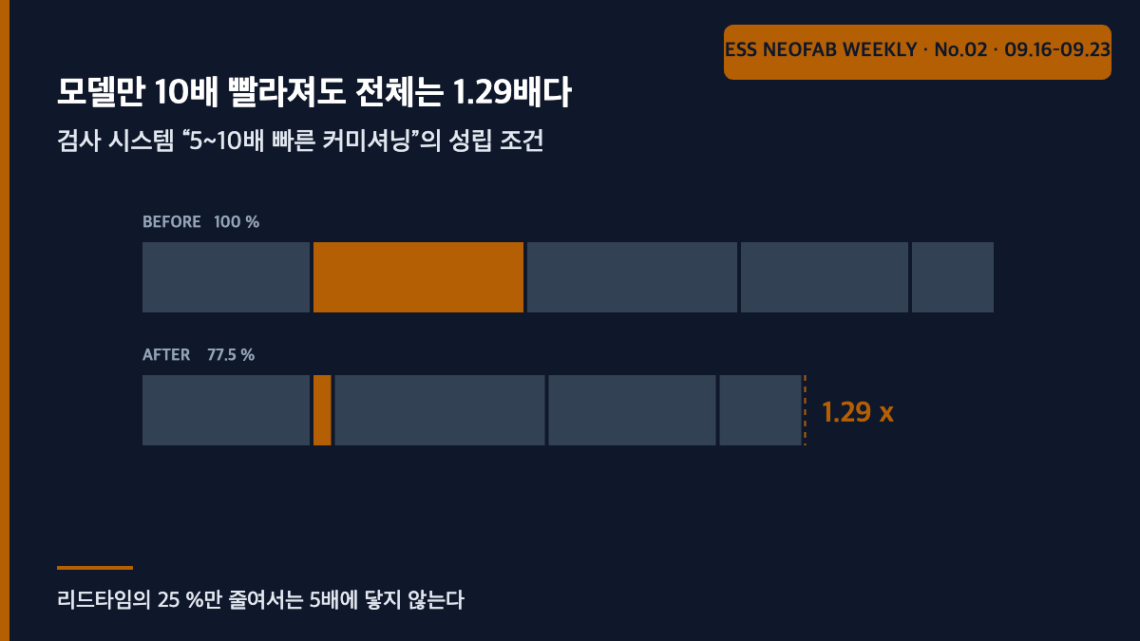
Even a tenfold faster model moves the whole by 1.29x — what “5 to 10 times faster commissioning” actually requires
Siemens and P&G announced on 18 September 2026 that their VIC inspection platform commissions new deployments 5-10x faster. Re-read through Amdahl's law, accelerating the model stage (assumed 25 % share) tenfold shortens the whole by only 1.29x (22.5 %). For 5x to hold the accelerated scope must exceed 88.9 %, and 10x at a partial factor of 5 is arithmetically impossible. The bottleneck is not AI but the standardisation of lighting, mechanics, integration and handover.
You May Also Like
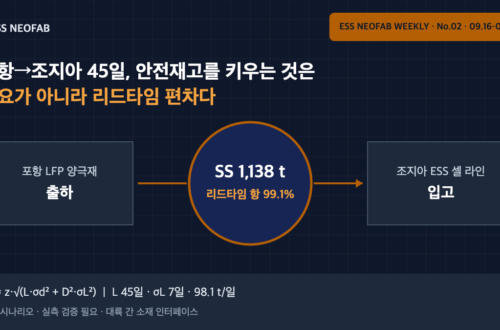
45 Days from Pohang to Georgia — Safety Stock at an Intercontinental Cathode Interface Is Driven by Lead-Time Variability, Not Demand
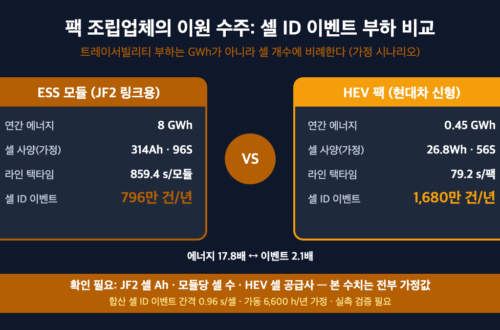
Sebang Lithium Battery’s Simultaneous HEV Pack and ESS Module Orders — Analyzing the Cell-Inbound Interface and Cell-ID Traceability Load
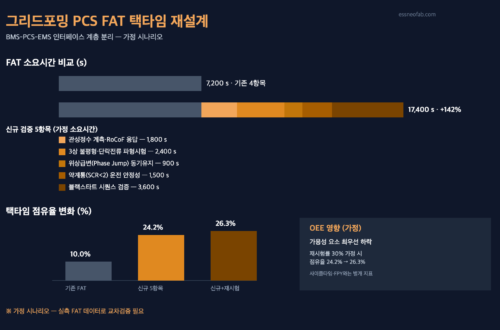
Grid-Forming PCS Mandate Redesigns FAT Takt Time and the BMS-PCS-EMS Interface
-
FAT and SAT Differ in More Than Location — How IEC 62381:2024 Defines the Tests
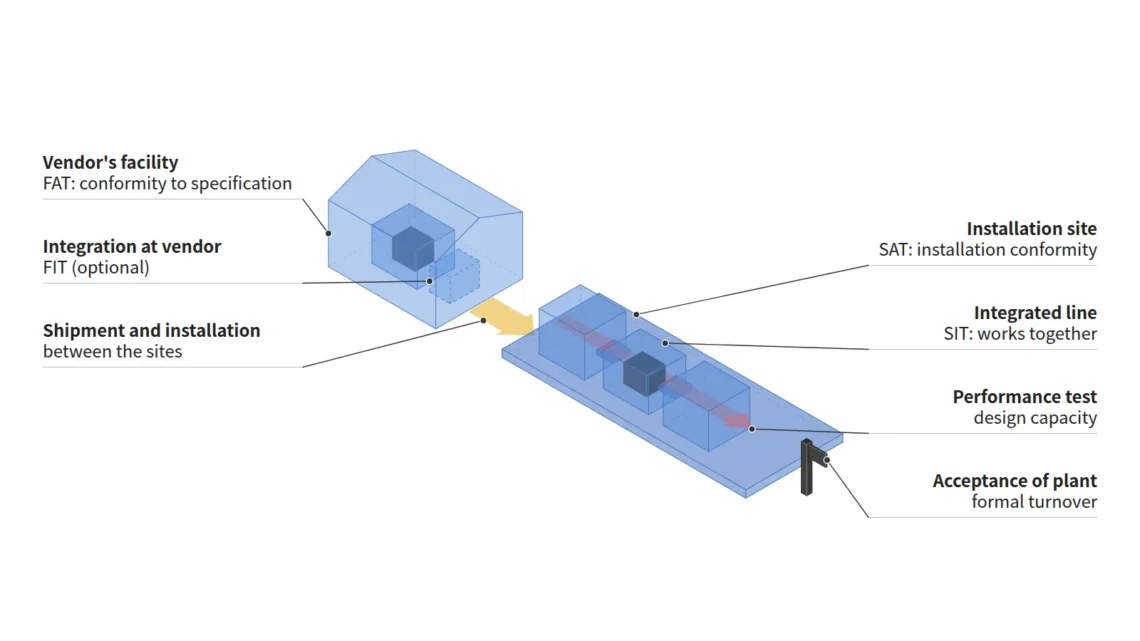
IEC 62381:2024 defines the factory acceptance test (FAT) as an activity to demonstrate that the automation system is in accordance with the specification, typically conducted at the vendor's facility, and the site acceptance test (SAT) as an activity to demonstrate, at the site of the installation, that the installation is in accordance with the applicable standards, codes, specifications, and installation instructions. The two tests differ not only in location but also in what they demonstrate, and the 2024 edition adds the optional factory integration test (FIT) and defines requirements and checklists for the FAT, FIT, SAT, and site integration test (SIT). Loop checks and commissioning lie outside the scope of…
You May Also Like
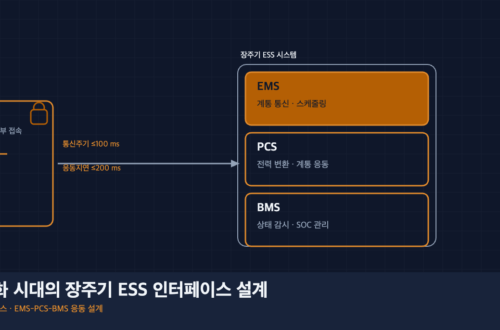
Long-Duration ESS Interface Design in the Era of Power-Grid Saturation
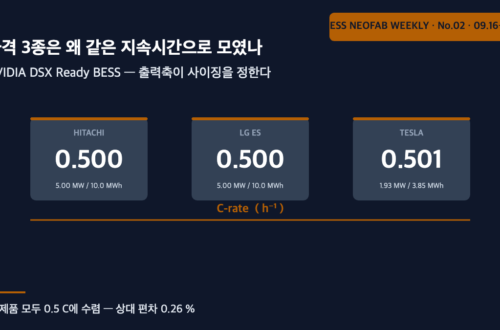
Why three qualified products landed on the same duration — in DSX Ready BESS, sizing is set by the output axis
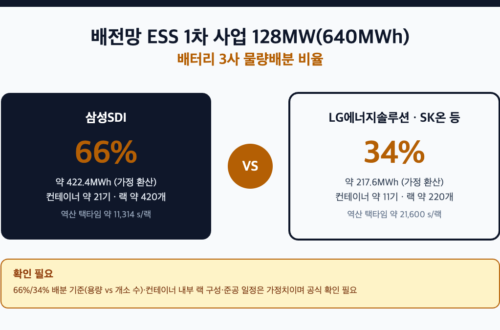
128 MW of Distribution-Grid ESS Volume Allocated — Can the Battery Pack Assembly Line Absorb the Takt Time?
-
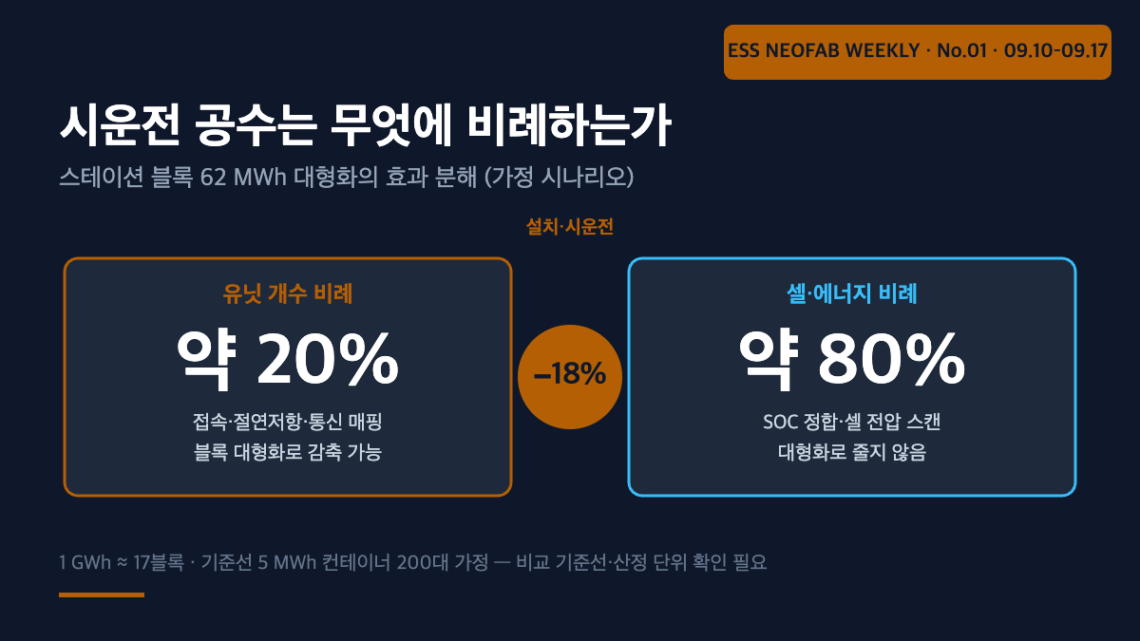
When the Station Block Grows to 62 MWh, What Actually Shrinks Is Commissioning Labor, Not Cell Count
On September 16, 2026, BYD unveiled its second-generation grid-forming station block, the "GC Block," in a maximum 10 MW/62 MWh single configuration, stating that a 1 GWh project would require approximately 17 blocks. The same announcement claimed a 69.4% reduction in BMS management complexity, a maintenance workload reduction of over 60%, and an installation/commissioning workload reduction of over 18%. Working backward from these three figures using the same assumed unit-count reduction rate (91.5% under a baseline assumption), the unit-count-proportional share of on-site commissioning labor turns out to be only about 20%, with the remaining roughly 80% proportional to cell/energy count. In other words, block enlargement is a lever that attacks…
-
StarPlus Energy’s Indiana Plant — The Blended-OEE Illusion Created by Sequential NCA/LFP Commissioning
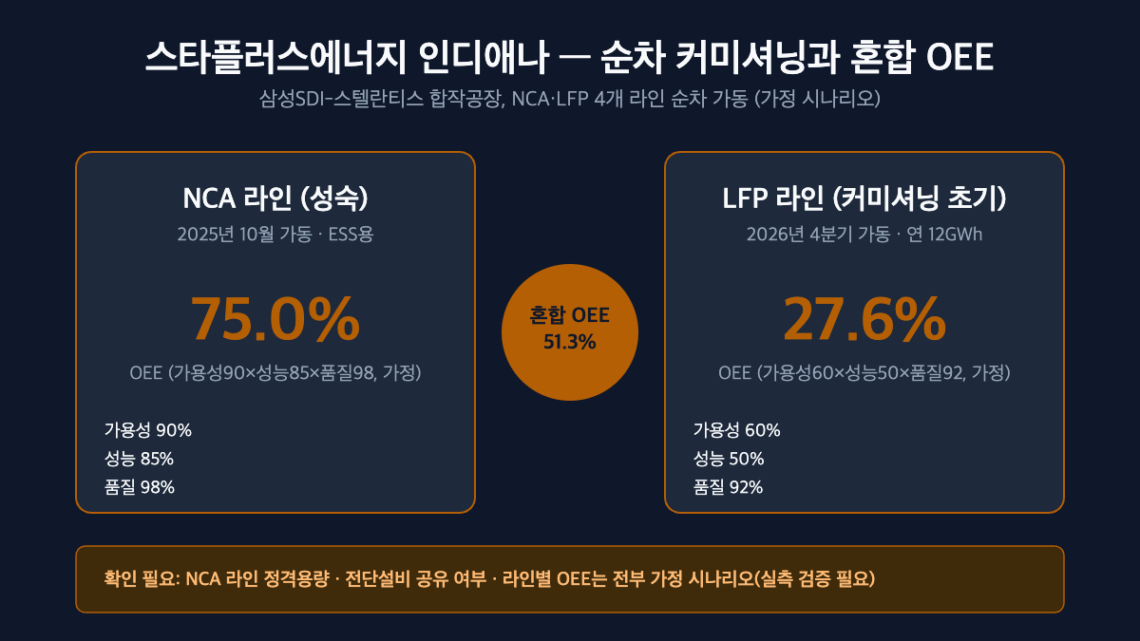
The Samsung SDI–Stellantis joint venture StarPlus Energy's Indiana (Kokomo) plant is bringing four lines online in sequence over 18 months: an NCA line starting October 2025, an LFP line (12 GWh/year) in Q4 2026, and additional NCA and LFP lines in Q1 2027. When lines of different chemistries (NCA, LFP) and end uses (EV, ESS) are commissioned at different times within a single site, a “Blended OEE” that sums the entire site into one number creates an illusion that obscures the actual performance of mature lines. This article back-calculates Takt Time from the publicly disclosed line-startup schedule and compares site-level blended metrics against line-level OEE under an assumed scenario. The…