-
LFP High-Compaction-Density Conversion and the Calendering Interface: How Nip Pressure and Line Speed Affect Takt Time
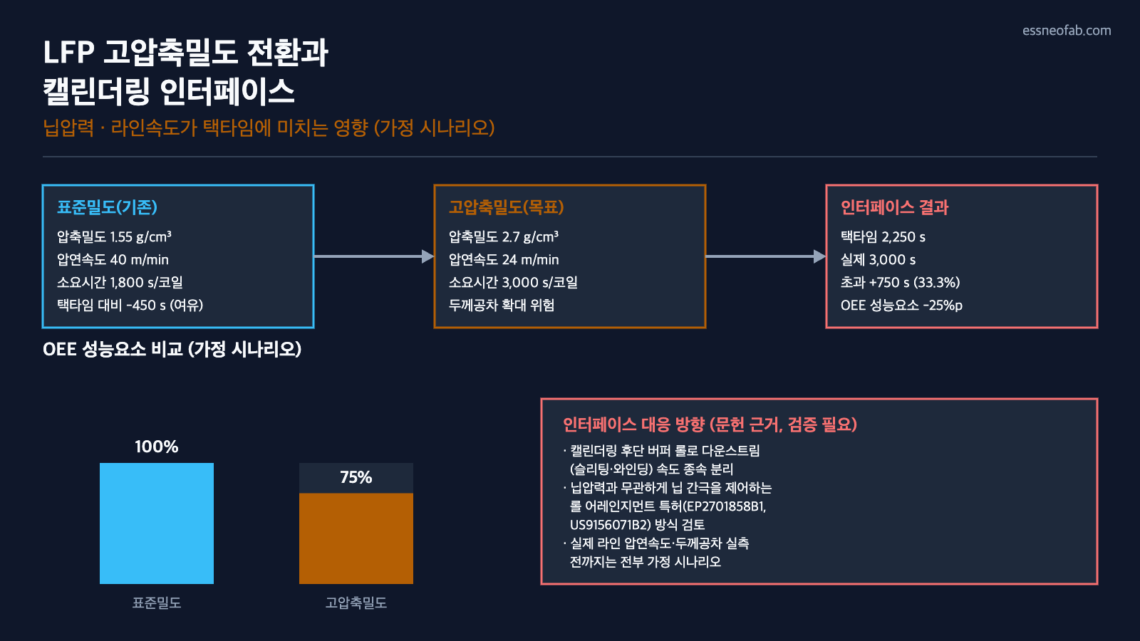
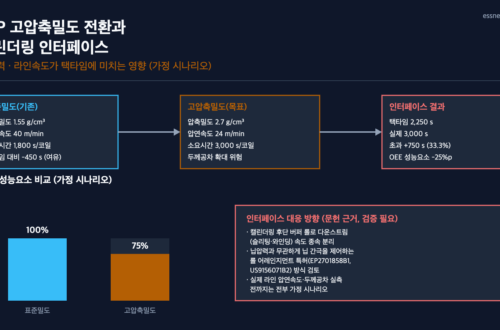
If the compaction density target for LFP (Lithium Iron Phosphate) cathode material — typically in the 1.4–1.6 g/cm³ range — is raised to the 2.7 g/cm³ class that L&F has disclosed as its end-2026 mass-production target, the nip pressure and line speed of the calendering (rolling) process must be redesigned, and this directly affects the takt time and OEE (Overall Equipment Effectiveness) performance factor of existing operating lines. In an assumed-scenario calculation, if the rolling speed decelerates from 40 m/min to 24 m/min, the calendering time per coil (1,200 m) increases from 1,800 s to 3,000 s, creating a bottleneck that exceeds the 2,250 s takt time by 750 s…
You May Also Like
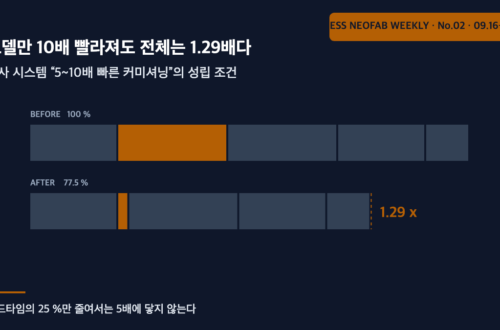
Even a tenfold faster model moves the whole by 1.29x — what “5 to 10 times faster commissioning” actually requires
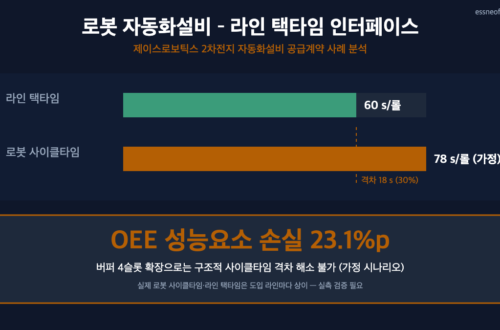
Introducing Robotic Automation Equipment — Where Does the Interface with Line Takt Time Break Down
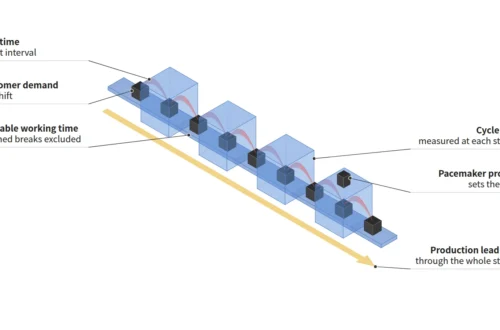
Don’t Subtract Breakdowns When Calculating Takt Time — Takt Time vs. Cycle Time vs. Lead Time
-
Between the Continuous Solid-Electrolyte Process and the Assembly Line: How Should the Buffer Interface Be Designed?
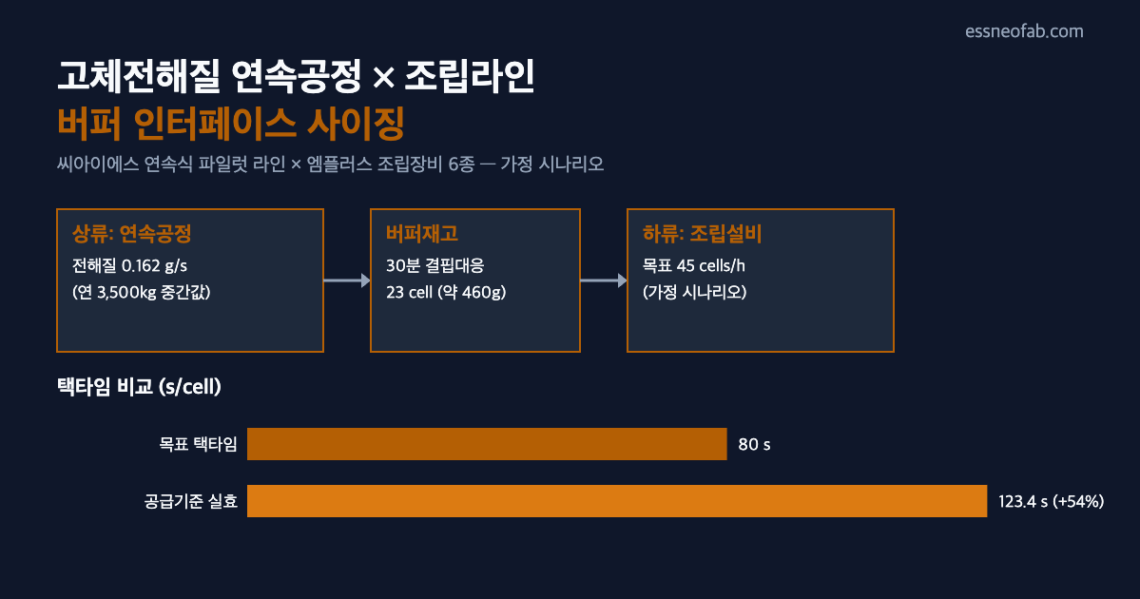
CIS's continuous-process pilot line for sulfide-based solid electrolyte at its Daegu Plant 3 (2–5 t/year, expanded from the existing batch process's 840 kg) and M Plus's order for six types of all-solid-state battery assembly equipment (targeting development/fabrication completion by end-2026) reveal a textbook interface problem: the production capacities of the upstream materials process and the downstream assembly process are not scaled up on the same timeline. This article estimates, as an assumed scenario, the buffer stock and takt-time loss required between these two processes, to quantitatively pin down why the materials-assembly interface design is a leading variable for the line's overall OEE (Overall Equipment Effectiveness). The downstream assembly equipment's target…
-
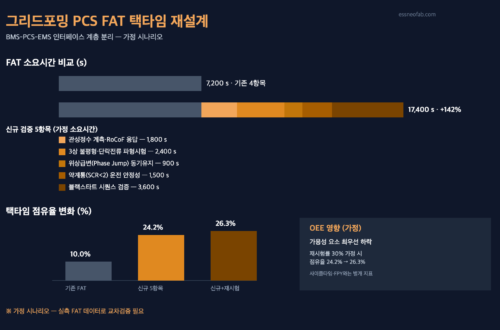
Grid-Forming PCS Mandate Redesigns FAT Takt Time and the BMS-PCS-EMS Interface
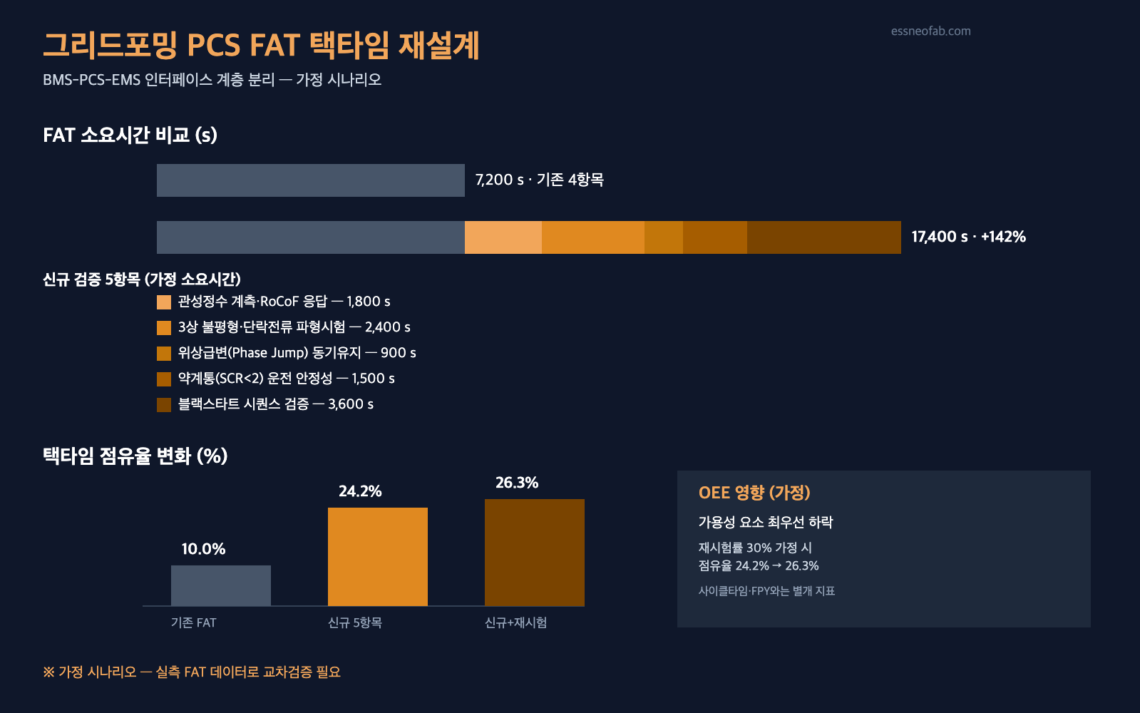
As grid-forming (GFM) inverter performance requirements become mandatory starting with long-duration BESS (Battery Energy Storage System) in the centralized-contract market scheduled for commercial operation in December 2027, five new verification stages are added to PCS (Power Conversion System) manufacturers' Factory Acceptance Test (FAT) lines. In an assumed-scenario calculation, per-unit FAT time increases by approximately 142% over the existing baseline, pushing the takt-time share from the 10% range to the 24% range, and if retests recur, the Availability factor of OEE (Overall Equipment Effectiveness) is the first to be shaken. At the same time, a design challenge emerges: a layer separation is needed between the grid-forming control loop, which requires sub-cycle…
You May Also Like
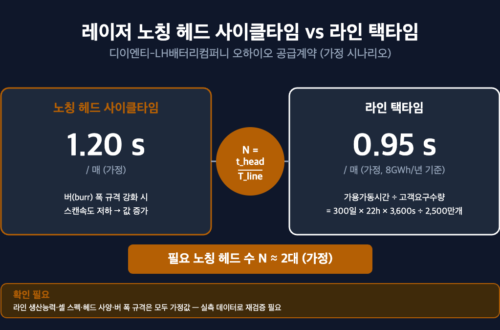
The Interface Between Laser Notching Cycle Time and Line Takt Time — The Head-Count Sizing Problem Revealed by DI ENT’s Ohio Supply Contract
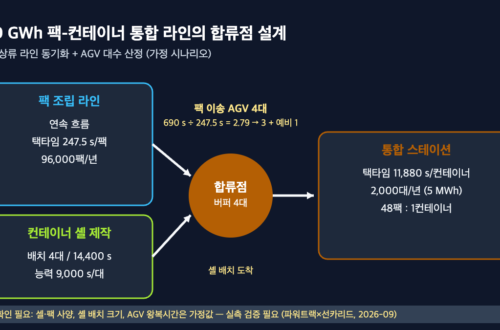
Designing the Merge Point in a 10 GWh Pack-Container Integration Line: Synchronizing Two Upstream Lines and Sizing AGV Fleet from the Powertrac × Sunka Lead Order
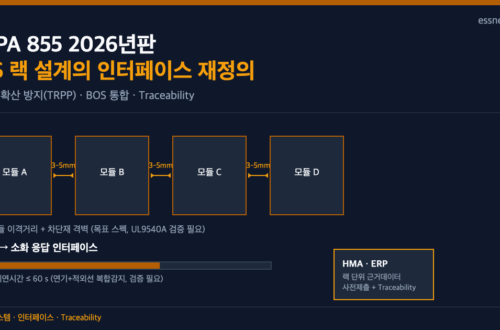
The 2026 Edition of NFPA 855 Changes ESS Rack Design and Traceability Documentation at the Same Time
-
Line Changeover Design in the Era of Low-Price ESS Round-3 Bidding — Flexible Assembly Viewed Through Takt Time and OEE
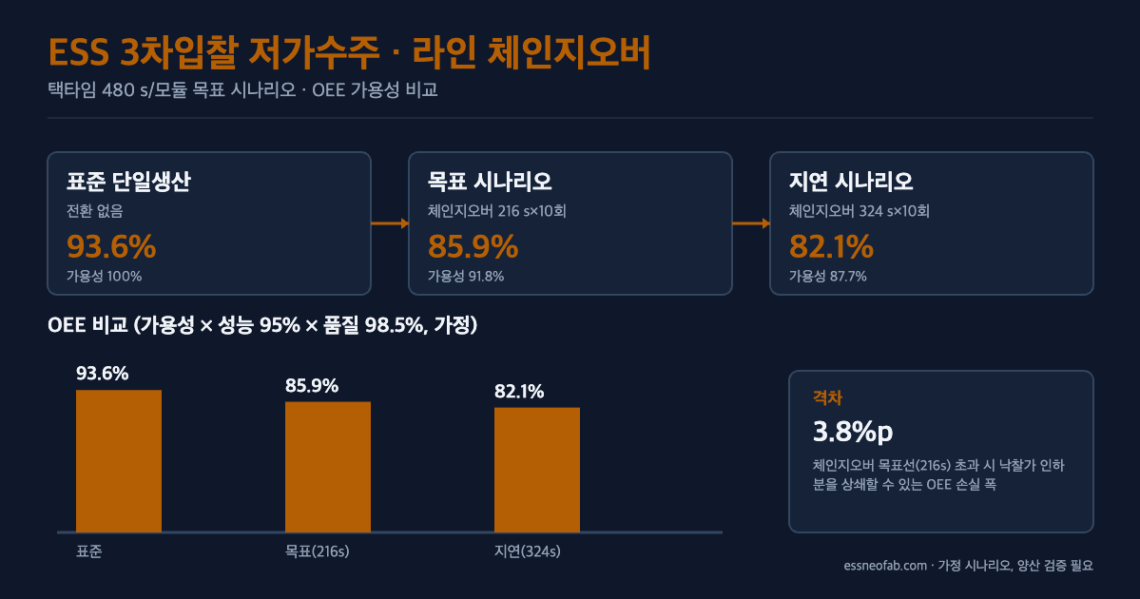
Korea's ESS centralized-contract market Round-3 bid (approximately KRW 1 trillion), scheduled for announcement in September 2026, has already shown a decline in bid prices compared to Rounds 1 and 2, intensifying low-price order competition among the three battery makers. This article focuses on the possibility that this low-price order volume will require cell-format mixed-model flow on an existing single-model production line, and quantifies, as a target scenario, the impact of changeover time on takt time and the OEE Availability factor. The verification shows that controlling changeover time within the 216 s target versus exceeding it by 50% produces an OEE gap of approximately 3.8 pp. However, these figures are an…
You May Also Like
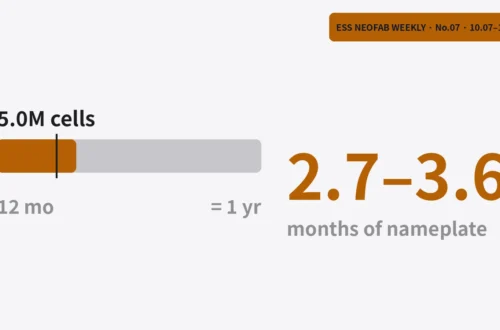
Five million ACC cells equal 2.7 to 3.6 months of nameplate output
Even a tenfold faster model moves the whole by 1.29x — what “5 to 10 times faster commissioning” actually requires
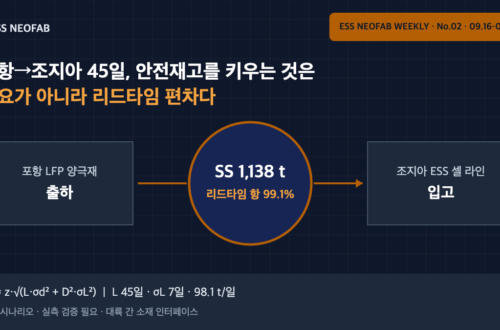
45 Days from Pohang to Georgia — Safety Stock at an Intercontinental Cathode Interface Is Driven by Lead-Time Variability, Not Demand
-
Edge AI Vision Inspection and Battery-Pack Leak Testing: How Gateway Aggregation Affects Traceability Completeness
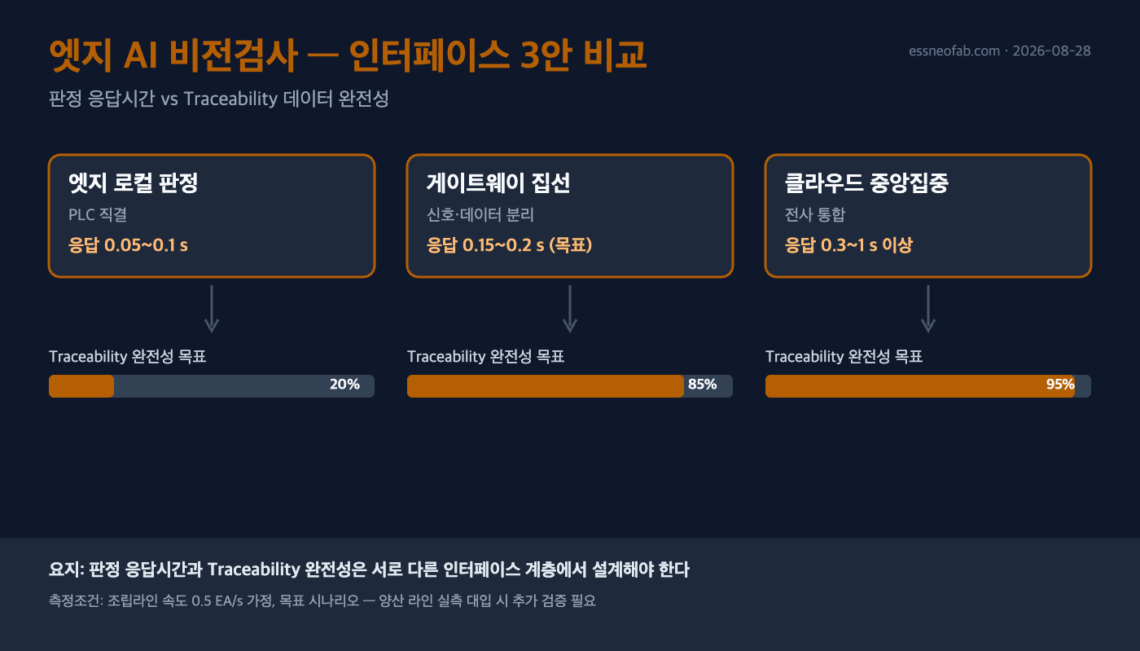
Edge AI vision inspection has already solved the problem of judgment speed itself on battery-pack assembly lines. Combining gas imaging with edge computing, as in GM's disclosed leak-inspection system “BVSeal,” makes per-cell judgment within 3 seconds possible. However, depending on where the judgment result is stored — the edge device locally, a gateway, or the cloud — the completeness of Traceability data remains an entirely different problem. This article compares the data architecture of edge AI vision inspection from an interface-design perspective and presents, as a target scenario, a gateway-aggregation approach that secures Traceability completeness without takt-time loss. 1. Judgment Has Gotten Faster, But the Record Still Breaks To state…
-
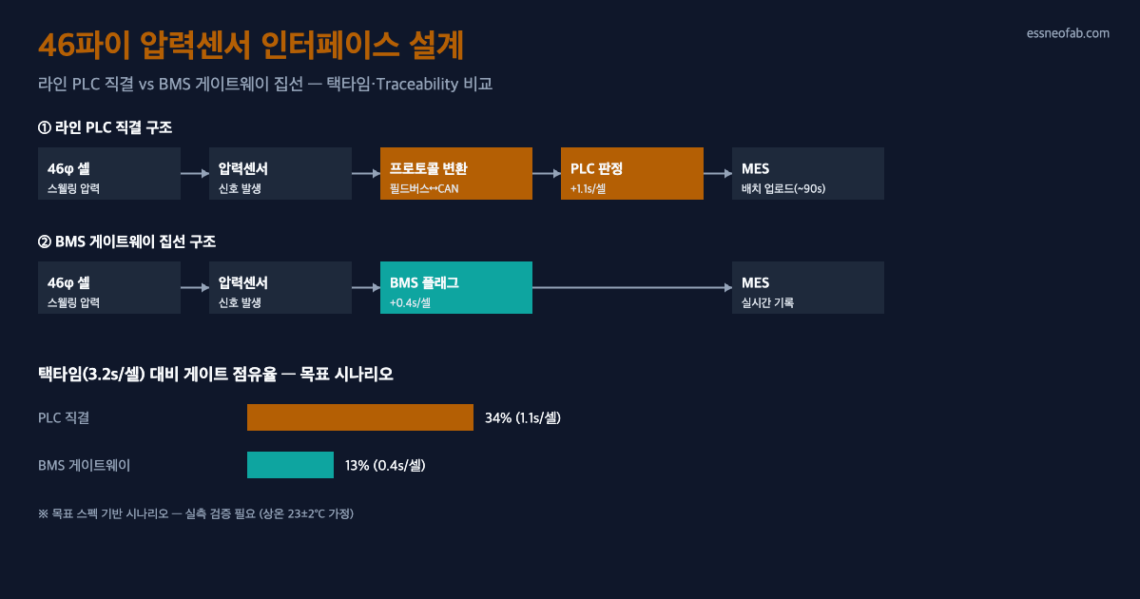
46-Phi Cylindrical Cell Line Conversion: The Pressure-Sensor–BMS Interface Determines Takt Time
As the transition to 46-series (46-phi) cylindrical cell mass production approaches, how much more finely the swelling-pressure behavior specific to the 46 mm-diameter cell must be measured compared to the 21700 has emerged as a practical line-design variable. As Korea's ESS Round-3 centralized-contract market bid size is under review for expansion to over 1 GW and new ESS orders for AI data centers surge, pressure to expand or convert 46-phi lines is expected to grow further. This article presents the proposition that an interface structure in which pressure-sensor data is first aggregated at the BMS gateway layer — rather than at the line PLC — absorbs per-gate judgment delay within…
You May Also Like
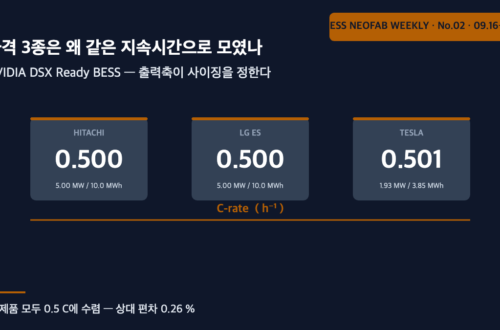
Why three qualified products landed on the same duration — in DSX Ready BESS, sizing is set by the output axis
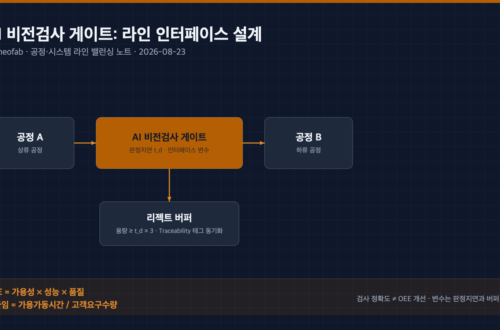
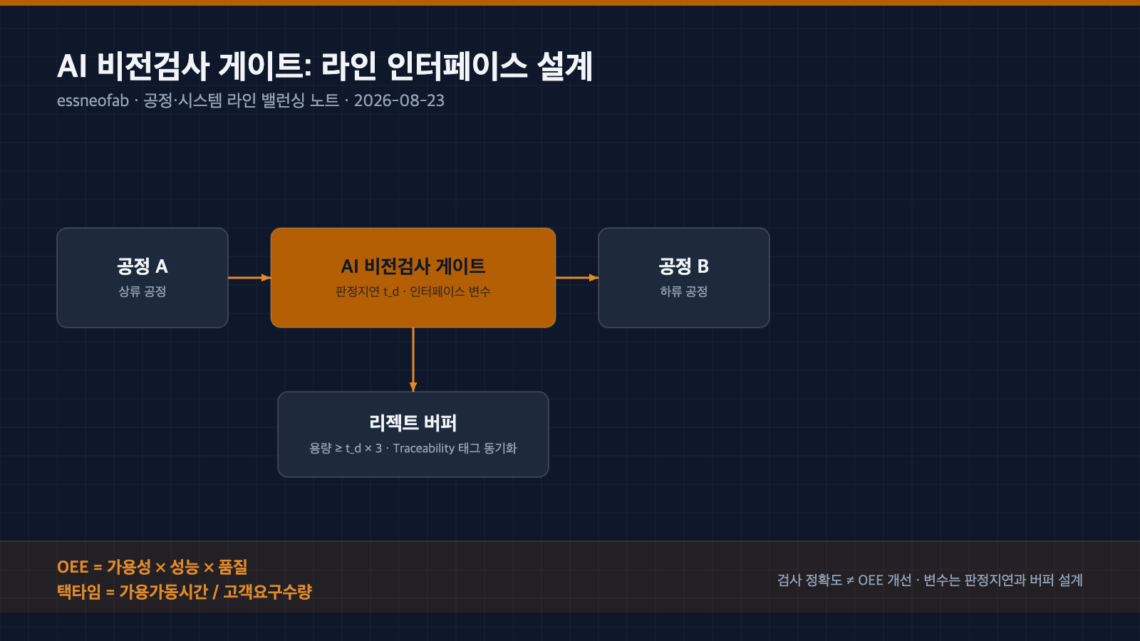
Embedding an AI Vision Inspection Gate in the Line: Redefining OEE and Takt-Time Design Variables
The Interface Between Laser Notching Cycle Time and Line Takt Time — The Head-Count Sizing Problem Revealed by DI ENT’s Ohio Supply Contract
-
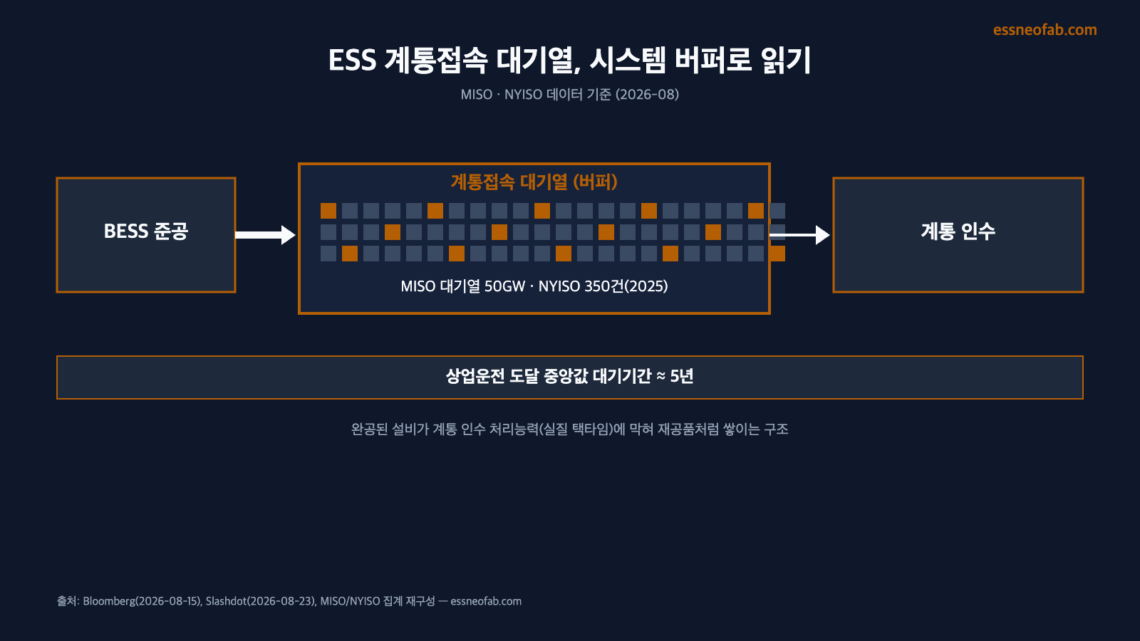
Re-Reading the ESS Grid-Interconnection Queue in the Language of Line Balancing
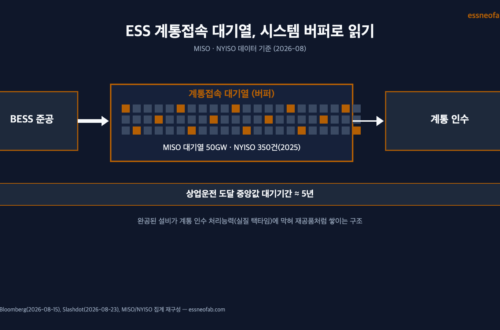
The stalled BESS (Battery Energy Storage System) commissioning cases in the US, reported successively by Bloomberg and Slashdot in August 2026, show that even after equipment is completed, delays recur at a separate bottleneck section called the grid-interconnection queue. BESS accounts for about 50 GW of MISO's total 650 GW queue, the number of NYISO's queued projects grew from 176 in 2018 to 350 in 2025, and the median wait time to reach commercial operation approaches 5 years. This article redefines this phenomenon using the line-engineering concepts of buffer, interface, and takt time, analyzing it as a work-in-process inventory structure in which completed equipment piles up without being able to…
-
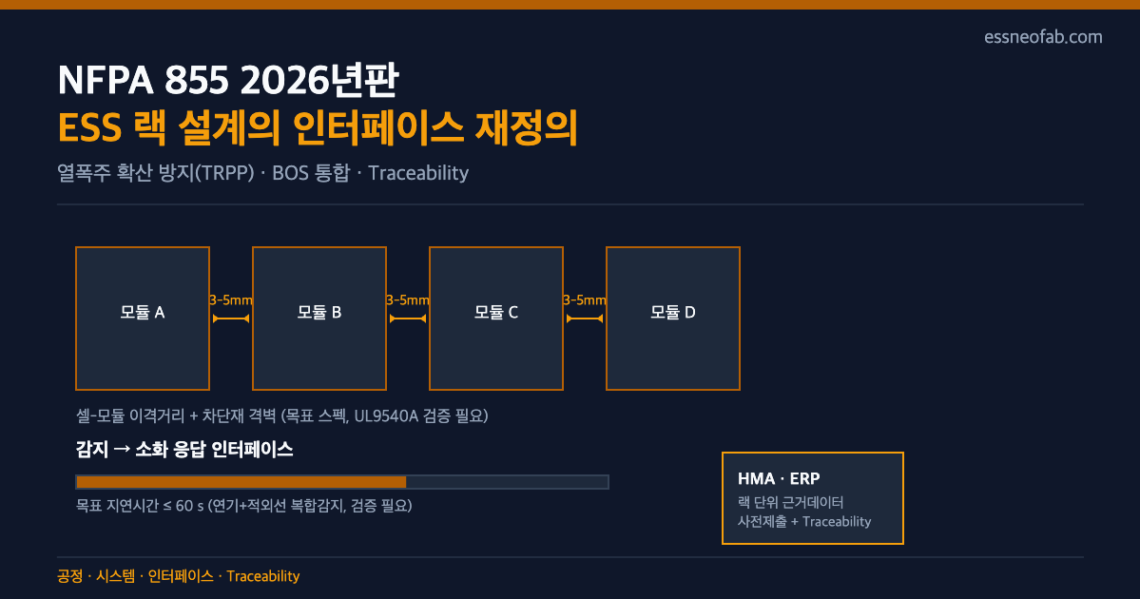
The 2026 Edition of NFPA 855 Changes ESS Rack Design and Traceability Documentation at the Same Time
The 2026 edition of NFPA 855 shifts the center of gravity of ESS (Energy Storage System) safety standards from preventing ignition at the cell level to Thermal Runaway Propagation Prevention (TRPP) at the rack/container level. This revision is a line/system-engineering matter, not a problem of the battery's own material properties, in that it brings the entire BOS (Balance of System) — including cell-to-cell spacing, detection interfaces, and cooling wiring — into the scope of design. At the same time, mandatory pre-submission of the HMA (Hazard Mitigation Analysis) and ERP (Emergency Response Plan) to fire authorities has made a Traceability system that tracks and retains design-basis data at the rack level…
-
The Equipment Maker’s Line-Ownership Shift — OEE and Takt-Time Design During the ESS-LFP New-Line Mass-Production Ramp-Up
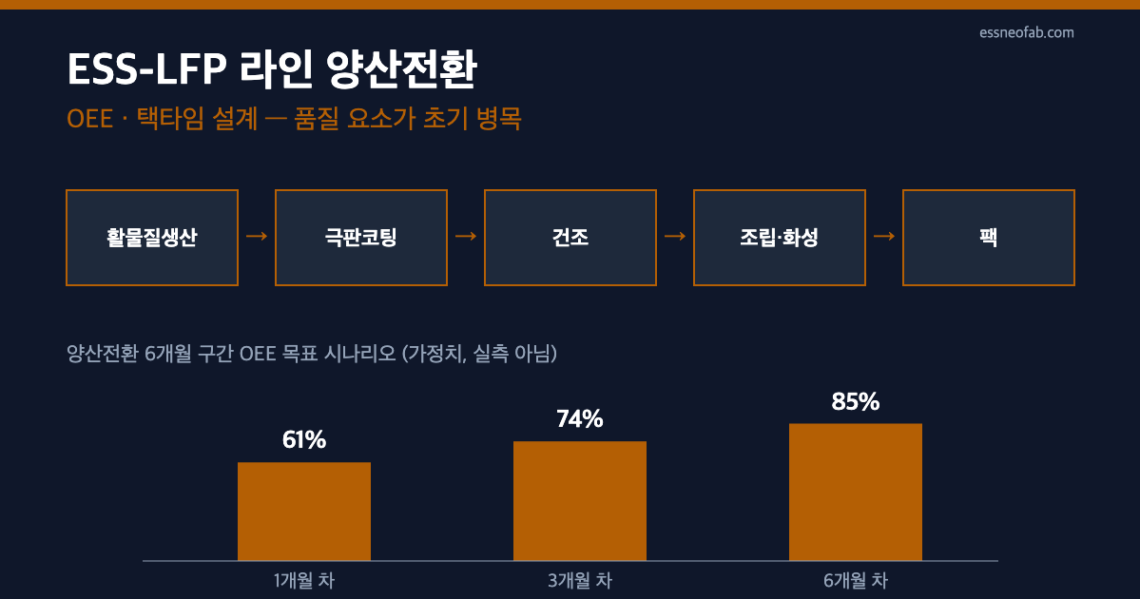
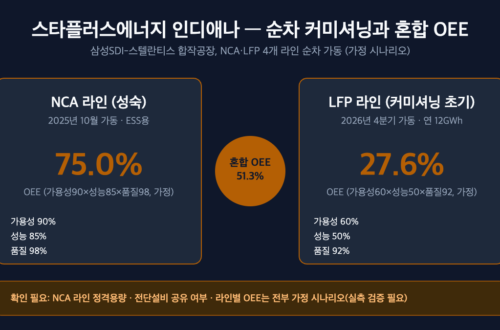
As more equipment suppliers directly operate their own ESS-LFP lines, a need has emerged to review line balancing and OEE management during the mass-production ramp-up separately from equipment-buyer-owned lines. Prompted by domestic equipment maker PNT's May 2026 earnings announcement, in which it stated it is focusing on yield stabilization for its Plant 4 ESS-LFP battery/cathode-active-material production line with a target of mass-production conversion in the second half of 2026, this article designs and verifies a target scenario for the order in which the three OEE factors — Availability, Performance, and Quality — improve during a ramp-up phase in which both new materials and a new line are introduced simultaneously. It…
You May Also Like
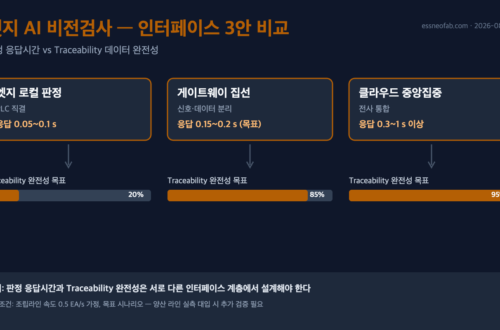
Edge AI Vision Inspection and Battery-Pack Leak Testing: How Gateway Aggregation Affects Traceability Completeness
45 Days from Pohang to Georgia — Safety Stock at an Intercontinental Cathode Interface Is Driven by Lead-Time Variability, Not Demand
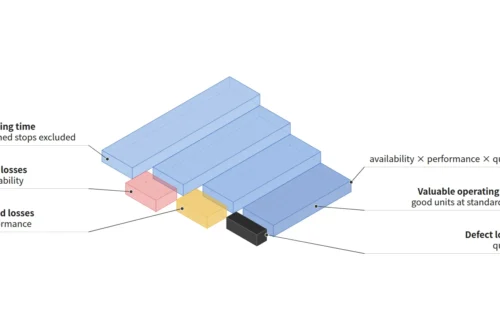
If Availability, Performance and Quality Are All 80 %, OEE Is 51.2 % — How to Calculate OEE
-
Embedding an AI Vision Inspection Gate in the Line: Redefining OEE and Takt-Time Design Variables
Across battery-line procurement specifications from 2024 to 2026, a trend is confirmed in which the Cognex, Keyence, ISRA, and MVTec deep-learning vision-inspection platforms have effectively become standard fixtures. However, only inspection-accuracy specs are typically stated, while the effect an AI vision-inspection gate has on the line's overall OEE performance rate and takt-time variance is often not treated as a separate design item. This article redefines the AI vision-inspection gate as two interface variables — judgment delay and reject-merge point — and addresses the procedure for incorporating them into line-balancing calculations. To state the conclusion first, it is not the accuracy of the AI vision inspection itself, but the buffer-capacity design…