-
Pylontech’s 588 Ah and 601 Ah LFP Cells Enter Mass Production — Why Energy-Weighted Availability Stays the Same When the Cell Count Halves
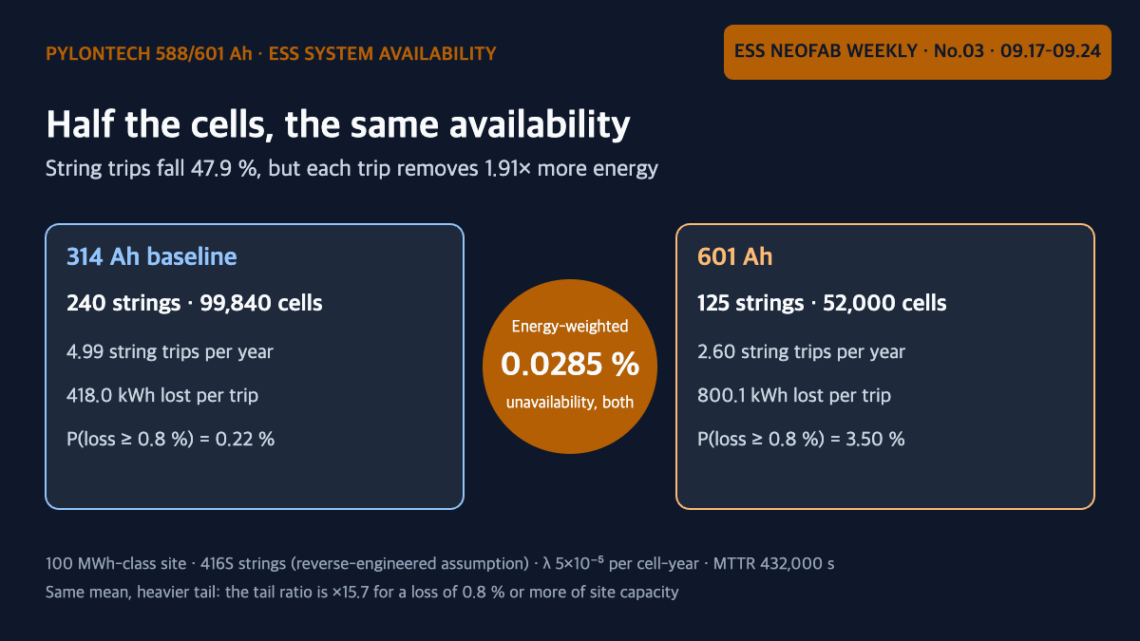
On September 21, 2026, Pylontech began mass production of 588 Ah and 601 Ah prismatic LFP ESS cells at its Hefei base and named "fewer cells and interconnections" as a benefit of the larger format¹. Under a reverse-engineered assumption of 416S strings, a 100 MWh-class site drops from 99,840 cells to 52,000 cells (−47.9 %), and string trips caused by cell-count-proportional faults fall at the same rate. Each trip, however, now removes 800.1 kWh instead of 418.0 kWh (1.91×), so the energy-weighted unavailability stays at 0.0285 % regardless of cell capacity. The mean is unchanged and only the tail gets heavier: the probability of losing 0.8 % or more of…
You May Also Like
The 2026 Edition of NFPA 855 Changes ESS Rack Design and Traceability Documentation at the Same Time
StarPlus Energy’s Indiana Plant — The Blended-OEE Illusion Created by Sequential NCA/LFP Commissioning
LFP High-Compaction-Density Conversion and the Calendering Interface: How Nip Pressure and Line Speed Affect Takt Time
-
A 25-Year Contract Increases Migrations, Not Storage — Traceability Design for Jeju Long-Term ESS Contracts
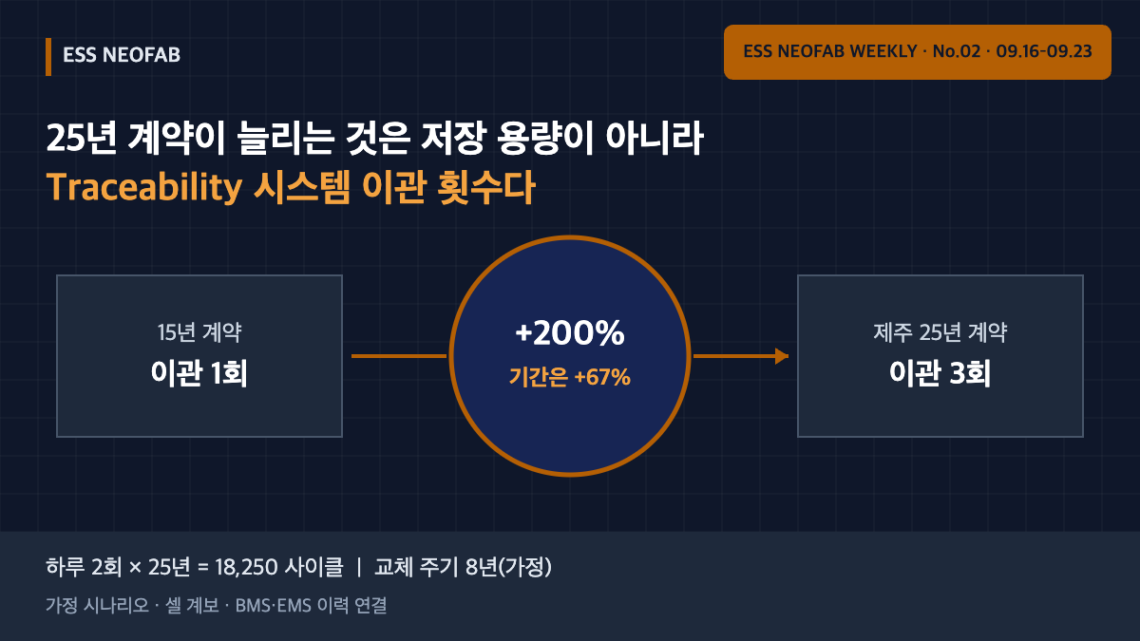
Korea’s 2026 ESS central contract market (1,180 MW, opened 22 September 2026) introduced, for the first time, a 25-year contract on Jeju for facilities capable of two charge/discharge cycles per day for 25 years. A longer contract lengthens the retention period for cell-level Traceability records. Under an assumed scenario (8-year system replacement cycle), the contract term grows by 67% but Traceability system migrations triple from one to three, while one generation of cell records is only about 15.9 GB. The design constraint of a 25-year contract is not storage but genealogy breaks at each migration.
You May Also Like
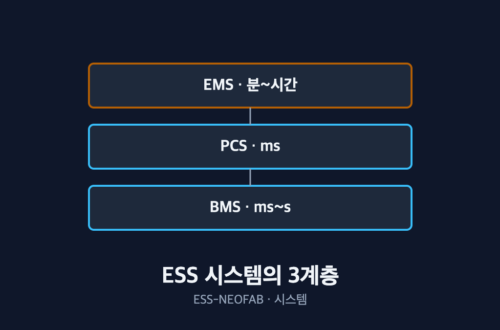
BMS, PCS, EMS: Why Do the Three ESS System Layers Move at Different Speeds?
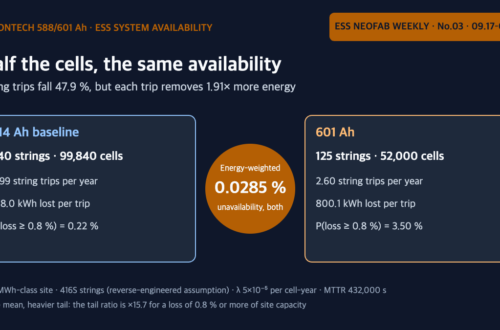
Pylontech’s 588 Ah and 601 Ah LFP Cells Enter Mass Production — Why Energy-Weighted Availability Stays the Same When the Cell Count Halves
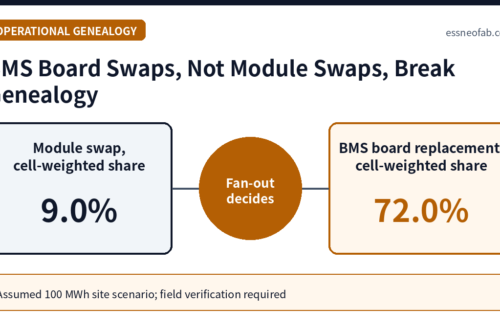
Serial Genealogy in ESS Operation: Where Module Swaps, Refurbishment and BMS Board Replacements Break Parent-Child Links
-
ESS Fire-Safety Kits Across 20 Sites — What the System Must Prepare
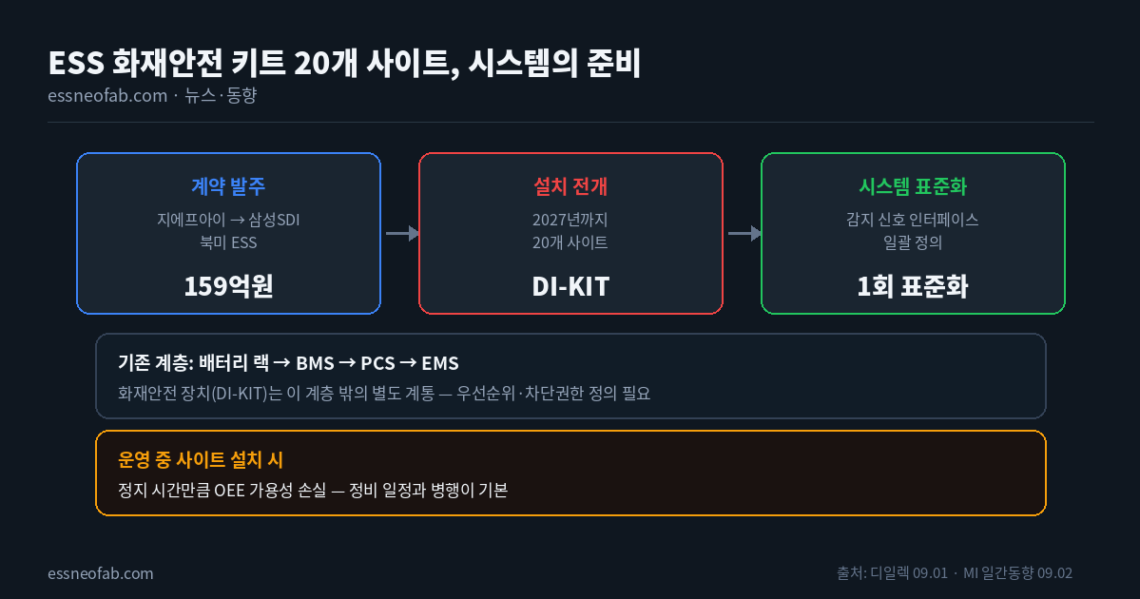
GFI has won a KRW 15.9 billion contract for Samsung SDI's North American ESS fire-safety solution. It will install DI-KIT at 20 sites by 2027. This contract shows that fire-safety devices are being ordered not as a cell-level option but as a site-level system line item. On the operations side, what is needed first is defining the installation sequence across the 20 sites and the interface with existing systems. 1. What Happened To state the conclusion first: ESS fire-safety solutions have moved into a phase of being applied in bulk across multiple sites. Until now, the general approach for North American ESS was to address site-specific safety requirements individually. Bundling…
You May Also Like
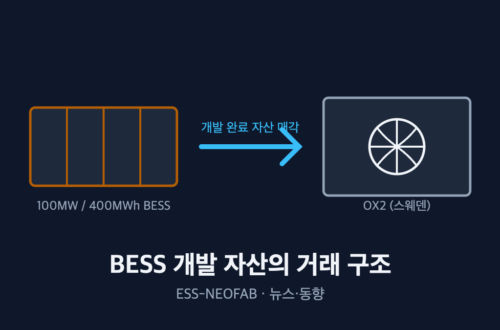
Hanwha Energy Sells Two Large Italian BESS Projects to Sweden’s OX2 — Evidence of European Development Capability
LS Electric Ships First Units of Next-Gen ESS PCS “G2” — Is Liquid Cooling the Answer?
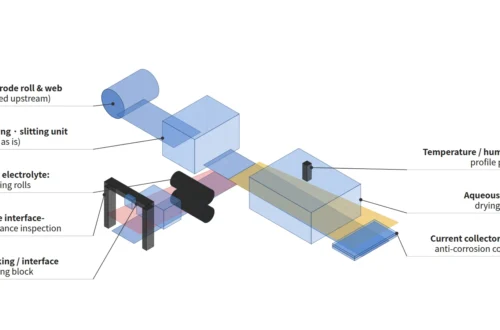
Solid Electrolyte and Aqueous Zinc Batteries: Investment Is Up — Is the Line Ready?
-
Grid-Forming PCS Mandate Redesigns FAT Takt Time and the BMS-PCS-EMS Interface
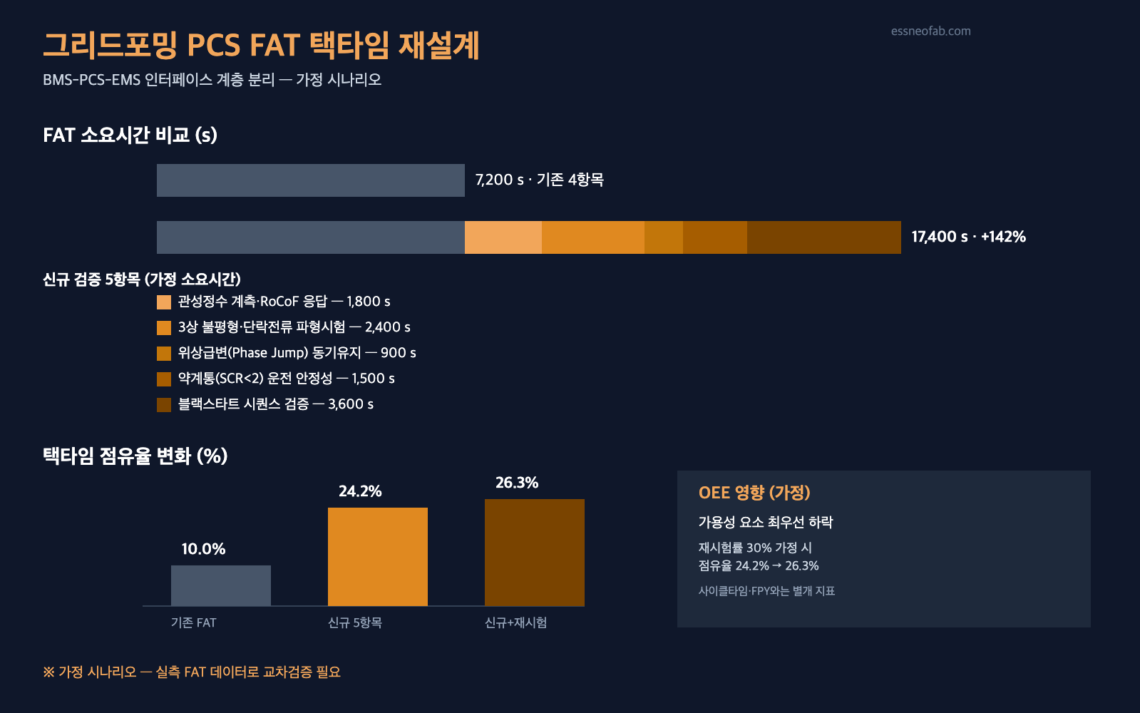
As grid-forming (GFM) inverter performance requirements become mandatory starting with long-duration BESS (Battery Energy Storage System) in the centralized-contract market scheduled for commercial operation in December 2027, five new verification stages are added to PCS (Power Conversion System) manufacturers' Factory Acceptance Test (FAT) lines. In an assumed-scenario calculation, per-unit FAT time increases by approximately 142% over the existing baseline, pushing the takt-time share from the 10% range to the 24% range, and if retests recur, the Availability factor of OEE (Overall Equipment Effectiveness) is the first to be shaken. At the same time, a design challenge emerges: a layer separation is needed between the grid-forming control loop, which requires sub-cycle…
You May Also Like
Pylontech’s 588 Ah and 601 Ah LFP Cells Enter Mass Production — Why Energy-Weighted Availability Stays the Same When the Cell Count Halves
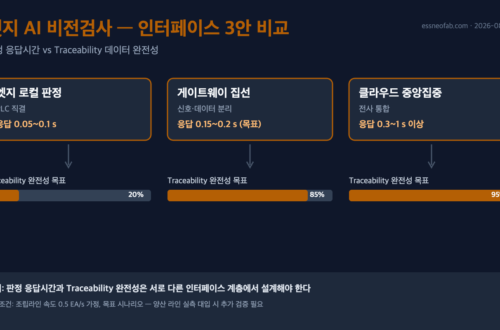
Edge AI Vision Inspection and Battery-Pack Leak Testing: How Gateway Aggregation Affects Traceability Completeness
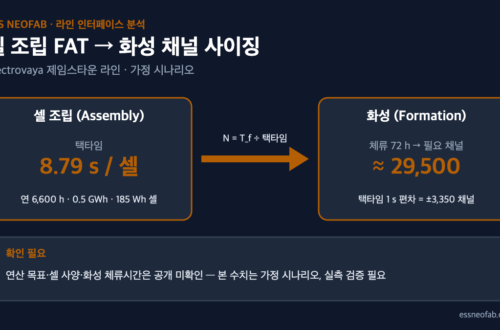
Formation Channel Sizing Read from a Cell Assembly Equipment FAT — How 1 Second of Takt Time Moves 3,350 Channels
-
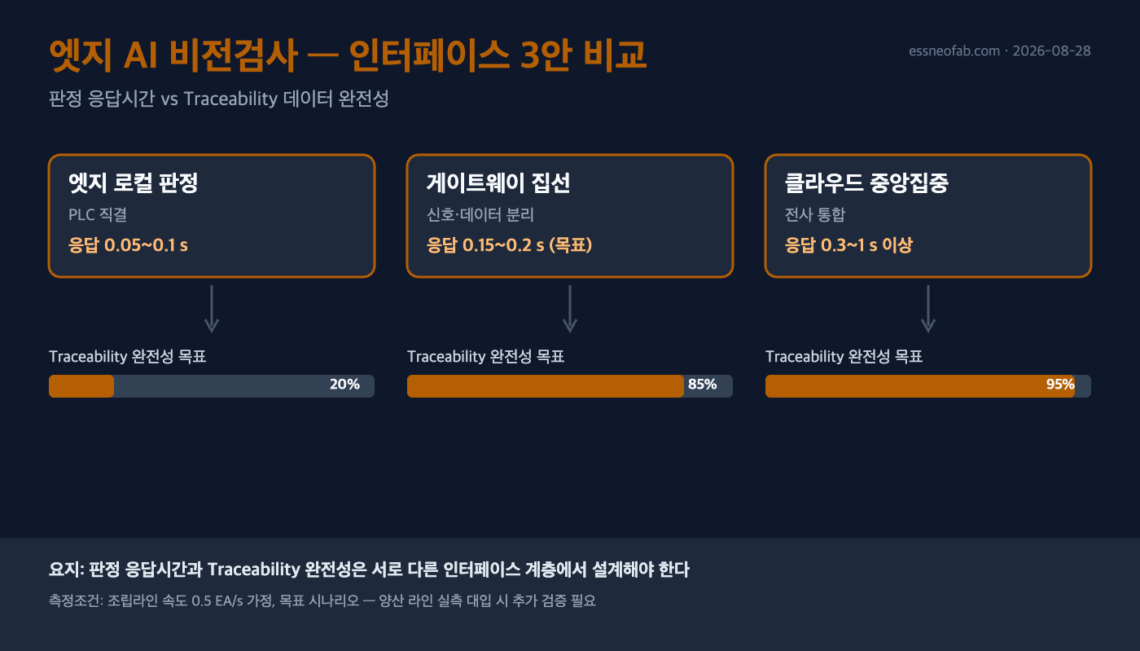
Edge AI Vision Inspection and Battery-Pack Leak Testing: How Gateway Aggregation Affects Traceability Completeness
Edge AI vision inspection has already solved the problem of judgment speed itself on battery-pack assembly lines. Combining gas imaging with edge computing, as in GM's disclosed leak-inspection system “BVSeal,” makes per-cell judgment within 3 seconds possible. However, depending on where the judgment result is stored — the edge device locally, a gateway, or the cloud — the completeness of Traceability data remains an entirely different problem. This article compares the data architecture of edge AI vision inspection from an interface-design perspective and presents, as a target scenario, a gateway-aggregation approach that secures Traceability completeness without takt-time loss. 1. Judgment Has Gotten Faster, But the Record Still Breaks To state…
You May Also Like
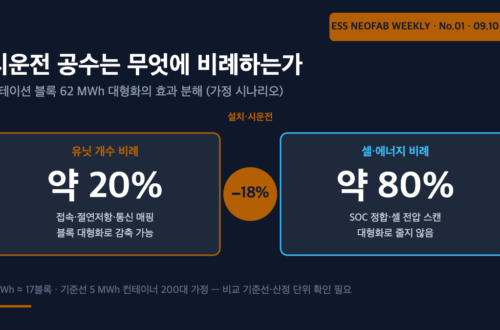
When the Station Block Grows to 62 MWh, What Actually Shrinks Is Commissioning Labor, Not Cell Count
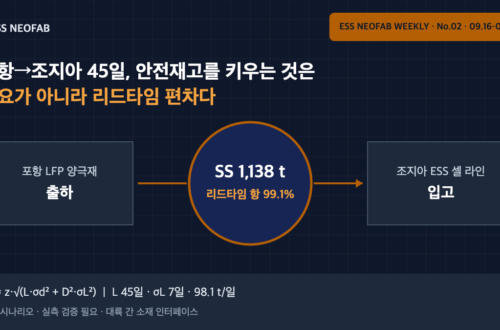
45 Days from Pohang to Georgia — Safety Stock at an Intercontinental Cathode Interface Is Driven by Lead-Time Variability, Not Demand
Formation Channel Sizing Read from a Cell Assembly Equipment FAT — How 1 Second of Takt Time Moves 3,350 Channels
-
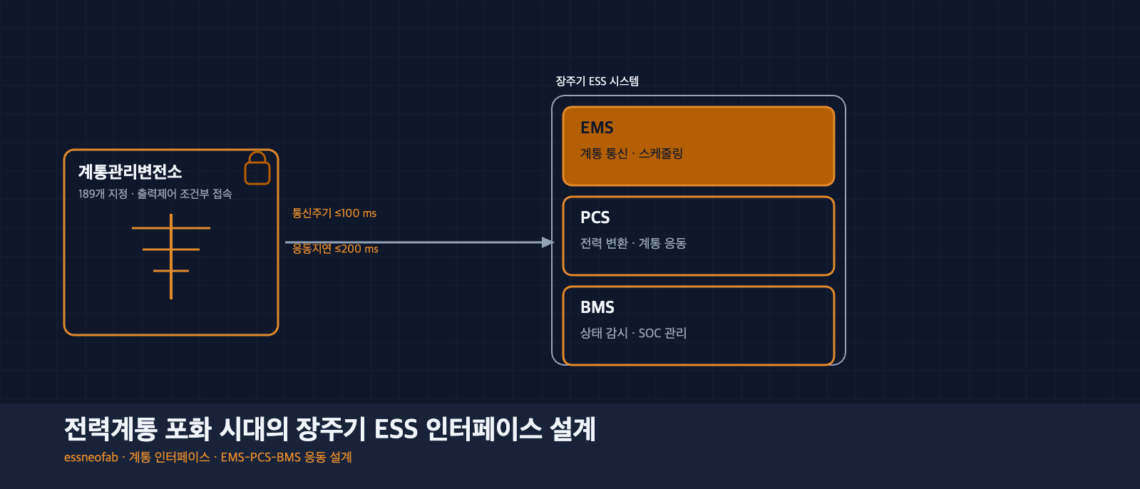
Long-Duration ESS Interface Design in the Era of Power-Grid Saturation
As 189 grid-management substations nationwide have, starting in 2026, been restricting new interconnection of renewable energy and large-scale demand through conditional curtailment, long-duration ESS (Energy Storage System) is shifting from a simple generation-consumption buffer into an essential variable in grid interface design. Korea's Ministry of Trade, Industry and Energy's centralized-contract market has presented a target of securing approximately 0.5 GW annually from 2026 to 2029, and a cumulative 21.5 GW by 2038, of long-duration ESS, which translates directly into standardization pressure on the communication and response specifications across the three-tier BMS-PCS-EMS hierarchy. In the current structure, where grid-interconnection queue information is not disclosed, designing margin into an individual ESS system's…
-
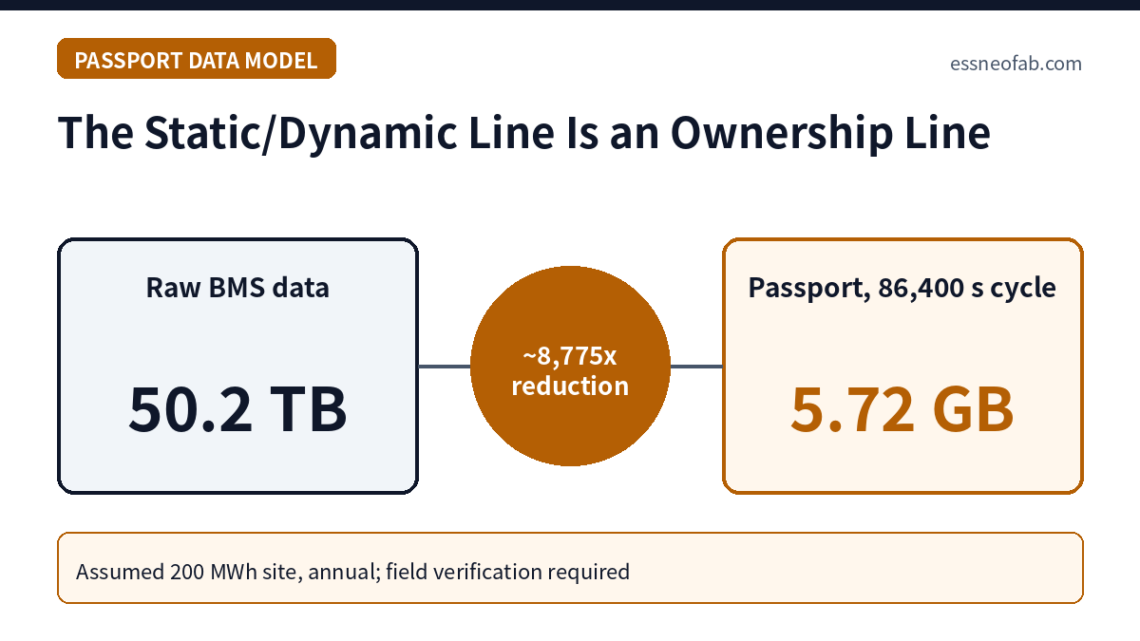
Battery Passport Static vs Dynamic Data: Ownership and Update Interfaces Across ESS Layers
The split between "static data" and "dynamic data" in the battery passport data model looks like a classification of data characteristics, but mapped onto ESS system layers it functions as the boundary where data ownership and legal responsibility diverge. Regulation (EU) 2023/1542 places responsibility for the accuracy and up-to-dateness of passport information on the operator placing the battery on the market (usually the pack or system integrator), yet the 16 dynamic attributes (mandatory for the stationary category) are generated after placing on the market in the BMS and EMS run by the asset owner, and the BMS read access right under Article 14 is granted to the purchaser, not the…
You May Also Like
Pylontech’s 588 Ah and 601 Ah LFP Cells Enter Mass Production — Why Energy-Weighted Availability Stays the Same When the Cell Count Halves
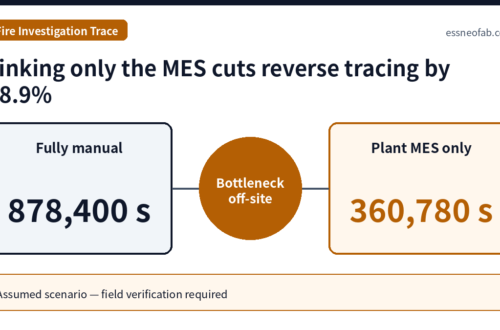
ESS Fire Investigation and Traceability: Decomposing Reverse-Trace Time from the Incident Rack to Same-Lot Sites
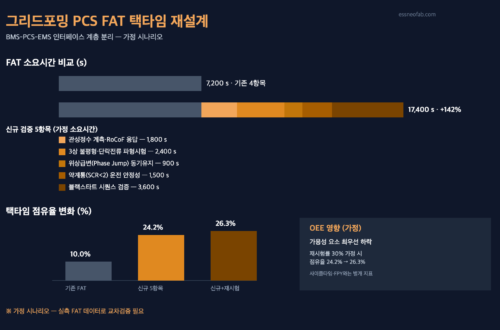
Grid-Forming PCS Mandate Redesigns FAT Takt Time and the BMS-PCS-EMS Interface