-
US storage set an energy record in Q2 as installed power fell 7%
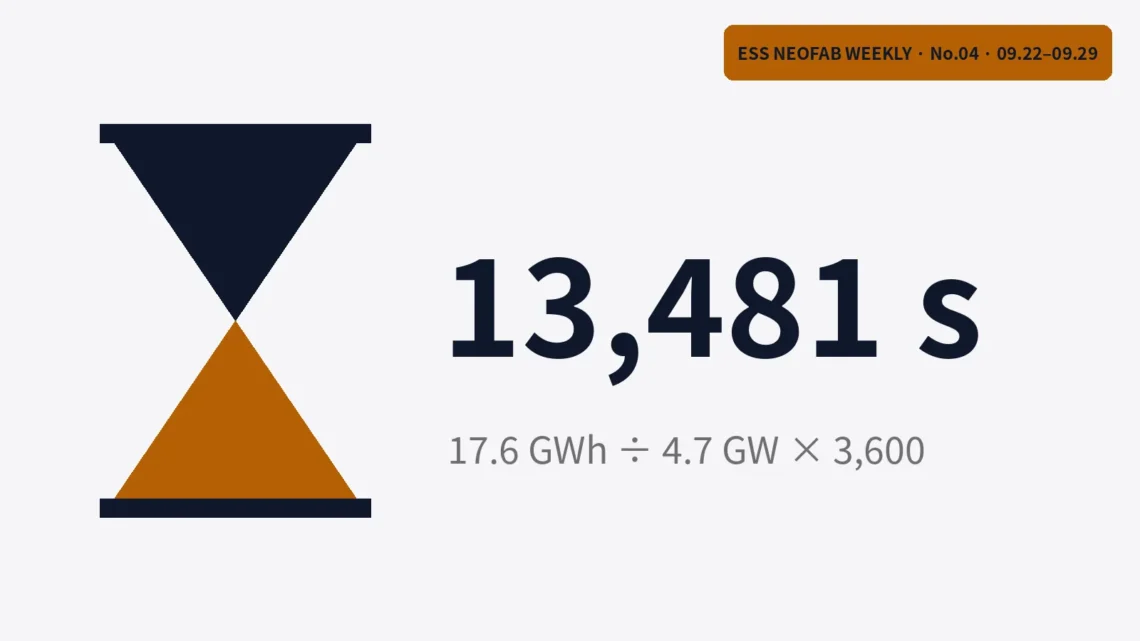
The US installed a record 18.9 GWh of energy storage in the second quarter of 2026, yet installed power fell 7% from a year earlier. Duration, the energy divided by the power, got longer, and for utility-scale projects it reached 13,481 s (about 3.74 hours). If duration stretches to the 14,788 s average in the 2026–2031 outlook, a 10% rise in energy calls for only 0.3% more PCS capacity. Battery lines follow GWh and PCS-transformer lines follow GW, and each conversion unit carries a larger share as duration grows.
You May Also Like
Line Changeover Design in the Era of Low-Price ESS Round-3 Bidding — Flexible Assembly Viewed Through Takt Time and OEE
A 2.5 GWh Line Fed Only 1 GWh of Cells — OEE of 36.9% and 83.8% Describe the Same Line
Market Trends from a Battery Process/Equipment Perspective — 46-Phi Ramp-Up, Dry Process, Equipment In-Housing
-
Don’t Subtract Breakdowns When Calculating Takt Time — Takt Time vs. Cycle Time vs. Lead Time
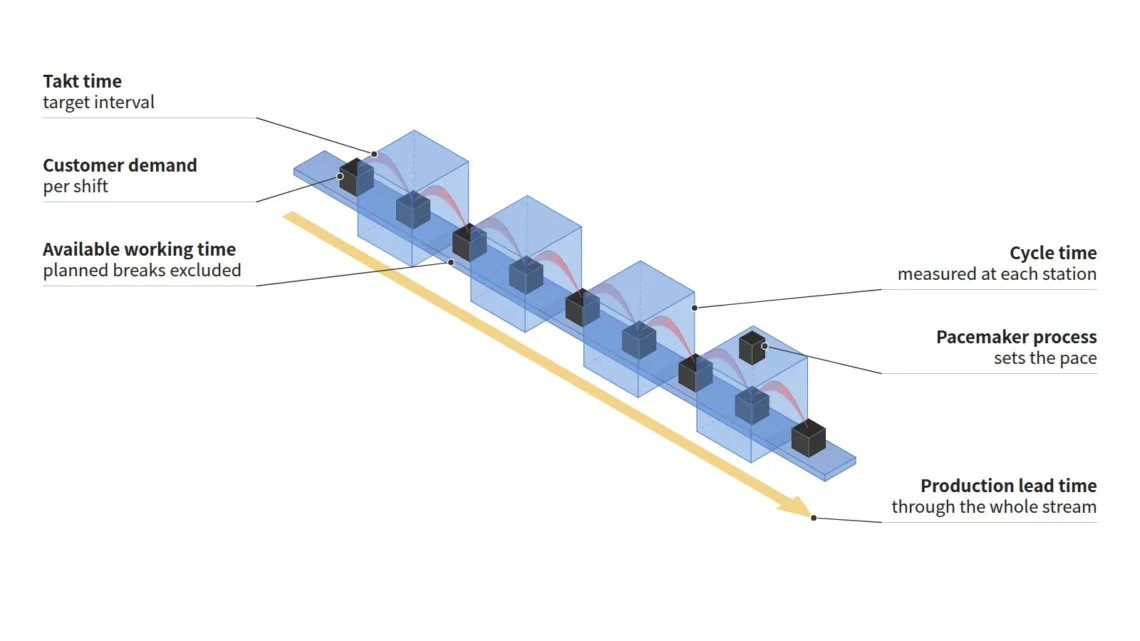
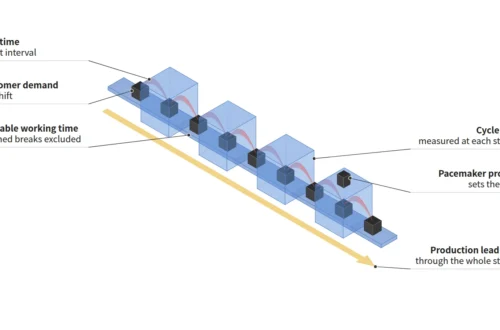
Takt time is the target production interval obtained by dividing available working time by customer demand, whereas cycle time is the measured time a process actually takes to make one unit. The calculation rule in the workbook published by the Lean Enterprise Institute (LEI) subtracts from shift time planned operator breaks, meetings, cleanups, etc., but not time for unplanned machine downtime, changeovers or other internal problems. Dividing the 27,600 s of available working time per shift obtained under this rule by the demand per shift of 690 units gives a takt time of 40 s. To cover stopped time as well, the measured cycle time must be shorter than takt…
You May Also Like
Between the Continuous Solid-Electrolyte Process and the Assembly Line: How Should the Buffer Interface Be Designed?
Introducing Robotic Automation Equipment — Where Does the Interface with Line Takt Time Break Down
Long-Duration ESS Interface Design in the Era of Power-Grid Saturation
-
Designing the Merge Point in a 10 GWh Pack-Container Integration Line: Synchronizing Two Upstream Lines and Sizing AGV Fleet from the Powertrac × Sunka Lead Order
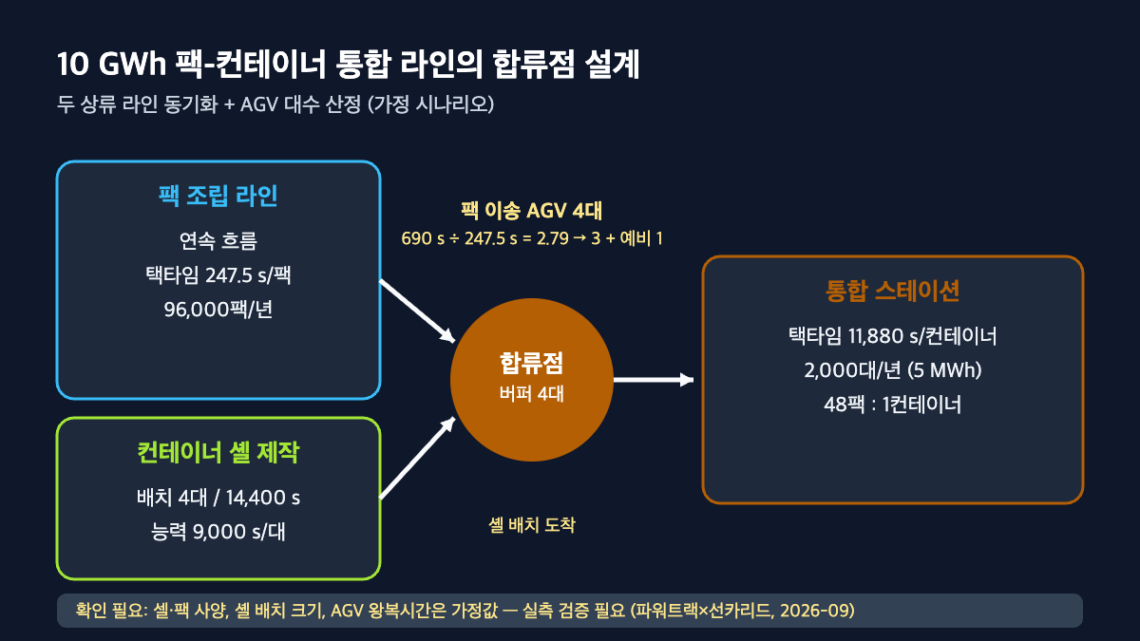
India's Powertrac has ordered a 10 GWh line from China's Sunka Lead in which a pack assembly line and an in-house container shell fabrication line — two upstream flows — merge at a single integrated station. In a two-input line of this kind, the first bottleneck appears not at the pack assembly takt time but at the merge point's synchronization buffer and the AGV transfer capacity linking the two flows. This article, under an assumed scenario (10 GWh/year, 5 MWh container baseline), back-calculates a container takt time of 11,880 s and a pack takt time of 247.5 s, and derives a design value of a minimum 4-unit merge-point buffer (assuming…
You May Also Like
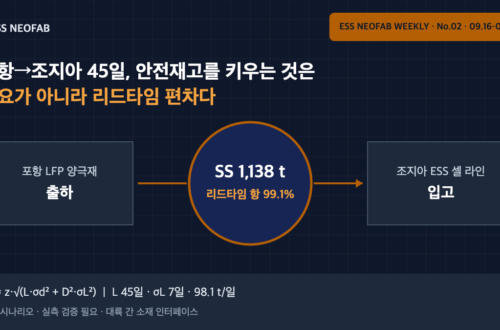
45 Days from Pohang to Georgia — Safety Stock at an Intercontinental Cathode Interface Is Driven by Lead-Time Variability, Not Demand
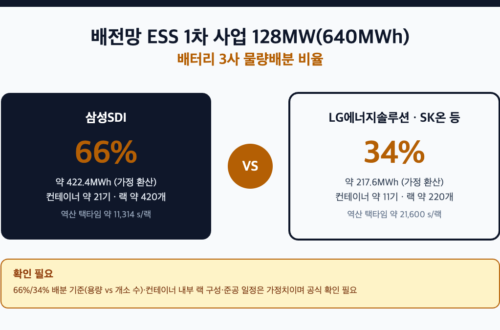
128 MW of Distribution-Grid ESS Volume Allocated — Can the Battery Pack Assembly Line Absorb the Takt Time?
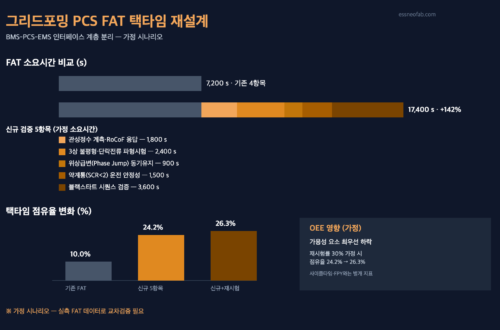
Grid-Forming PCS Mandate Redesigns FAT Takt Time and the BMS-PCS-EMS Interface
-
StarPlus Energy’s Indiana Plant — The Blended-OEE Illusion Created by Sequential NCA/LFP Commissioning
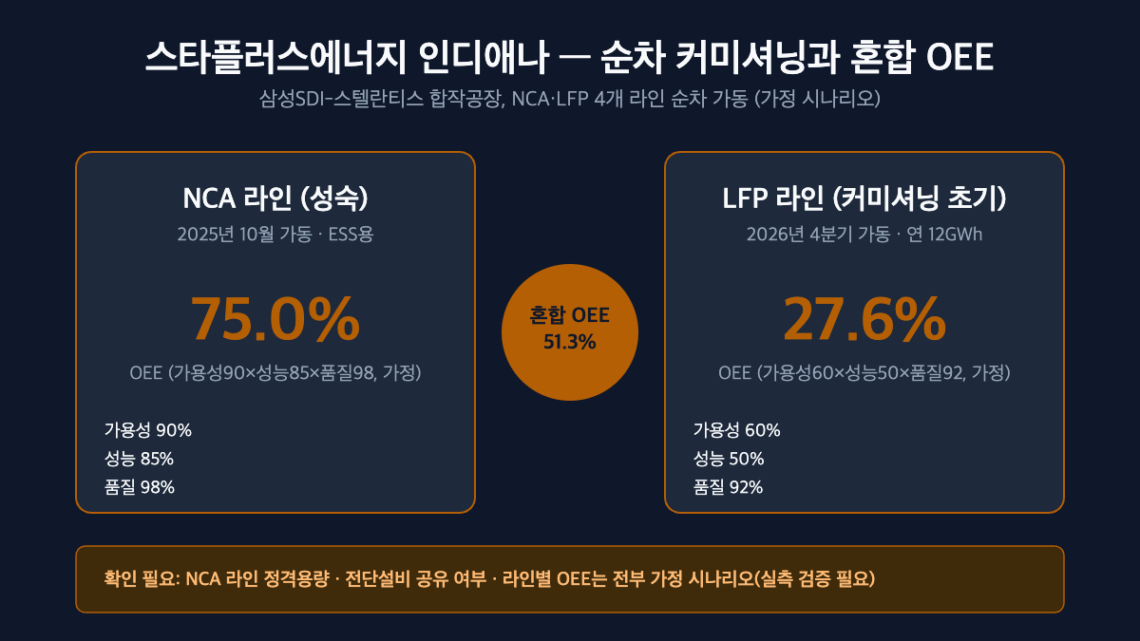
The Samsung SDI–Stellantis joint venture StarPlus Energy's Indiana (Kokomo) plant is bringing four lines online in sequence over 18 months: an NCA line starting October 2025, an LFP line (12 GWh/year) in Q4 2026, and additional NCA and LFP lines in Q1 2027. When lines of different chemistries (NCA, LFP) and end uses (EV, ESS) are commissioned at different times within a single site, a “Blended OEE” that sums the entire site into one number creates an illusion that obscures the actual performance of mature lines. This article back-calculates Takt Time from the publicly disclosed line-startup schedule and compares site-level blended metrics against line-level OEE under an assumed scenario. The…
You May Also Like
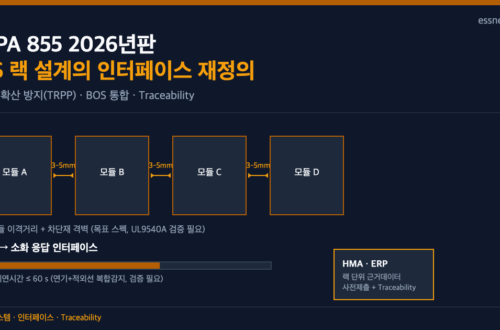
The 2026 Edition of NFPA 855 Changes ESS Rack Design and Traceability Documentation at the Same Time
SK On’s Dual-Site ESS Production Bases — Where Fixed Contracts and Variable Bidding Split Takt Time Design
Between the Continuous Solid-Electrolyte Process and the Assembly Line: How Should the Buffer Interface Be Designed?
-
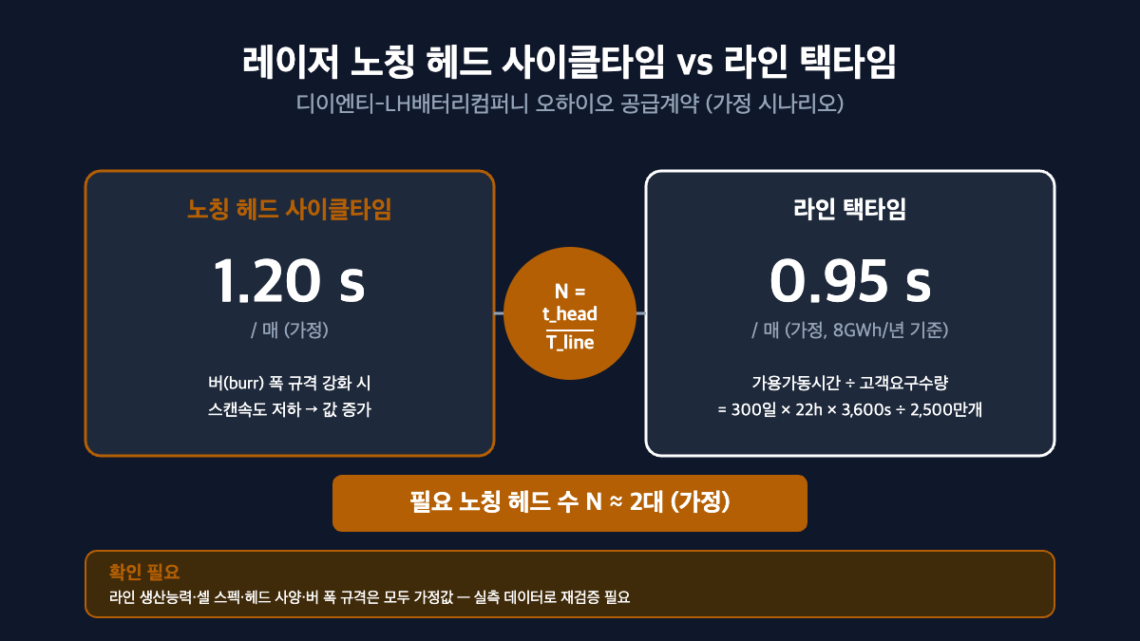
The Interface Between Laser Notching Cycle Time and Line Takt Time — The Head-Count Sizing Problem Revealed by DI ENT’s Ohio Supply Contract
DI ENT signed laser notching equipment supply contracts worth a combined KRW 87.3 billion, across two separate orders, with LH Battery Company (an LG Energy Solution–Honda joint venture), for delivery to Honda’s new second battery plant in Ohio, USA, by March 2026. This supply contract is more than an order-win announcement — it surfaces an interface-design problem between the notching process’s cycle time and the line’s takt time. When the processing time of a single notching head is longer than the takt time the line requires, adding parallel heads becomes unavoidable, and as burr-width specifications are tightened, per-head processing time increases, causing the required head count to rise non-linearly. This…
You May Also Like
128 MW of Distribution-Grid ESS Volume Allocated — Can the Battery Pack Assembly Line Absorb the Takt Time?
Pylontech’s 588 Ah and 601 Ah LFP Cells Enter Mass Production — Why Energy-Weighted Availability Stays the Same When the Cell Count Halves
Long-Duration ESS Interface Design in the Era of Power-Grid Saturation
-
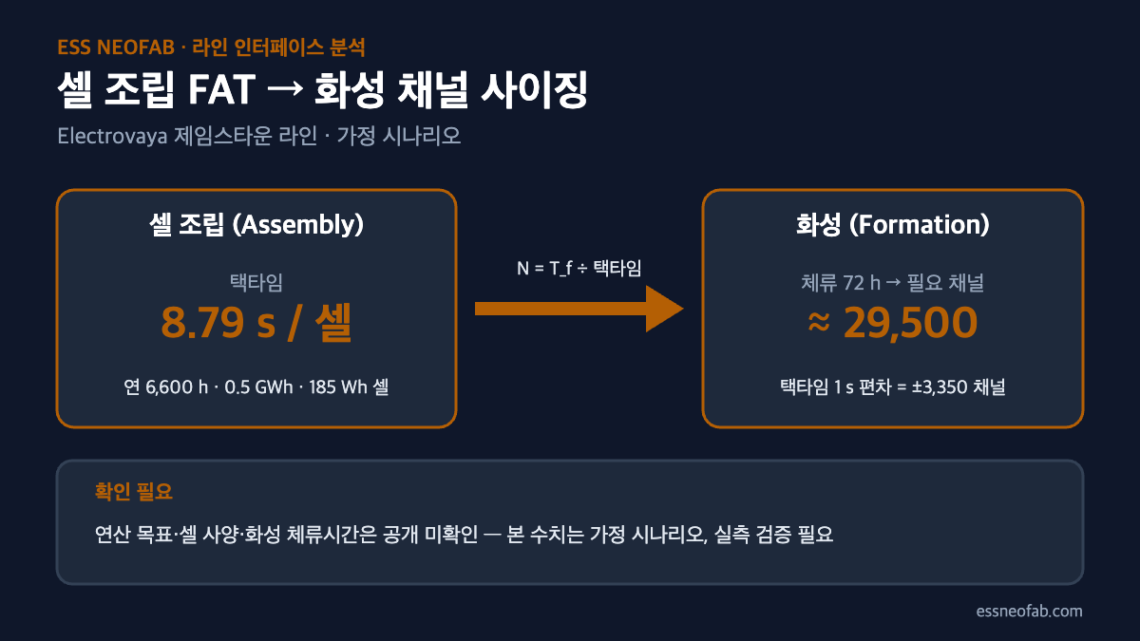
Formation Channel Sizing Read from a Cell Assembly Equipment FAT — How 1 Second of Takt Time Moves 3,350 Channels
Electrovaya announced that on August 24, 2026, it began a Factory Acceptance Test (FAT) of automated cell-assembly and Formation equipment for its Jamestown, New York cell plant, to be followed after completion in early October by shipping and a Site Acceptance Test (SAT). This article reinterprets that FAT not as “equipment inspection” but as a sizing verification that absorbs, through the number of Formation channels, the takt-time mismatch between cell assembly — which moves at a second-by-second cadence — and Formation — which holds cells for hours at a time. Under an assumed scenario (0.5 GWh annual output, 185 Wh cells, 6,600 h/yr of operation, 72 h Formation dwell time),…
You May Also Like
LFP High-Compaction-Density Conversion and the Calendering Interface: How Nip Pressure and Line Speed Affect Takt Time
Don’t Subtract Breakdowns When Calculating Takt Time — Takt Time vs. Cycle Time vs. Lead Time
128 MW of Distribution-Grid ESS Volume Allocated — Can the Battery Pack Assembly Line Absorb the Takt Time?
-
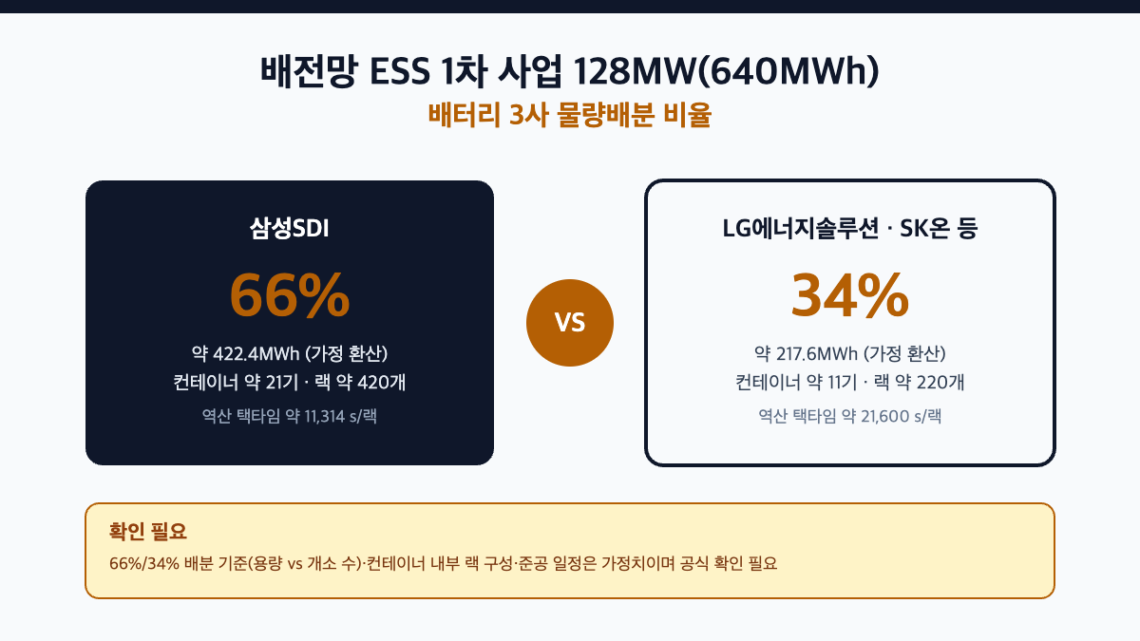
128 MW of Distribution-Grid ESS Volume Allocated — Can the Battery Pack Assembly Line Absorb the Takt Time?
The Ministry of Climate, Energy and Environment’s Phase 1 distribution-grid ESS project — linked to additional renewable-energy interconnection — confirmed 9 operators and allocated a combined 128 MW (640 MWh) across 32 distribution feeders. Samsung SDI recorded the largest award at 66%, with LG Energy Solution and SK On splitting the remainder. This article converts that volume-allocation ratio into a load distribution across battery-pack assembly lines, and back-calculates, under an assumed scenario, how far the takt time diverges between operators. The conclusion is that a difference in procurement-volume ratio is carried straight through into a load imbalance at the production-line design stage, so Line Balancing review must be conducted together,…
You May Also Like
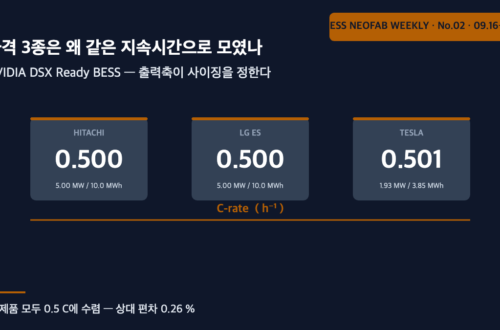
Why three qualified products landed on the same duration — in DSX Ready BESS, sizing is set by the output axis
Between the Continuous Solid-Electrolyte Process and the Assembly Line: How Should the Buffer Interface Be Designed?
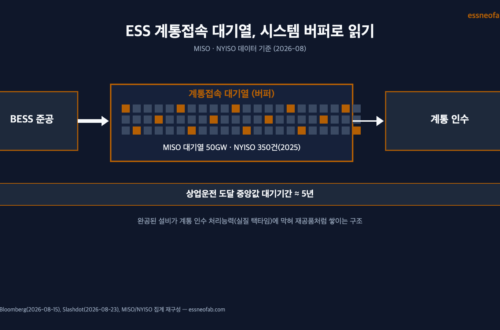
Re-Reading the ESS Grid-Interconnection Queue in the Language of Line Balancing
-
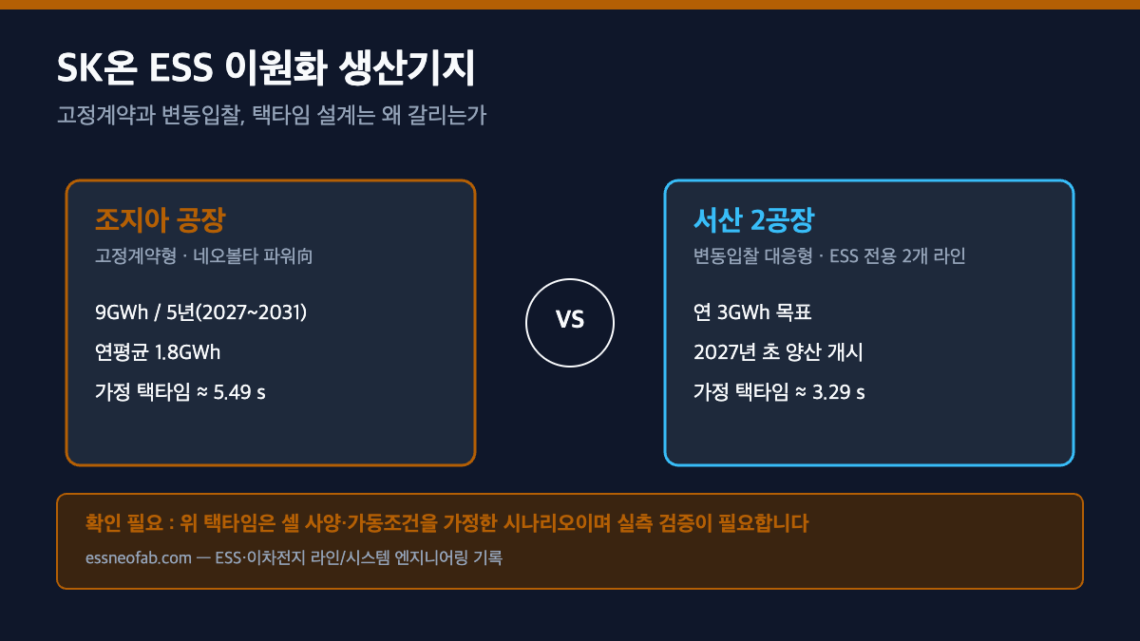
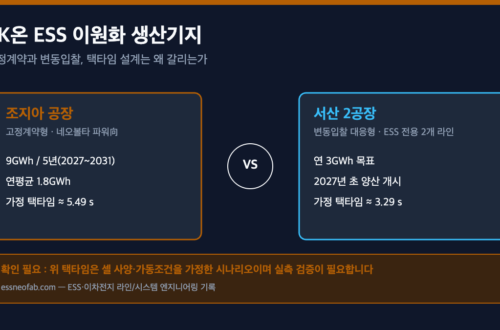
SK On’s Dual-Site ESS Production Bases — Where Fixed Contracts and Variable Bidding Split Takt Time Design
As of the second half of 2026, SK On is simultaneously pursuing two capacity-allocation efforts that look similar on the surface but differ sharply in character: a long-term fixed-contract ESS supply obligation from its Georgia, USA plant (9 GWh over 2027-2031 to NeoVolta Power), and a variable-bid-responsive capacity build at its domestic Seosan Plant 2, where 2 of 4 production lines are being converted to dedicated ESS-LFP pouch-cell lines. Both sites represent "ESS expansion" on paper, but the takt time (Takt Time) character each demands is different. Using publicly disclosed contract and conversion volumes, this article constructs an assumed scenario showing quantitatively that the fixed-contract site is better served by…
You May Also Like
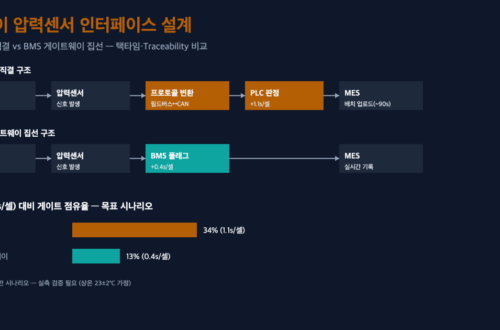
46-Phi Cylindrical Cell Line Conversion: The Pressure-Sensor–BMS Interface Determines Takt Time
45 Days from Pohang to Georgia — Safety Stock at an Intercontinental Cathode Interface Is Driven by Lead-Time Variability, Not Demand
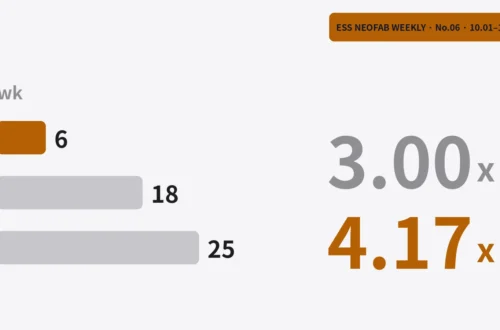
A 160 MW battery’s six-week commissioning has two baselines
-
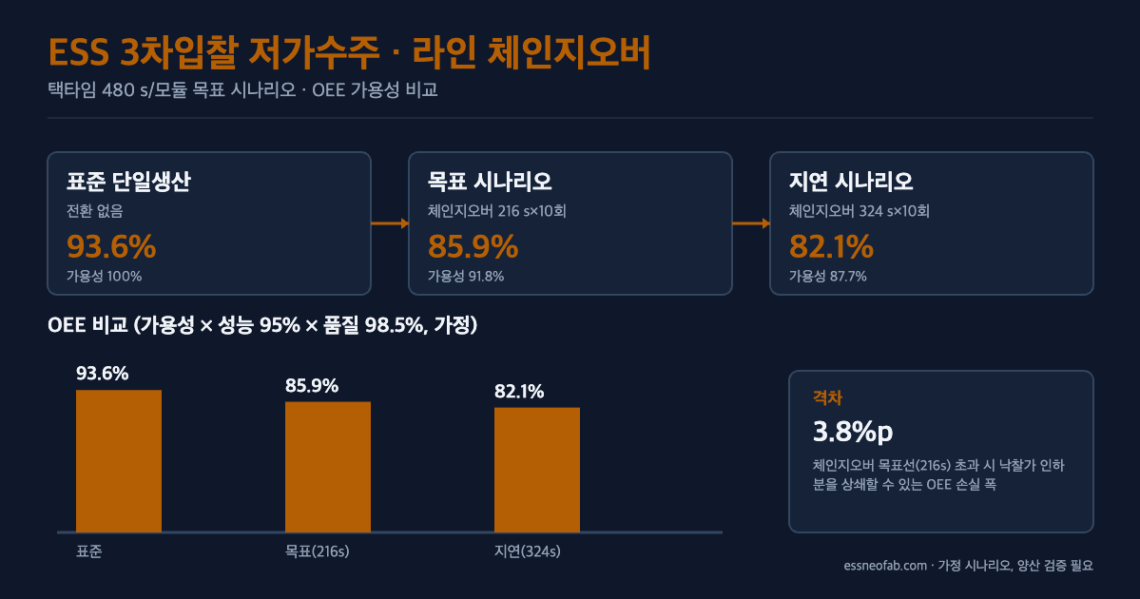
Line Changeover Design in the Era of Low-Price ESS Round-3 Bidding — Flexible Assembly Viewed Through Takt Time and OEE
Korea's ESS centralized-contract market Round-3 bid (approximately KRW 1 trillion), scheduled for announcement in September 2026, has already shown a decline in bid prices compared to Rounds 1 and 2, intensifying low-price order competition among the three battery makers. This article focuses on the possibility that this low-price order volume will require cell-format mixed-model flow on an existing single-model production line, and quantifies, as a target scenario, the impact of changeover time on takt time and the OEE Availability factor. The verification shows that controlling changeover time within the 216 s target versus exceeding it by 50% produces an OEE gap of approximately 3.8 pp. However, these figures are an…
You May Also Like
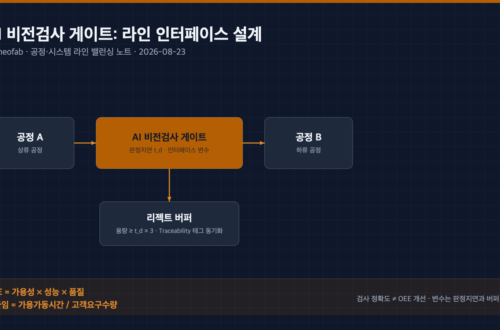
Embedding an AI Vision Inspection Gate in the Line: Redefining OEE and Takt-Time Design Variables
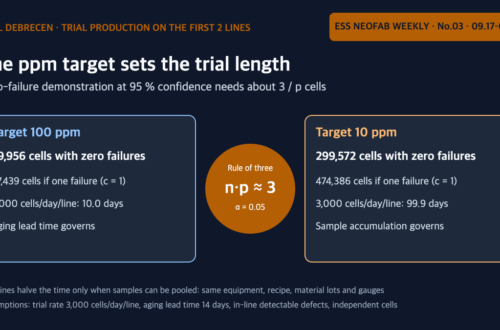
CATL Starts Trial Production in Debrecen — The Digits of the Defect-Rate Target, Not the Equipment, Set the Length of a Trial Run
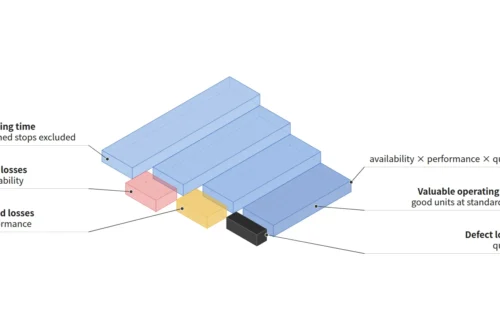
If Availability, Performance and Quality Are All 80 %, OEE Is 51.2 % — How to Calculate OEE
-
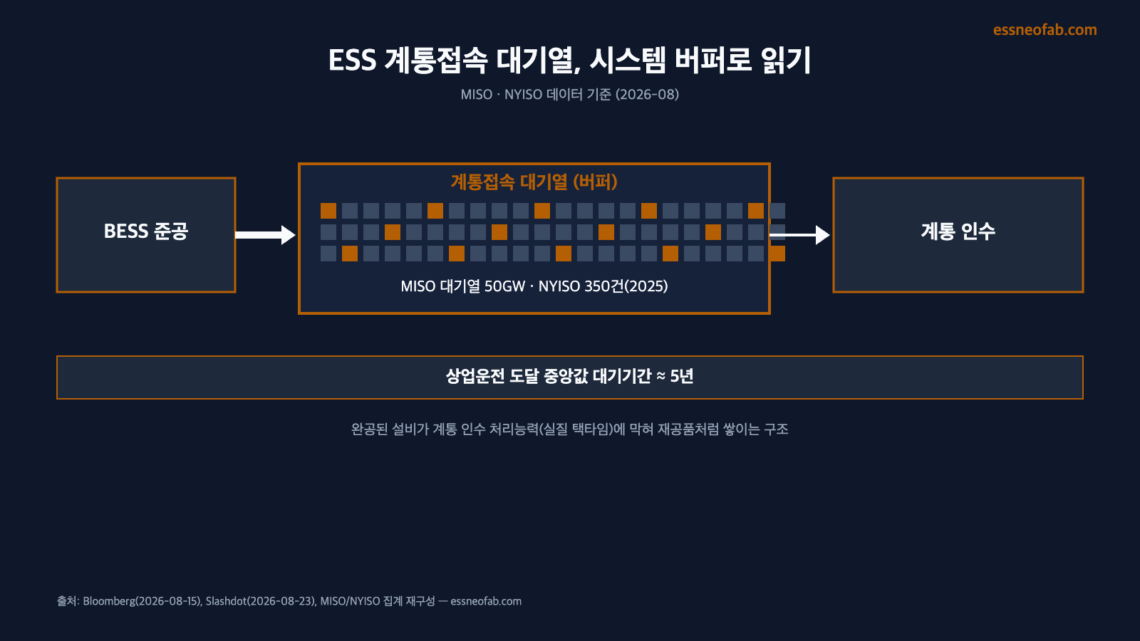
Re-Reading the ESS Grid-Interconnection Queue in the Language of Line Balancing
The stalled BESS (Battery Energy Storage System) commissioning cases in the US, reported successively by Bloomberg and Slashdot in August 2026, show that even after equipment is completed, delays recur at a separate bottleneck section called the grid-interconnection queue. BESS accounts for about 50 GW of MISO's total 650 GW queue, the number of NYISO's queued projects grew from 176 in 2018 to 350 in 2025, and the median wait time to reach commercial operation approaches 5 years. This article redefines this phenomenon using the line-engineering concepts of buffer, interface, and takt time, analyzing it as a work-in-process inventory structure in which completed equipment piles up without being able to…
You May Also Like
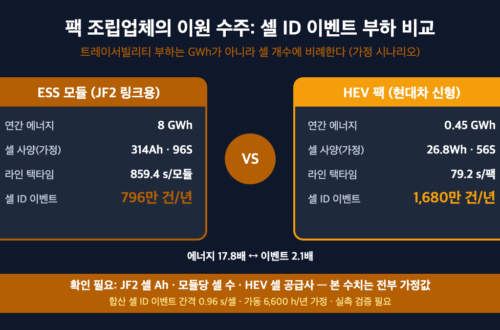
Sebang Lithium Battery’s Simultaneous HEV Pack and ESS Module Orders — Analyzing the Cell-Inbound Interface and Cell-ID Traceability Load
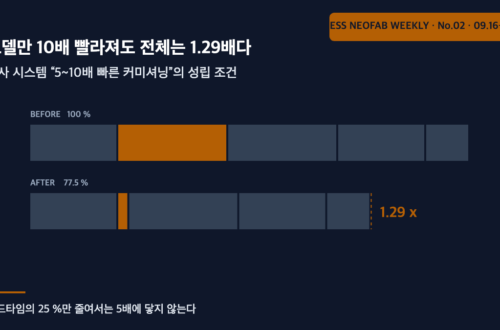
Even a tenfold faster model moves the whole by 1.29x — what “5 to 10 times faster commissioning” actually requires
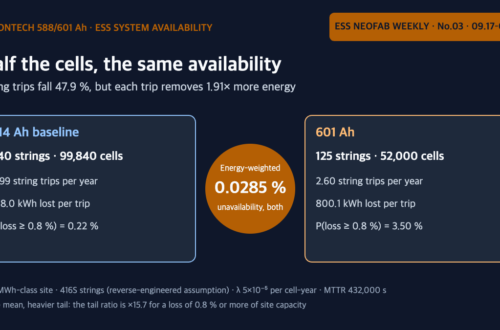
Pylontech’s 588 Ah and 601 Ah LFP Cells Enter Mass Production — Why Energy-Weighted Availability Stays the Same When the Cell Count Halves